(Re)Introducing Fansplaining
Reporting, analysis, criticism, and more—all by, for, and about fandom.

Fans have never been more visible in the mainstream. Hollywood’s endless franchises and reboots; the romance and romantasy booms; fanfiction being sold for seven-figure book deals; fans using social media for good and for ill. Fandom is made up of a vast array of overlapping subcultures—and today, it underpins mass culture. To understand the world, you have to understand fandom.
So why does it feel like the media conversations around fans and fandom are going in circles? Over the past few years, as publications have folded, culture teams have been gutted, and freelance budgets have shrunk dramatically, much of fandom coverage has backslid: gawking, intruding, and republishing the same old takes that have been discussed ad nauseam.
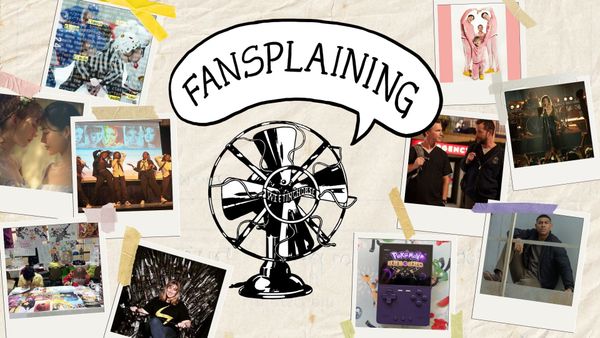
Fansplaining wants to help change that. Today, we’re relaunching as an independent, subscriber-supported, journalistic publication. One longread a week: reporting, analysis, criticism, and much more, all by, for, and about fandom.
Longtime Fansplaining followers know we’re no strangers to these conversations. We began as a podcast at San Diego Comic-Con in 2015: at the time, my co-host, Flourish Klink, was explaining fans to people in Hollywood, and I was covering fan culture in the media. (I’d shifted from book journalism a few years prior, fueled by rage over the ~100,000 terrible articles on fanfiction in the wake of Fifty Shades of Grey.)
When we started Fansplaining, I thought I knew fandom—after all, I’d been reading and writing fic for two decades at that point. But looking back more than 250 episodes later, I realized I’d barely scratched the surface. There was no better fandom education than all those years of listening to other people, academics and industry professionals and especially my fellow fans, doing what fandom does best: turning something over from every angle and really getting to the heart of it. I felt like collectively, we were having thoughtful, nuanced discussions that expanded and deepened my perspectives on fans and fan cultures.
When Flourish stepped down in the spring of 2024 (to have a baby and be ordained as a priest!), I put the podcast on hiatus, commissioning and publishing one fandom article a month in the interim. These writers covered fans of the new (KPop Demon Hunters) and old (Blake’s 7); fan practices (respectful cross-cultural exchanges) and groups (sober jam band fans); the big corporate machinations (the Star Wars franchise's misdirection) and the deeply personal (exploring gender through fandom roleplaying). I was very proud of every piece we published, but I felt like it was just the tip of the fandom journalism iceberg.
Over the past two years, fandom’s mainstream cultural footprint has only increased—the Dramione pull-to-publish novels, for example, or the explosion around Heated Rivalry late last year—but the media coverage just seemed to be getting worse and worse (“why slash,” anyone?). Meanwhile, smart writers I know couldn’t get fandom-related pitches accepted (unless, of course, they were about a narrow band of blockbuster titles like Star Wars or Game of Thrones).
Fandom history goes back decades (or, depending how you define it, centuries); fan practices and norms influence every corner of cultural creation today. Fans and non-fans alike deserve thorough coverage in this realm: writing that goes beyond the hot fandom of the moment, or the latest blow-up on a social media platform.
That’s why we’re incredibly excited to relaunch the expanded Fansplaining today. “We” includes the two brilliant editors—and longtime fans—who’ve joined me in this project: Aja Romano and Lin Codega. We’ve spent the past few months brainstorming, writing, and editing, reaching out to writers we’d like to publish and identifying gaps we’d like to fill.
We have several months’ worth of pieces in the works right now—and yes, we’re open to future pitches, too. (Official pitch information coming soon!) We’re kicking things off today with Lin’s magnum opus on The Pitt’s fandom and the ways the show encourages a robust fic culture. In the pipeline, we have writing on conlang enthusiasts, Philip Pullman’s Book of Dust trilogy, a Kenyan perspective on reading fic in English, religiously observant fans, the ethics of Harry Potter fandom, and much more. We’re also excited to welcome the great Gavia Baker-Whitelaw as our first staff writer; Gav fans, get ready to read her regularly at Fansplaining.com.
Fansplaining the podcast was supported by Patreon; with our expanded scope, indie-publication Fansplaining will follow the ad-free subscription model of most newer titles, like the TTRPG outlet Lin co-founded, Rascal, or gaming sites Aftermath, Rogue, and Mothership—not to mention trailblazers in this space, like Flaming Hydra and 404 Media, or the grandaddy of them all, Defector.
Readers will need to sign up for a free account to be able to read anything on the site: what 404 Media dubbed a “freewall,” to keep AI scrapers from yanking even more of our stuff—scraping our fic was bad enough! You will be able to read a handful of articles for free before hitting our tiered paywall. Our “Supporter” tier—access to all articles—will be $7 a month or $70 a year; our “Benefactor” tier at $12 a month or $120 a year gets you every past and future special episode as well. (We’re hoping to record one per month—and Flourish will join from time to time!) Don’t worry, big spenders: we’ve got an aspirational “Champion” tier for you, too. And for the underresourced, we do offer a discount for our basic tier; just email us at info@fansplaining.com.
As we’ve done in the hiatus period, all articles will continue to have an accompanying audio version, usually read by the author. The main podcast back catalog, with audio, show notes, and full transcripts, will remain freely available to all; because the episodes are archived all over the web, those pages will be in front of the “freewall.”
We really hope folks will become paying subscribers if they can afford it; Fansplaining will only survive and grow with fan support. We believe that fans love to read, and we hope that this model will be sustainable as we work to publish deeply reported and investigated articles and criticism on fandom.
As Lin so succinctly put it last week: “Fandom is culture, and we’re here to talk about it.” We can’t wait to share what we’ve been working on—and keep this conversation moving forward.