Practicing Faith As Fans, or: Printing Fanfic for Shabbat
For religiously observant fans, balancing fandom and faith can be complicated.

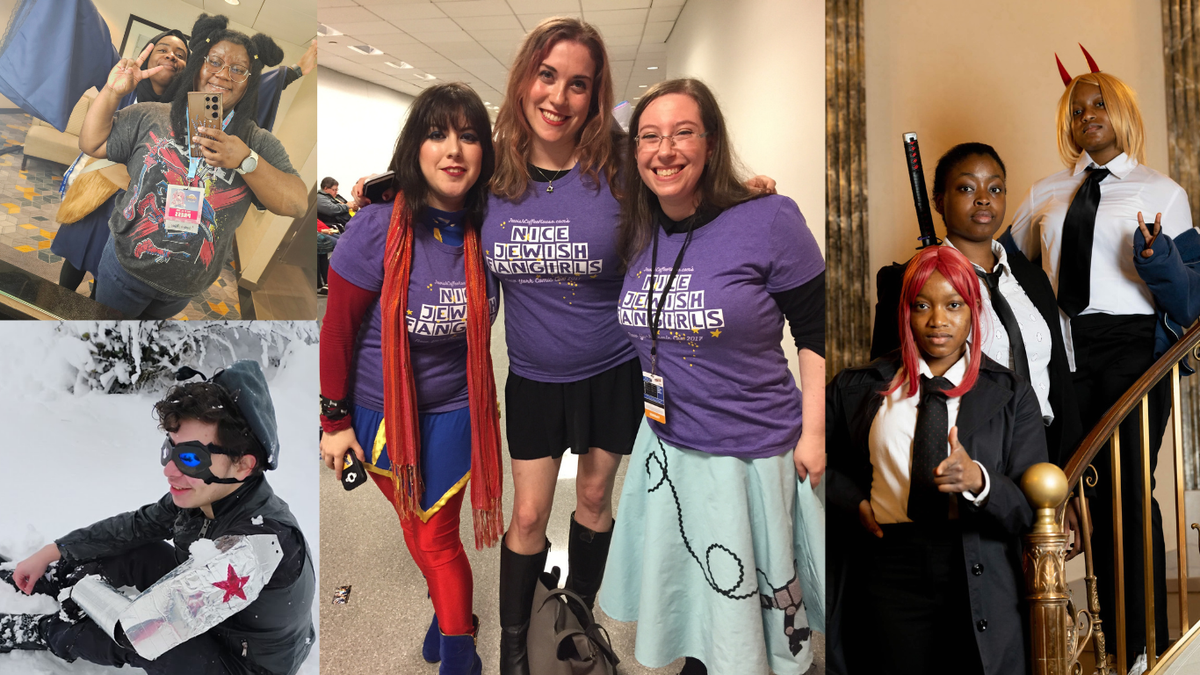
One of my biggest fears in the age of digital technology is that print books will cease to exist. Publishing industry ramifications aside, this is a practical fear: for 25 hours every week, from just before sunset Friday until after dark on Saturday night, I do not actively use any electronic devices. I’m a practicing Modern Orthodox Jew, and observe the Jewish Sabbath, or Shabbat. Lights go on timers, food is cooked overnight in slow cookers, and my phone is put aside.
Since childhood, I’ve spent Shabbats exploring fiction—mostly fantasy, sci-fi, and romance. Raised in a very fannish home—some of my earliest memories feature my father introducing me to Star Trek and Star Wars—I first encountered fanfiction in fifth grade. As an art form in modernity, it is predominantly digital; since I do most of my reading for pleasure on Shabbat, I never picked up fanfiction for long. Books simply were more practical.
In 2020, this changed. The pandemic made Shabbat particularly hard: a weekly time of community was shattered, as socializing and services at synagogue went on hiatus, and the routine of weekly meal plans and hanging out with neighborhood friends was broken.
It was during this time that I began to print out fanfic to read on Shabbat. I became a fan of the Chinese television show The Untamed and started reading fanfic before I even finished watching the series. Printing fics helped me savor the feeling of immersion and added newness into my Shabbat experience in the middle of disjointed life.
I haven’t stopped printing them since. I have a box in my apartment full of printouts, where I update and replace fics on occasion. I’ve invested in better printers and more cost-efficient ink. Ahead of a Jewish holiday spent with my family last year, I asked the author of my favorite comfort fic if they’d mind if I got it bound. I’ve since had another one bound ahead of a holiday this year.
I’ve been an observant Jew my entire life and a fan nearly as long, but I rarely discuss my life’s focal points side-by-side; my religion and fannishness only rarely interact. Wanting to explore this dichotomy through the lens of the practices of religiously observant fans, I spent much of the past few months talking to people across faiths, fandoms, and observances.
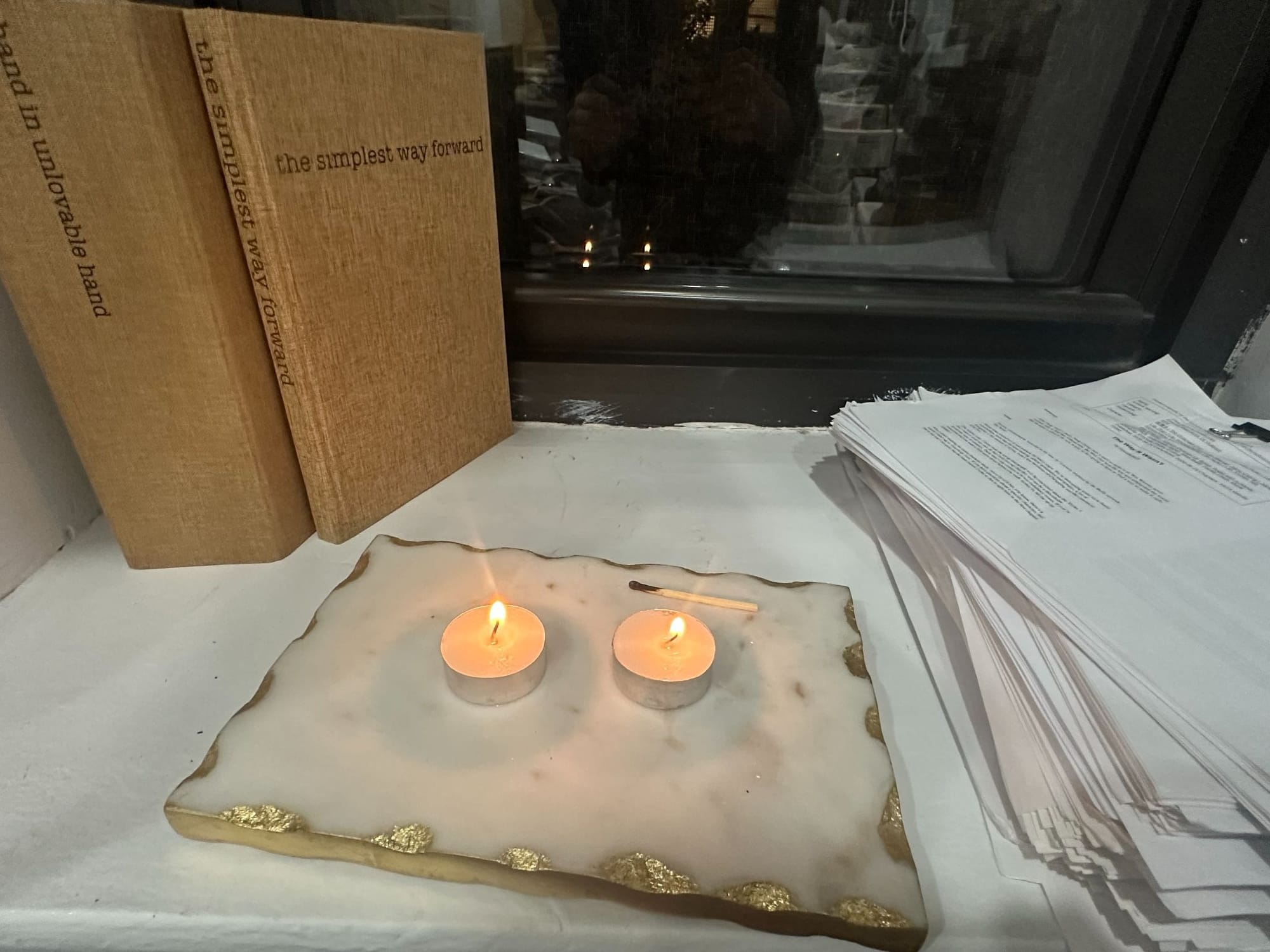
Some of my interviewees were theologians and ordained religious leaders, though most were simply both fans and religious practitioners; every person I spoke with had to be actively practicing faith as they defined it, with observances and traditions varying widely. The majority were Christian, Jewish, or Muslim, though I also spoke with some Hindu and neo-pagan practitioners. Most, but not all, live in the U.S. I generally use full names, except for people who explicitly asked to use pseudonyms due to personal or professional privacy concerns.
I went into every conversation wondering about each person’s experience of practicing religiosity in the context of fandom. I quickly learned that even the idea of “practicing” or “observing” religiousness was shaped by people’s interpretations of different faiths and cultural backgrounds. There was no single pattern to how religious people approach fandom, or the ways they balance conflicts between their fannishness and their religiousness; there were many different perspectives on what it means to exist as a religious person today. Our worlds, of course, are the ones that we make for our fandom selves.
The Jewish new year, Rosh Hashana, is always a day of judgement—but this year, it felt like a personal test. The Korean band BIGBANG, one of the most impactful musical acts of the past two decades, was performing in New Jersey on the first night of the holiday. I discovered their music in high school and covered their career as a journalist for years, but I’d never seen them live. While my friends were partying it up at the concert at Metlife, I was dipping challah in honey in the hopes of a sweet new year, readying myself mentally for the next two days in synagogue spent ruminating on life and death. I was thinking, a lot, about decisions I make, and how I live.
My initial approach to this piece was similarly about exploring others’ physical observances: Who else has spent time finding a way to balance their religious and fannish practices? But as I spoke with interviewees, it became quickly apparent that there was a major divide: some had never really thought about it, whereas for others it’s a way of life. The divide was largely, but not entirely, based around who is a Christian living in a Christian-dominant society, and those of us who are not. I admit to immense envy for those of you who live in a society where you are confident that your holiest day is always a day off.
For me, every offline fan experience is full of complications. The fun and joy is often accompanied by stressors many other attendees won’t think twice about: Will I be able to eat any food since I observe kosher? Will I be fasting? I frequently miss shows due to Shabbat or Jewish holidays, and sometimes make the maybe heretical choice to go to concerts on Shabbat. To do this, I often have to spend extra money to book more expensive hotels within walking distance of venues, since my Shabbat observance means that I do not travel via vehicles during the 25-hour period weekly, barring a life-saving emergency. When I was a full-time music journalist, my religious observance led to many missed opportunities.
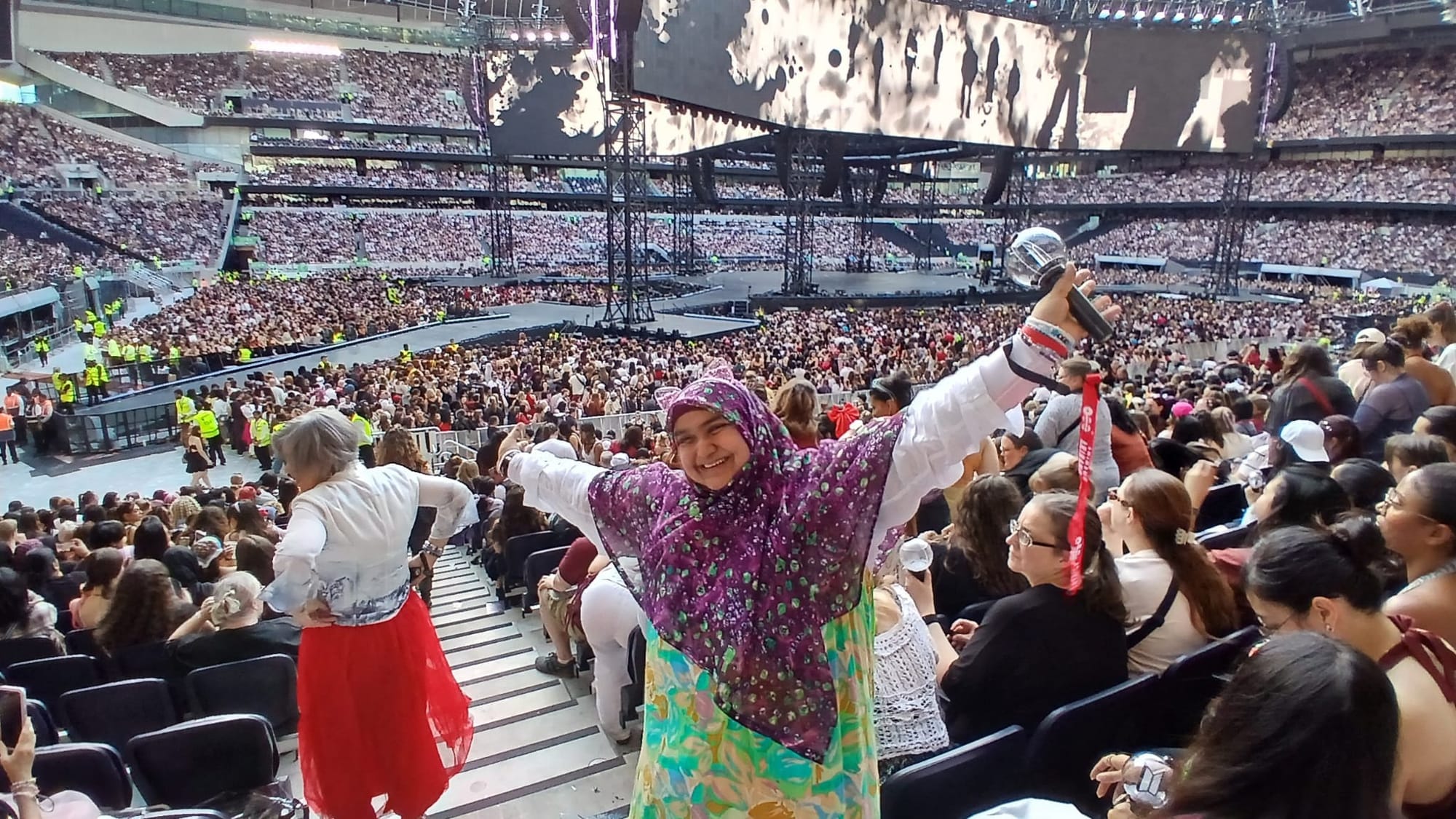
Similarly, for Khadija Khalil, a Muslim K-pop and K-drama fan based in London, going to a concert isn’t just a matter of trying to get tickets and traveling to the venue. “The number one question that I have whenever I go to something is, ‘where can I pray?’” she said. “These concerts all start as the sun is going down. We have a prayer [at] that time. ‘Where am I meant to do that? Will they allow me to do that? Is it safe to do that? Can I secretly get away with hiding in a corner and doing that? Or will someone come for me?’ Because they do. It happened to me when I went to something at the O2. You can just be sitting there for 10 minutes, and nobody will say anything. You start praying, and security will come for you.”
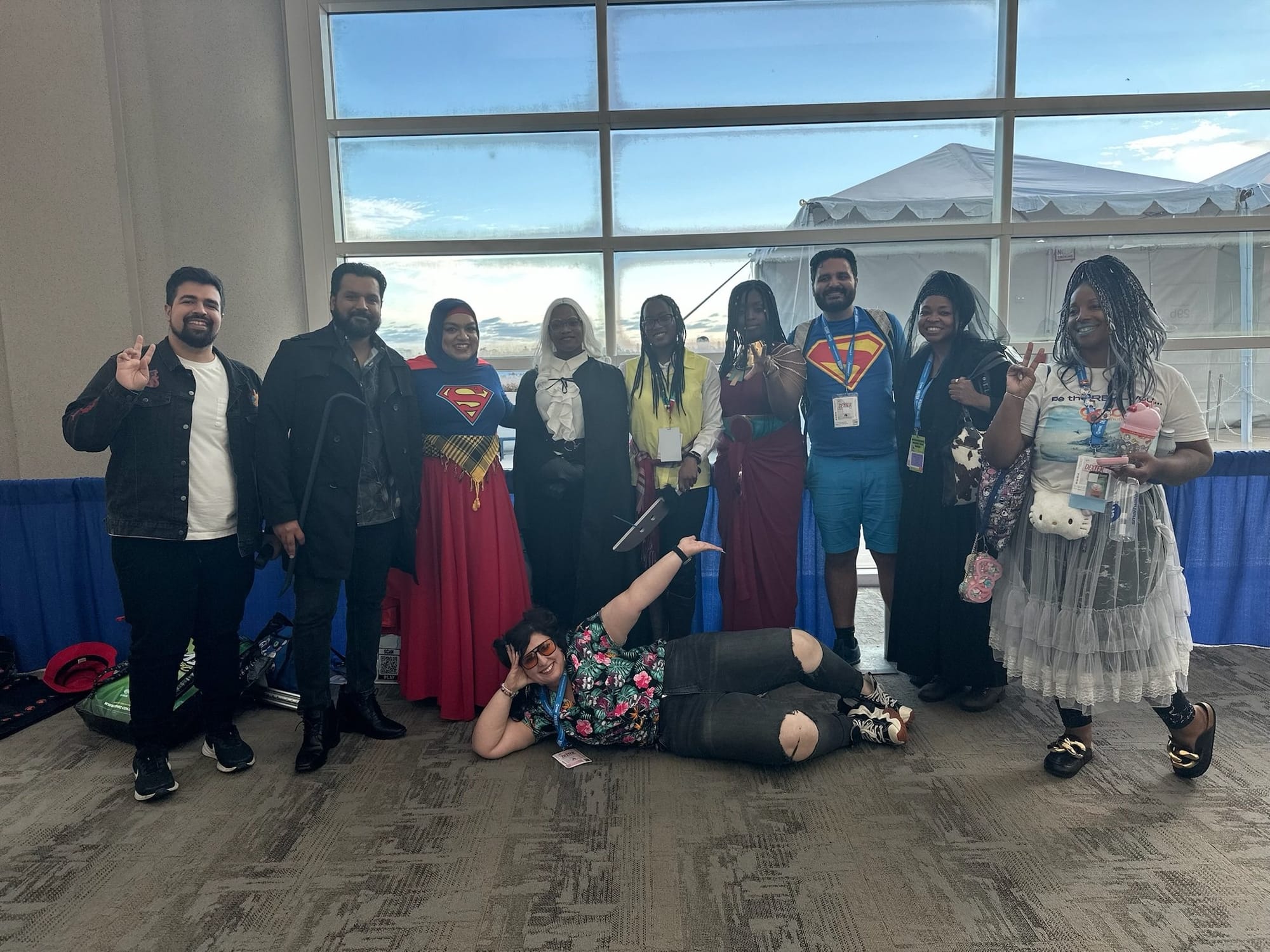
Some in-person fandom spaces have made specific accommodations for prayer in recent years. Elle H., who writes the blog Religiously Nerdy and is known online as The Muslim Blerd, said she’s been able to pray at U.S. fandom conventions without an issue. “I started frequenting cons in like 2019, when I was wearing a hijab, and I would need a place to pray. I just would ask a staff volunteer and they’d be like, ‘Oh, it’s back here.’” Nowadays, there’s even an unwritten rule that if cons have cosplay changing rooms or costuming spaces, that can be a prayer area. “Muslims will just go to the costume area and just pray back there,” Elle explains, “because not everyone needs that space all the time.”
For Shabbat-observant Jews, we have another stressor: fandom events like conventions, concerts, and meetups are typically held over the weekend. “I’ve been to very small, niche Song of Ice and Fire conventions, and I’m the only observant person there, doing Shabbos on my own,” shared Michal Shick, using an alternative pronunciation for the Jewish sabbath. She has to plan how to access events that often use digital ticketing, and deal with hotel keycards and automatic lights. Kosher food is often unavailable, so she has to bring her own, which she eats cold in her room.
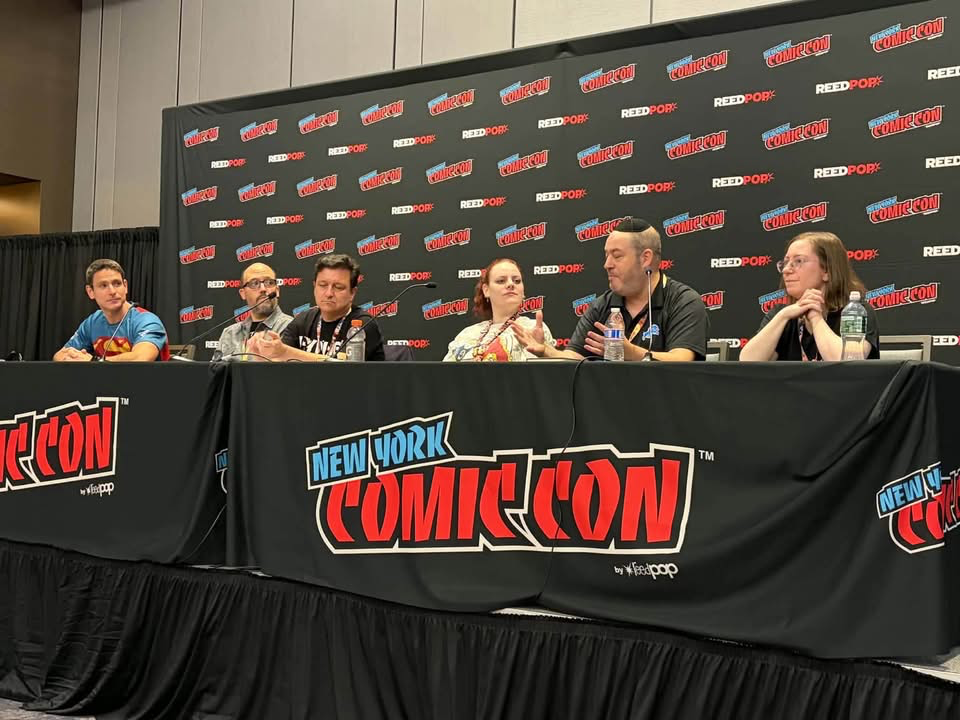
A Modern Orthodox Jewish writer and podcaster, Schick started a now multi-thousand-member Facebook group called Orthodox Ladies United in Fandom (OLUF) in 2015. She admits to constantly thinking about fandom in the context of faith “anytime [fandom] comes into the real world.” To her, being a Jewish fan makes a lot of sense, despite the complications: “I do think there is a granularity to Orthodox Judaism that has similarities to the experience of being very deep in fandom. And if you’re willing to stand in line all day to see something, that’s devotion.”
Food is a major issue for many people—not just because of accessibility, but because of what meals mean as a place to come together in communities. Shivam Bhatt is a Hindu priest who became a content creator after previously working in gaming and media. He often skips post-event hangs, because there simply aren’t options that fit his strict Hindu vegetarian diet. “I run into this a lot. My friends are like, ‘we're all going to go out and get sushi and steaks,’ and I’m going to get room service. I went to KBBQ once, and it was like... I'm going to literally have a bowl of rice.” Having sat through many KBBQ meals where I, too, couldn’t eat anything, it was a relatable—and annoying—experience that we both share.
Sometimes it’s not about what you can eat, but rather that you can’t eat at all. Religious fasting days often overlap with attendance at fandom events. For Christians I spoke with, fasting typically means restricted food intake; for Jews and Muslims, it means no food or water for a set period of time ranging from around 12 to 25 hours.
Daniel Ambord, an independent scholar whose academic works blend his Roman Catholic faith with his love of sci-fi and fantasy, was at Wondercon in California one year that overlapped with Good Friday, which is a fast day for many Christians, as well as Easter Sunday two days later. “I remember fasting being especially difficult that year, because a convention is always a quite high-energy event for me,” Ambord said. “I also made a point to wear red—the color traditionally associated with Good Friday—and to try to be less talkative [and] step away for some prayer time between the hours of noon and 3 P.M., traditionally, the hours upon which Christ was on the cross, both of which are, again, a bit tricky at a convention.”
Attending a con on the holiest day of the Christian calendar presented additional challenges. “That year, I was presenting a paper on religion and the X-Men comics at the convention, and my presentation fell on Easter Sunday, so I had to adjust my mass attendance around the needs of the convention.” He recalls being inspired by the conversation it spurred on the holy day, regardless of the struggles.
Ramadan often proves to be a point of personal conflict for Muslim fans I spoke with, and not only because of its daily fasts. Last year, when the K-pop boy band Tomorrow X Together (TXT) came to the UK for the first time, Khadija Khalil had a bit of a crisis: TXT were performing during the last 10 days of Ramadan, the holiest period during the holy month where Muslims prioritize reflection, prayer, and community. She went to one of the concerts—and still is thinking about it to this day.
“I was saying to myself, ‘it’s what, three hours out of my day? I can come home and pray. I will be pious until the time I go, I will be reading my Quran.’ But you know what? It actually wrecked the rest of my Ramadan because I couldn’t decompress like you normally do [after a concert]. You sort of process it by going through your videos and talking to people and being excited about it. You need to decompress. And I wasn’t allowing myself to do that, which kind of interfered with the rest of my Ramadan.”
Mariam Elba, a Muslim music lover from New York, had a similar experience at Metlife Stadium in New Jersey during BTS’s 2019 tour, when she got her hands on a VIP soundcheck ticket. “It was during Ramadan. I managed to keep my fast, and do all my prayers on time. I brought one of those prayer mats that you bring for outside. It was really funny. Sunset was like 20 minutes after the start of the concert and I remember getting a phone notification for sunset, and j-hope’s ‘Just Dance’ was on, and that was right when water cannons started to fire.”
Elba said she wouldn’t do it again. “I was younger, at a different time of my life. It was a good experience. But I think nowadays if there’s a concert during Ramadan, I would probably not attend it, or just attend a date that is before or after.”
Khalil also hopes that she never has to make this choice in the future. “I still don’t think it’s okay,” she reflected on her decision to attend the concert. “I wish they hadn’t come in Ramadan, because the thing is…I don’t wish I hadn't gone. This is a conflict that I’m just gonna hold.” Ahead of BTS’s tour this year, she prayed to Allah that the London dates wouldn’t be during Ramadan; ultimately, the Arirang tour didn’t begin until a month after.
Like Ramadan, the period of Lent also impacts some people’s fan behaviors. Father Flourish Klink is one of the original founders of Fansplaining, and partly left Fansplaining for faith-based reasons: to fully focus on a new career as an Episcopal priest in New York City. They have given up wearing their earbuds in public during Lent, to engage more with the people around them, and have contemplated giving up all fiction reading for the holy period, immersing themselves more in the world around them via reading nonfiction or engaging in other real-world activities.
“There are certain fannish behaviors that I enjoy and I don’t think they’re bad for you, but they might get between me personally and something while I want to be paying attention to other human beings,” they reflected. “They might be distractions from my life in ways that I decide are not good for me, or that aren’t good for me right now. That I want to give up for Lent, and then maybe go back to.”
As we spoke, I wondered if some of my fandom friends probably think my religiousness is a distraction to my fannishness, rather than vice versa. “I think a lot of people in fandom might find it horrifying,” said Father Flourish. ‘What do you mean you’re torturing yourself?’ I don’t see it that way. It is voluntary for me; my religion doesn’t require me to, it doesn’t require me not to. I get to pick.”
When I was in college, I tried making a Facebook group for Jewish K-pop fans. I think 10 people joined, mostly friends of mine. To this day, I’ve never been in a Jewish-only K-pop chat. (Please add me if there is one!) Since so much of fandom discourse is centered not only in the English language but also culturally Christian environments, there are a lot of biases built into larger fan communities even if there are no overt religious or non-religious aspects. For many fans who exist separately from the dominant culture, we have to try and piece together our own places where we can feel seen and understood, not just as persons of faith and fans, but simultaneously, always, both.
The blog Religiously Nerdy is one such space. “We meet other Muslims worldwide who are all just a bunch of nerds,” Elle told me. “People don’t really see it. No one ever connects nerdiness with Muslims. I didn’t go to Anime NYC last year, and ended up selling my ticket to someone from Reddit who ended up being a hijabi. She was like, ‘How do I pray? I don’t want people freaking out because they see Bakugo in a corner.’ It was her first con. I gave her the Instagram of one of the other people on the blog; they met up to pray.”
Listening to her, it reminded me of the first time I discovered the Facebook page Michal Schick created. “The reason I started OLUF was because I went to a nerdy event, and I realized how many other religious, Orthodox, practicing young women were also there,” Schick recalled. “I was there with friends, so it wasn’t a revelation to me that other people liked it, but the number of people who really had this in common, and it was an important part of their lives… I think everyone sort of thinks they’re doing it alone.”
Carving out places for ourselves is one route, but trying to get acceptance and raise awareness of different fannish perspectives is another. Shivam Bhatt says he sometimes feels like he’s shouting into the void to simply get Hinduism acknowledged as something sacred in fandom spaces. He’s spent many years calling out anti-Hindu sentiment in video games and Magic: The Gathering, where he’s seen instances where Hindu deities are disrespected, and not given the same grace as iconography associated with Abrahamic faith in pop culture.
“You wouldn't see anybody putting Jesus or Moses in fighting games, but they'll do that to Vishnu and Kali all the time,” he reflected. “It’s been a weird navigation of fandom. How do we engage with games without also [acknowledging that] my culture is treated [as] lesser than yours?” He also pointed generally to how the term “avatar” is simply accepted in the digital age as a representation of self; in Hinduism, it’s associated with the literal manifestation of deities.
There are also those for whom fannishness is a potential spark of conflict not only because of how they interact with other communities, but within their immediate religious sphere. Sova, a fan of the band Ghost as well as a Traditional Gardnerian Wiccan, knows some other Pagans may disapprove, but finds spirituality amid what others may look at as less-than-religious. “The conflation of Witchcraft, Paganism, and Satanism in general society might make some other Pagans look askance at my adoration for this band,” they said, a reference to misconceptions that paganism is synonymous with devil-worship. “But anything can be a symbol or a metaphor or an allegory or analogy when looked at through a different lens.”
While physical practices often overlap with offline fan interactions, online fandom spaces may present less conflict, since people of faith can engage—or disengage—on their own terms.
Fanfiction is an important forum for many fans of faith: it’s a place where they can explore their relationship with religion in a lower-stakes creative playground. Eitan, who grew up in a Chabad Jewish family but now aligns himself with more liberal Orthodox communities, incorporates the practice of asking rabbis questions about how to follow Jewish law, or halacha, into his fanfiction writing. “Weaving halacha with fandom really helped me connect with Jewish observance in a way that didn't feel very tangible as a kid,” he told me. “I love coming up with questions about how halacha would work in a world with superpowers, space travel, time travel, etc., and coming up with answers or bugging my friends and rabbis about it.”
For Quakers, pacifism is a key tenet, but Rhiannon Grant, a Quaker and a professor of theology, is a big fan of Marvel, and has written fanfics that feature violence. Even that is a path of introspection, she said. “I think there’s something about saying this is a way of exploring the things that lead to violence in fiction. Maybe we can understand where this is coming from? Life is complicated. At some level, that’s a tension that I’m living with rather than something I’ve resolved.”
Linnea, an author whose mother is a Lutheran feminist theologian, is currently in the process of converting to Judaism through their Reform congregation. Their religious path and fanfic narratives have converged in the nearly 300 works on AO3 they’ve authored over the years. “Since joining The Queen’s Thief fandom in 2022, [I’ve been] really getting into the religious and theological worldbuilding,” Linnea told me, referring to the series by Megan Whalen Turner that incorporates a Greek-inspired pantheon of gods. It’s been meaningful, they say, “realizing that my experience as a religious person and as someone who thinks about theology could be relevant to what I write as a fan or how I engage with fandom.”
One of Linnea’s most religiously driven fics was based on the Check, Please! webcomic, where they used two characters’ religiousness to explore how different people experience Christianity. “It was so obvious that neither one was the universal experience, just being able to have them talk to each other about it and disagree about what messages they had gotten from the church.”
Claire Willett, a Catholic novelist, playwright, and fanfic writer, frequently draws on her internal discourse with faith when writing. One The 100 fic took eight years to write and is around 450,000 words long, and features characters grappling with theology while facing religious cults and homophobia.
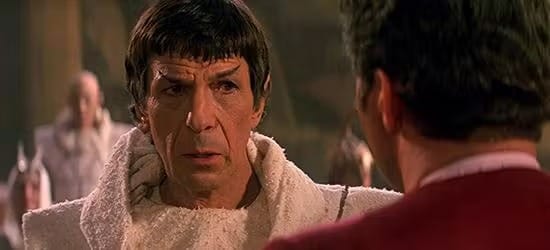
“It was probably the earliest thing I had written where I was deeply drawing on something specific to my own Catholicism,” she said. “It really drew on a lot of just how Catholicism for me is both the personal, spiritual piece, and also I am part of this large, public-facing institution that interacts with the material world in many different ways that are also important and interesting and worth exploring narratively.” Although The 100 fic was more “Catholic-flavored” as per Willett, she recently wrote a Star Trek fic that is more specifically about Catholicism and the teachings and discourses around Jesuit theology contrasted with Vulcan mysticism.
The narrative of writing fic while ruminating on faith makes a lot of sense, says Kris, who also goes by the name Raygun in fandom spaces. Raygun is a devotional polytheist neopagan worshiping the Norse Gods who also identifies as a witch. She attends a Unitarian Universalist church online. To her, fandom and faith go hand-in-hand, always, and fanfic plays a role in that.
“I’ve never felt tension between my practices and fandom because they bleed into each other and communicate with each other. I take metaphors I’ve learned from Trek into my practices and have taken my polytheistic understanding of the world and applied it to Trek. The Trek fandom is kind of my church in that it’s a community that I go to to discuss the big questions of existence. ... To me, my fannish obsession and religious obsession comes from the same source.”
While many people I spoke with shared how their faith practices interact with fanfiction, Jenna DeWitt told me about how her fandom practices helped influence her religious practices. DeWitt is a United Methodist who runs a queer Christian website called Invisible Cake Society, and frequently writes about the intersection of fandoms like Doctor Who and Taylor Swift, neurodivergence, disability, and aromanticism and asexuality. For her, fanfiction is one aspect of fandom that mirrors religion in a distinct way that many other fandom practices don’t: it separates canon from apocrypha, even if the two merge in the public eye sometimes.
“The fandom community has returned to me vitally important religiously associated concepts like canon and derivative works,” said DeWitt. “There’s what’s actually in the text or the media, and then there’s what the community around it adds or projects onto it. Whether it’s a 5th-century theologian or a Gen-Z pastor on TikTok, or a fanfiction writer who established popular fandom tropes decades ago, or a cosplaying Youtuber now. … There is no ‘the Bible said so’ simplicity that doesn’t have our own lenses filtering it. And the same skill has to be learned in fandom with what we saw, heard, or read; what the authors, directors, and actors intended; what the characters and plot actually said or did; and what others took away from it.”
Anisa Khalifa, a recurring guest on Fansplaining who spent years co-hosting the K-drama podcast Dramas Over Flowers with Khalil, is another person who spends a lot of time thinking about fandom and the stories around it, and how her own background influences what fandoms and fanfiction she engages with.
“The thing I think about is what these stories mean to me,” she mused. “I think the type of stories that I gravitate towards, they are informed by my worldview as someone who grew up believing in the faith that I do. The way that my parents taught me Islam was always that it’s not just a set of rituals, but it’s a way that you understand and interact with the world. How are you behaving as a community member? How are you behaving as a family member? Standing up for justice, making sure that you’re taking care of people who don’t have a lot of stuff. It was really about your character and being accountable for your actions toward God and other people. I do gravitate towards stories about people who are, not to be corny, but fighting for justice.”
Fandom is full of religious turns of phrase, like narrative canon, word of god, pop idols, etc. This question of idolatry as a practitioner of an Abrahamic faith is a recurring theme particularly among K-pop fans I speak with. “You shall have no other gods besides Me,” reads Exodus Chapter 20, verse 3, the second of the Ten Commandments, important to Judaism and Christianity; “There is no god but G-d” begins the Shahadah, one of the Five Pillars of Islam.
“As a Christian, we are only supposed to worship God, and not place any other idols before Him,” reflects Anna Cheang, a Protestant from Singapore. “There are times when I catch myself obsessing with a certain artist or group—it doesn’t help that they’re called idols—to the extent that their content is the first thing I reach for in the mornings, or spend most of my time pursuing, at the expense of spending time reading the Bible, for example. Even if it's not about the physical time that is spent, they could also take up an unhealthy amount of my heart and brain.”
In comparison to most people I spoke with, Anthea Isaac is a Christian living in a non-Christian-dominant society—specifically, in India. Her family’s Protestant faith is a strict variant, with restrictions on engaging with any entertainment. “You don’t drink. You don’t smoke. You don’t have any entertainment. You forget all worldly pleasures. Even some of my cousins, some of my relatives, they don’t watch any movies.” Her fandom interests made her dream of a career in entertainment journalism, but her family’s beliefs made that path complicated.
Now teaching English literature, Anthea says there’s still some tension, but it’s more internal. Echoing Anna Cheang, she said, “In K-pop, we literally call them idols. So that disturbed me so much, to be honest. I was googling things and trying to read some Reddit posts. An anonymous writer wrote that if you feel very disturbed, you better start praying for your idols. ‘It is nice. It will give you a sense of peace.’ And I remember doing that. I used to think about all my favorite members and pray for them. That’s how I found peace from that kind of battle. God is going to be God, nobody’s going to replace him. It’s just about prioritizing.”
Brigitte Krahn, an evangelical Christian based in Argentina, is similarly concerned about the terminology, but makes a sharp demarcation in both her sports and K-pop fandoms. “I think for a lot of people, it doesn’t have to be a K-pop idol, it can be anyone, [like] your favorite athlete. But that person is literally on a pedestal, and they’re better than everybody else, and they can do no wrong. So for me…that’s always something that I just can’t believe.”
“Idols have a very negative connotation in Islam, so I think that [may] have been one reason why I was kind of hesitant to get into K-pop in middle school,” recalled Mariam Elba. "I think there's a balancing act between how much space in your life you let not just K-pop but the parasocial relationships that come with K-pop take up in your life as a practicing Muslim. We pray five times a day as a way to remind ourselves that there's something much bigger than the dunya, our earthly life. And K-pop is a very earthly thing.”
In comparison, there’s Jenna Gibson, a practicing Catholic and a major K-pop fan: “I’ve never had an issue. I see them as people. I’m sure there are people who really cross that line, or see them as idols in the literal sense. I do see some of the fandom discourse and it makes me really uncomfortable. Are people putting idols, singers, in the place of a deeper spiritual connection they may be lacking in their lives? Or the lack of community, or lack of support. It’s certainly not confined to any given religion or lack thereof, but it is interesting to think about. … When does that cross a line? What lack are people feeling when they put a singer in such a place in their life? Not to compare too literally, but there is something that you find also within fandom communities [as in faith ones]: you’re all there with a shared goal, in communion with each other.”
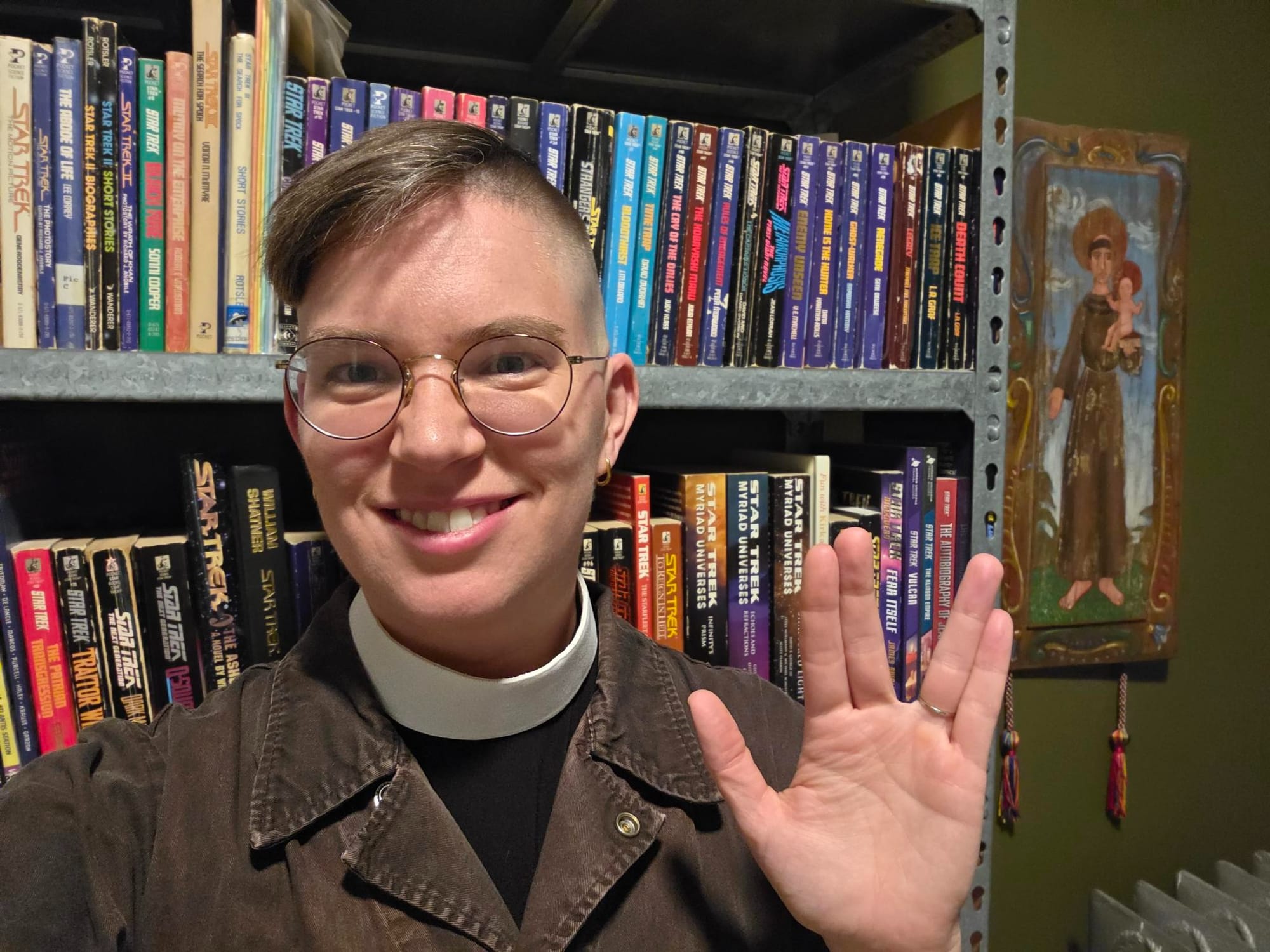
Why do humans like what we like, to the intensity that we do? Why do we form communities around it? Maybe it’s just an integral part of the human experience to be seeking to fill this void. Attempting to delve into the why of all this overlap, Father Flourish suggested that just as religion has historically provided meaning, so too does fandom; they’re not parallel communities because fandom is filling in the gap of religion, but rather because religion and fandom are both answers to the same problem. Each provides an alternative path in comparison to the structural systems most of us live within.
“I get really bored with some conversations about fandom as religion and religion as fandom, because they often miss the point,” they said. “We can’t get [ourselves] out of the logic of capitalism, but there’s another logic that’s also present. That’s true in religious spaces and it’s true in fan spaces, and it’s not true in all that many other places.”
For Sacha Judd, a Fansplaining contributor and Pentecostal Christian in Aotearoa New Zealand, it similarly makes sense: “I see really strong parallels between how faith communities build, support each other, and sometimes let one another down, in the way that I see fandom spaces operating.”
“Fandom and religion” isn’t a new conversation: one of the recurring refrains you’ll hear is that fandom is religion, especially at a time when participation in traditional religions is decling in many countries, including the U.S., which is moving away from religion at historic speed. But while the parallels do truly exist, it’s hard as a person of faith to look at a fandom as a replacement for what I have. Assuming that other people who aren’t religiously observant aren’t fulfilled unless they fill a gap of meaning not only feels rude, it doesn’t explain why religiously devout people are fans. If fandom is a replacement, what does that mean for individual practitioners who blend both?
In both of these realms, we look for more, and form communities that are constantly in conversation with one another. They inspire us to give freely to others, whether it’s via charity or creating fanworks. “At the heart of it, we're just looking for these places where we can come together around these shared experiences, and find support, and find common interests, and be held up by one another,” reflected Judd.
Fandom and faith might never cross paths for some, but it certainly feels as though, for many of us, there’s a logic of parallelism at play, where connectivity, creativity, and curiosity draw us all into these side-along lifestyles and practices.