Lanterns: Was It Worth It?
In episode 5, tensions mount in Rushville as Antaan arrives to take down the Manhunter, leading John to make a shocking choice.

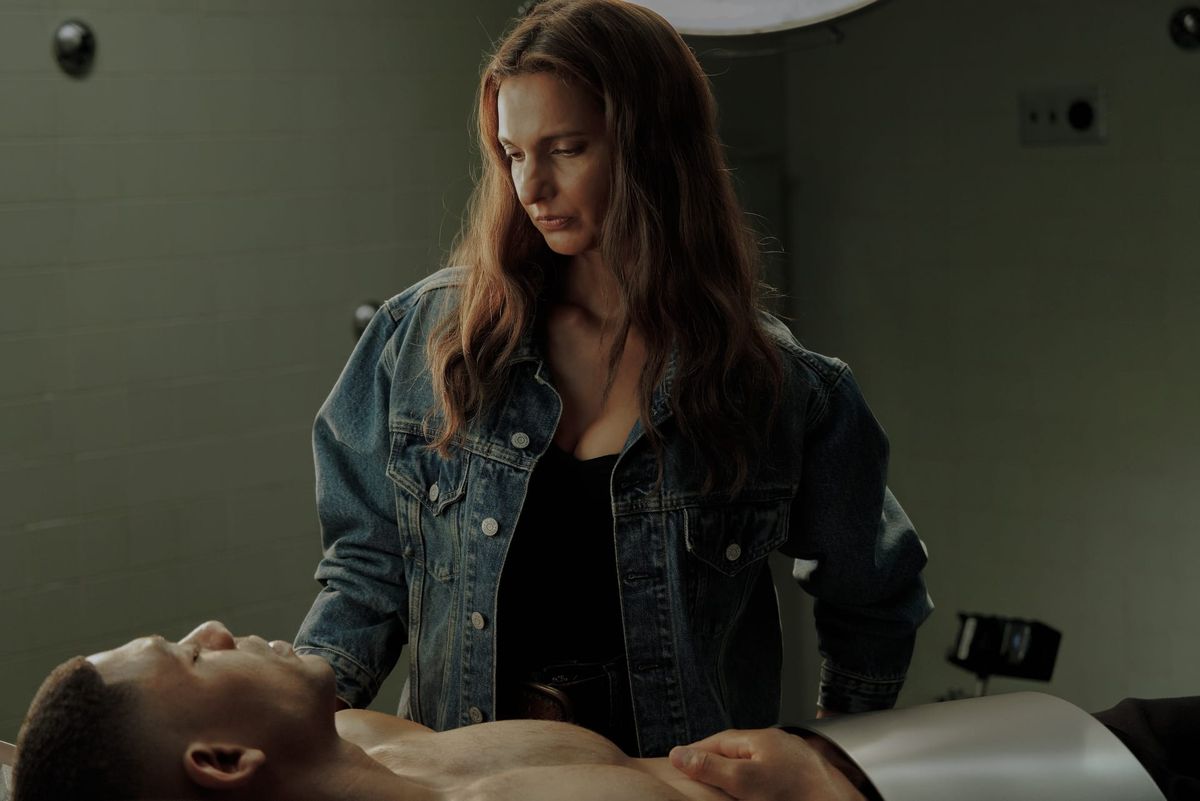
In 2007, Kerry Kane arrives in Rushville by accident, on the run from two gangsters who follow her all the way from Gotham. They corner her in Rushville’s diner. Her father was a snitch, and they've been sent to kill her, tying up one final loose end.
Kerry’s situation seems dire until Zoe shows up—a deceptively normal-looking middle-aged woman who swiftly snaps one gangster’s neck, then slams the other face-first onto the diner’s counter. Similar to the way she approached William Macon when he was dying of cancer, Zoe has identified Kerry as a vulnerable target for manipulation. It’s time to make a deal.
Threatening to kill his entire family if he disobeys, Zoe tells the surviving gangster to return to Gotham with proof of Kerry’s “death” (a severed finger), leaving Kerry to start a new life in Rushville. In return for her continued survival, Kerry must promise to protect Zoe when the time comes. Everyone in town has some reason to feel indebted to Zoe, and we now understand that Kerry’s reasons are more urgent than most.
Picking up where episode 4 left off, the 2016 storyline continues with John trapped in a crashed car as Hal stands outside, refusing to help him out. “I need to move you off the game board,” Hal callously explains. Having arranged a meeting with Antaan later that day, Hal plans to pit Antaan’s team against Macon’s militia, using them to distract each other so he can get to Zoe. John points out that the Guardians will surely take Hal’s ring if he chooses to kill Zoe— to which Hal derisively replies that Lanterns don’t kill. He intends to hand Zoe over to the Guardians and, in theory, regain their trust.
Hal used to save people from meteor strikes and natural disasters, but he now seems to have abandoned any lingering idealism. His main goal now is to impress the Guardians, regardless of the collateral damage. It’s hard to claim that Lanterns “don’t kill” when you’re setting up a confrontation where bystanders are guaranteed to get hurt.
Soon enough, sirens are going off across town, telling Rushville’s residents to mobilize against their benefactor’s enemies. Abandoning John in the car, Hal flies to the top of the water tower and activates the Halogram, showing him John’s drawing of Zoe and telling him to locate her as a “hostile E.T.” Once again, we’re reminded of the difference between the Hal of 2016 and the Hal of ten years ago, as the Halogram compliments John’s artwork, and says that he liked John when they last met, unaware that Hal may have left his trainee to die.
Hal’s next stop takes him to a road outside of town, touching down in front of Kerry’s car. He’s angry with her for sending them to investigate a dead end the night before: Hector Hammond, the Manhunter’s decoy. Kerry responds by pulling her gun and shooting at Hal, forcing him to raise a shield. Zoe, she explains, is watching everything from above, so they can only speak if Kerry looks like she’s actively trying to kill him. “I fucking owe her!” she yells. Rushville is her home—a home she only gained thanks to a “miracle” from Zoe.
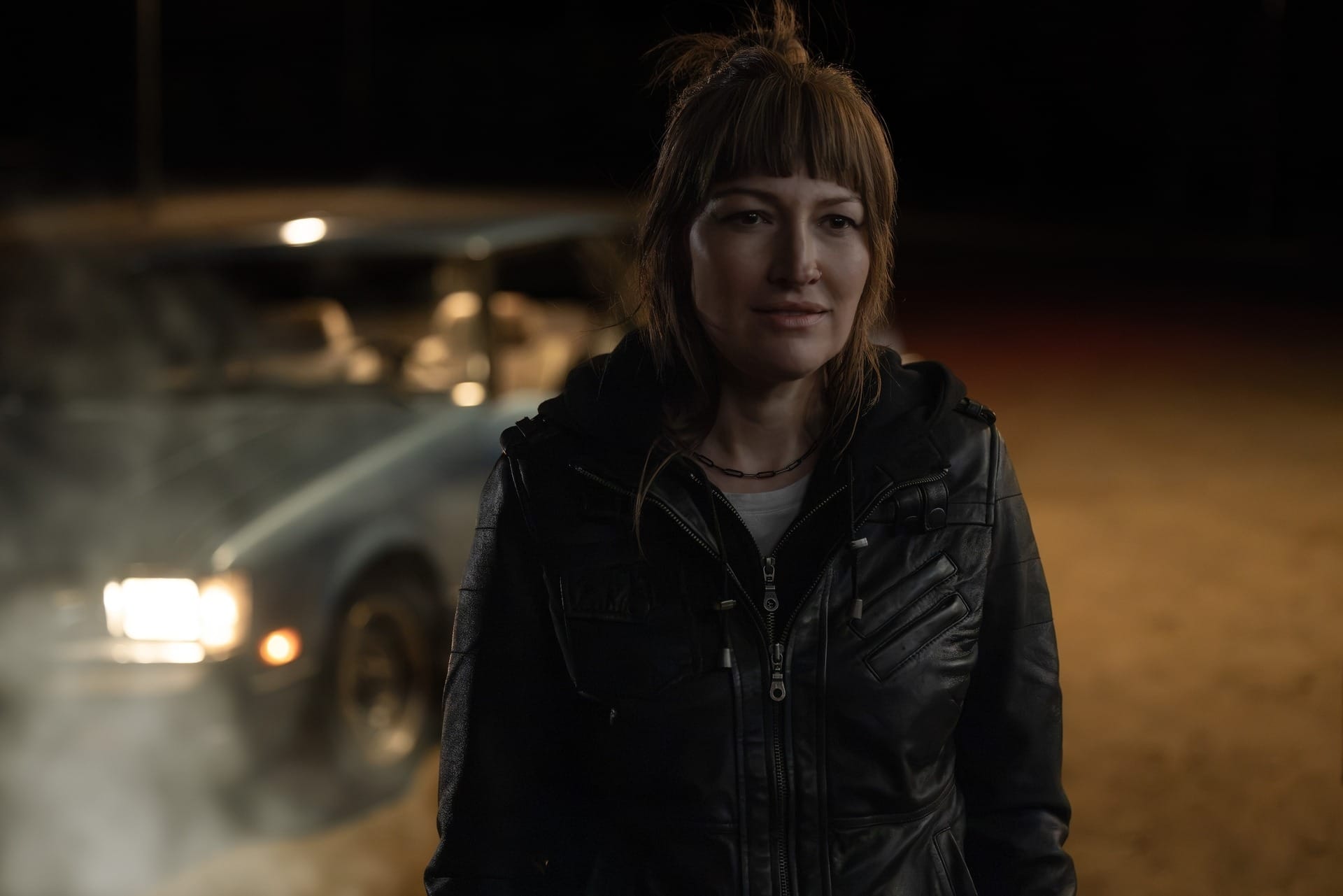
“You’re protecting a war criminal,” Hal argues, attempting to persuade Kerry that Zoe is an “it,” not a “she.” In last week’s episode, John joked that Hal has a crush on Kerry; we have to wonder if Hal’s anger partially stems from what he sees as a betrayal, facing off against a woman whom he’s grown to like. He offers to help Kerry and her son Noah leave town and escape the Manhunter’s influence, but Kerry stands firm. Running won’t save them. Manhunters are ruthless, and Zoe will have no qualms about harming the locals if she starts to feel truly threatened.
“Everything that happens next is on you,” says Kerry flatly. “Are you willing to accept those consequences when they come?”
To remind you of how far Zoe the Manhunter’s power extends: she has the undying loyalty of everyone in town, supported by alien satellite technology that allows her to surveil the population and target any nearby location with a laser weapon. This is how she locates John, calmly ignoring his pleas for help as his car bursts into flames.
The next thing John knows, he’s waking up in a windowless room with bandages covering debilitating burns across his entire body. Zoe is standing by his bedside, offering him a choice that isn’t really a choice at all. If he agrees to turn against Hal and take the ring for himself (and, of course, let Zoe go free), then she’ll heal his burns, leaving him as good as new.
Naturally John agrees, leading into a conversation about race, as he quips about Zoe’s skin-healing machine: “If I come out white, deal’s off.” He mentions that there’s always been a slight tension between him and his older brothers, both of whom are darker skinned than he is, and believe that “life gave him a better shake” due to colorism. Here, the show is tacitly acknowledging an issue around Aaron Pierre’s casting: the fact that he is lighter-skinned than the original John Stewart in the comics, who was modeled on Sidney Poitier. In turn, this leads John to ask Zoe about her own more abstract relationship to her ethnicity.
John understands now that Zoe’s human identity and appearance—and by extension, the conversation they shared in the diner, bonding over their experiences as people of color—is entirely fabricated. He’s curious about why she chose this body, establishing herself on Earth as an Indian-American woman. Zoe replies that she has had many “skins” in her lifetime, but she chose this one for “power.”
“How do you conquer a community, a culture, a planet? You come to it as an outsider. Fastest way to understanding a civilization is if you start at a disadvantage.” She goes on to explain that “adversity is seen as some insurmountable barrier. But I need that barrier in order to achieve a higher vantage point.” She sees prejudice and adversity not as “obstacles” but as “the crucible that forges your greatest self.”
Given that Zoe is a shapeshifting genocidal robot, we can safely assume that the show isn’t asking us to endorse this peculiar perspective on Earth’s racial dynamics. That being said, the narrative purpose of this conversation is a little hard to parse.
In some respects, Zoe’s statement overlaps with the themes of John’s backstory. Motivated by a desire to counteract structural prejudice, John’s parents put him through hell, hoping to shape him into a fearless and self-sufficient adult. They certainly believe in the crucible that Zoe mentions, and the show draws attention to Hal’s white privilege.
At the same time, Zoe’s argument is obviously nonsensical. Her experience of life as an Indian-American woman is superficial and inauthentic, because she invented her cultural background for cynical purposes. Her comments about adversity are also very hard to accept at face value, considering her technological advantages as a Manhunter, and her emotional distance from human prejudice. Meanwhile we don’t learn anything about her identity as a Manhunter.
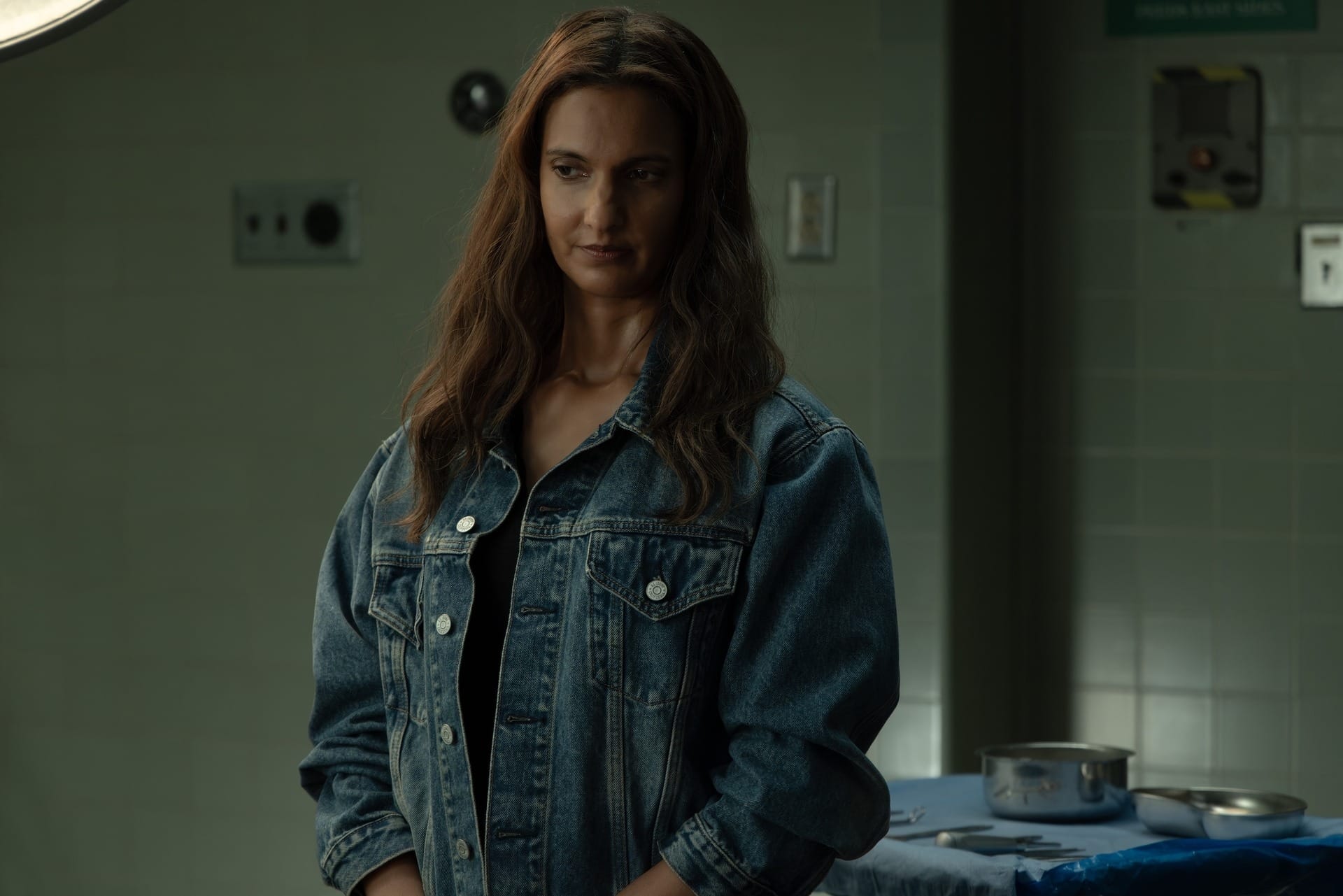
Zoe is the last of her kind; a species who were created to serve the Guardians, and were then destroyed by their own creators. Did Manhunters have a culture of their own? What was their conception of good and evil? How do their emotions function? Earlier in the episode, Zoe unapologetically tells her young grandson Noah that “some people will die today.” Those impending deaths could easily include Noah’s parents, and Zoe doesn’t seem overly sorrowful about her own husband’s demise. She sees these deaths as a necessity. The show wisely steers clear of using the Manhunters as a direct allegory for human power structures or minority identities, but we’re given so little information about their background that Zoe exists as an oddly contextless entity: an antagonist whose level of free will is never fully clarified.
The strangest element of this scene is the way Zoe’s beliefs about “adversity” are presented without a counter-argument. It would make sense for John to push back and point out that her philosophy is both absurd and offensive. Yet the show basically leaves her point as-is, and once she heals John’s burns, the conversation pivots to her original arrival on Earth.
“You killed Abin Sur,” says John. “He brought you here to spare you.” In Zoe's words, the Guardians “flipped a switch” and killed all but one of the Manhunters as punishment for their transgressions, unintentionally leaving her as the sole survivor. Abin Sur sympathized, but even though he tried to hide her from the Guardians, Zoe killed him because—as John theorizes—it’s in her nature. “I had to,” Zoe agrees. “I couldn’t help it.” Her drive for self-preservation is characterized as an inexhaustible compulsion, which puts a different spin on the love scene in episode 4. Maybe she wanted John to leave town because if he gets in her way, she knows she will have to kill him as well.
This also brings to mind episode 3’s interview sequence, where Lianna attempted to interrogate John’s “programming,” struggling to understand the human way of raising children. If the Guardians launched the Green Lanterns to replace the Manhunters, then they were presumably hoping to recruit officers who can think for themselves instead of following a pre-programmed sense of justice. Yet the Guardians also desire obedience and loyalty, with Hal and Sinestro representing two dangerous failures in their recruitment methods. Frustratingly, we don’t get to meet any other Lanterns, and we don’t have any insight into why Sinestro rebelled and killed a Guardian. Maybe he had a good reason!
We also know very little about why the Manhunters went on their genocidal rampage, but we’re invited to perceive them through a strict lens of nature versus nurture. Zoe is certainly a person, but she’s different from a human person. Her ruthless survival strategies are presented as an inbuilt trait that she cannot disobey. She literally had to kill Abin Sur, even though he saved her life. And now she has to rain destruction down on Rushville, even though she’s made a life here and married a human man.
When John acknowledges this cornerstone of her personality, she strokes a hand down his face. “That’s why I’m so drawn to you, John. You really see me.” But does she actually believe that? All of her relationships are tools for manipulation, and it’s up to us to guess the truth of her feelings toward John.
As Hal returns to town, he begins to see the bloody consequences of his choice to pit Antaan against Macon’s army. When Antaan’s men arrived, the locals met them with open gunfire in the streets, leading to multiple casualties as Antaan’s team searched for their target. It’s another moment where Lanterns plays into its Western roots, with Hal arranging to meet with Antaan at the diner—Rushville’s equivalent of a plot-relevant saloon.
When Hal tells Antaan that Macon is the Manhunter, Antaan is highly skeptical—in part because he doesn’t trust Lanterns, and in part because Macon is an unexpected choice for the Manhunter’s human persona. Antaan is aware of the Manhunter’s love of “adversity,” and posing a rich white guy doesn’t really seem like their speed.
Hoping to sabotage any of Antaan’s lingering trust in John, Hal also tells him that John has been “compromised” by the Manhunter, which is technically true. But as Antaan notes, sex is “one of the Manhunter’s greatest weapons,” typically attempting to seduce the “alpha,” the strongest individual in a community. So if John is compromised and Macon is the Manhunter, then John and Macon must have had “coitus.”
Hal has no choice but to go along with this assumption, but once Antaan mentions Manhunters targeting the “alpha,” Hal immediately feels the need to defend his own masculinity. John may have had “a little coitus” with the Manhunter, Hal admits, but obviously Hal himself was Macon’s main target. Hal would rather have Antaan believe that he fucked Macon than have Antaan believe that John is more of an “alpha” than he is. It’s a rather convoluted piece of psychosexual absurdity from Hal, who is deeply insecure about the possibility of John replacing him as a younger, fitter model.
“You always presented as heterosexual,” says Antaan, surprised. Modestly, Hal explains that thanks to his experiences traveling the galaxy, he’s no longer restricted by petty human concerns like gender. (Canonically, this is a lie, but for any Hal/Sinestro shippers out there, it puts an amusing twist on his earlier visit to Sinestro’s prison, which Hal later covered up by telling John he was “getting laid in space.” Maybe he was telling the truth! The Guardians are, after all, worried about Hal’s troublingly close relationship with his former mentor.)
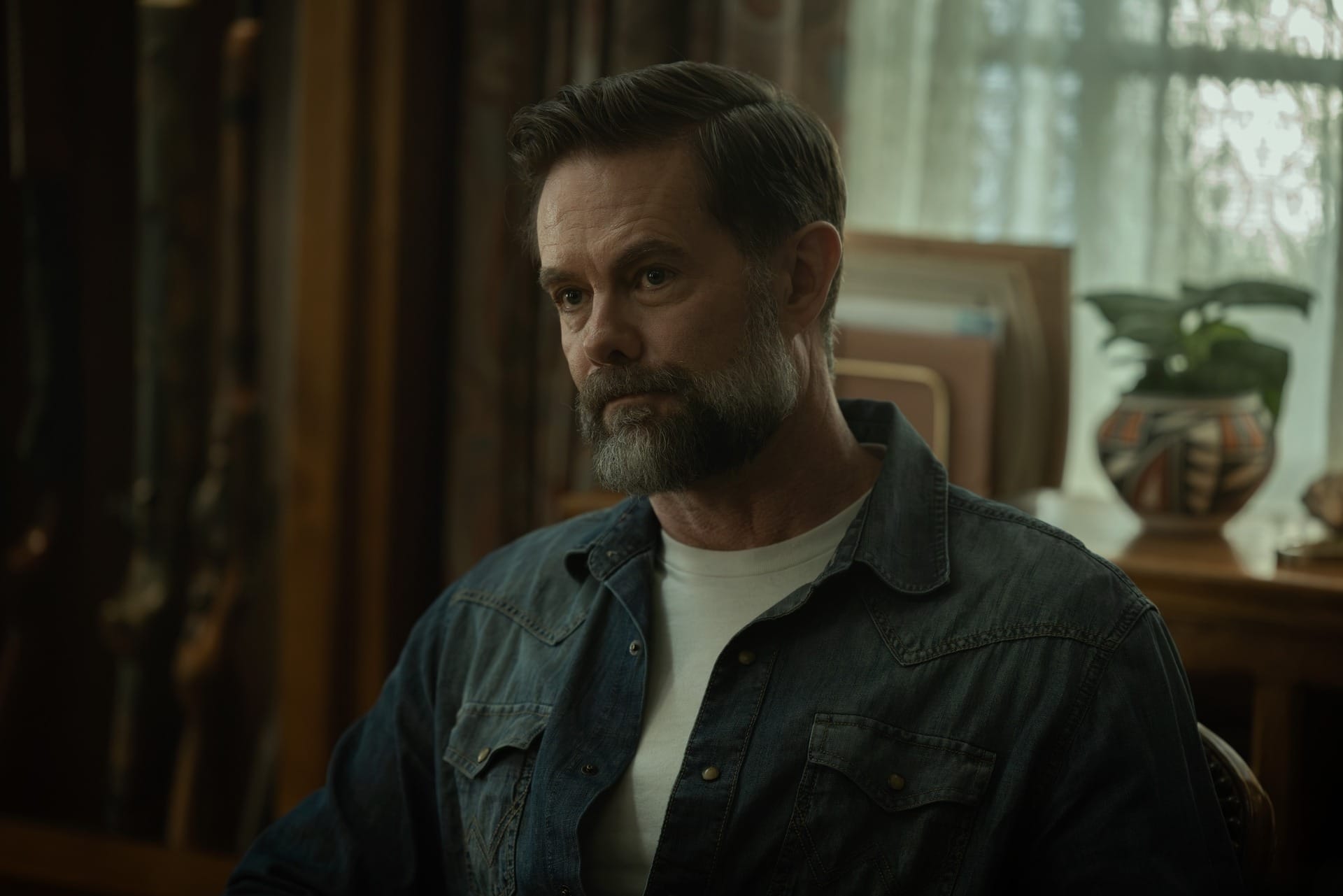
Antaan is now convinced that Macon is his target, but he makes sure to hammer home the point of Hal’s culpability before he leaves, stating that if Hal is lying, innocent people will die. He and his men then drive to Macon’s ranch, with two of them blowing themselves up to kill the guards and destroy the weenie—the same suicide-bomb technology that Waylon Sanders employed in episode 1.
Echoing my criticism of Macon’s guards last week, Antaan’s followers are similarly lacking in characterization. Presumably they’re aliens from Antaan’s home planet, but none of them have names or personalities, and they all look like they were selected straight from central casting to play mercenaries in a superhero show.
Leaving the newly healed John under armed guard in his hospital room, Zoe knows that time is growing short. Watching satellite footage in his office, Macon calls her to say goodbye. Interestingly, he speaks to her in an alien language, indicating just how much she’s taught him during their marriage.
“Tell me you’re ready,” she says, and thanks him for everything he’s done for her. He thanks her in return, and professes his love one last time. They’ve evidently been preparing for this moment for years, allowing Macon to impersonate the Manhunter while Zoe makes her escape. Settling down at his desk, he waits for Antaan to walk through the door, pressing a hidden button that fixes Antaan with a laser-targeting system as soon as he arrives.
At this point, Antaan is somewhat sure that Macon is the Manhunter, but he still needs to be convinced, remarking that “it’s not like you to take the form of an elite.” They’re both speaking the same language that Zoe used earlier, and we learn that Antaan was once in a romantic relationship with the Manhunter—a relationship that made the Manhunter’s betrayal all the more painful. Intensely paranoid about the Manhunter’s duplicitous nature, Antaan tries to poke holes in Macon’s cover story, asking him questions that only the Manhunter should know. What did he say when they first met? What was the last thing Anton said to him? What were their children’s names? “We couldn’t conceive,” answers Macon, feigning sorrow.
Antaan’s final argument takes aim at the Manhunter’s ruthlessness, pointing out that if Macon was really “him,” then he would have killed Antaan on sight, rather than run any further risks. “You’ve mastered my tongue, my memories, my past,” says Antaan. “Yet one thing betrays you. That you would never welcome death.” Leaping across the desk, he pins Macon down, and carves out his heart: an entirely human heart that fails to crystallize, thus proving that Macon is not his target.
This confrontation brings to mind a topic I discussed a few episodes ago: Lanterns’ disinterest in sexuality. As a show that exists downstream of True Detective, it seems keen to distance itself from True Detective’s notoriously misogynistic depiction of women and sex, but in doing so, Lanterns may go too far in the opposite direction. Zoe is a femme fatale villain who uses seduction to manipulate her adversaries, but the show fails to evoke a convincing level of sexual tension between her and John, and doesn’t give them enough screentime to create a deeper relationship. Meanwhile, this meeting between Macon and Antaan introduces some intriguing ideas about gender and sexuality that remain unexplored.
When I interviewed Garret Dillahunt for TV Guide, he said that Zoe had a profound impact on Macon’s view of relationships. Macon gives every impression of being a straight guy with vaguely conservative vibes, but unlike John (who originally believed Zoe to be a human woman), Macon knowingly married an alien who has no fixed gender, and who is far more powerful than he is. Zoe’s former relationship with Antaan brings the question of gender into the foreground, because Antaan doesn’t seem to perceive Zoe as female. We also have no idea what Antaan looks like or how he identifies when he’s not disguised in human form. But none of this is treated as a queer narrative, because the show isn’t interested in queerness, gender, or sexuality—an impressive feat in the context of Zoe’s entire deal.
Uncaring about the destruction unfolding around him, Hal locates Zoe with help from the Halogram and handcuffs her to a helicopter. In response, her followers unleash a wave of the black-smoke weapon they used against Hal and John during the weenie infiltration sequence. As a cloud of smoke rises around them, Antaan arrives at the scene, activating his internal detonation device in a last-ditch attempt to kill Zoe. Except Hal then contains the explosion in a bubble, so Antaan dies in vain. In the ensuing confusion, Zoe escapes, leaving Hal with no choice but to return to his motel to recharge his ring, which is running out of power.
It doesn’t take long for John to break out of the hospital where Zoe healed his burns, and he’s now very much on the warpath. Striding through the carnage of Rushville’s town center, he calls his parents to let them know he’s had enough of Hal, and is now planning to take the ring “clean off that motherfucker’s finger.” Stealing a gun along the way, John tracks Hal back to the motel, where John tackles him into an all-out brawl.
With the ring nearly out of juice, it’s hardly a fair fight. John is younger, taller, and obviously far more physically fit. As John knocks Hal around, the only thing that stops him from winning within minutes is an unexpected attack from Zoe’s laser weapon, which blows up the room, and leaves Hal trapped under the rubble as John stumbles outside.
Believing that John is still committed to their deal, Zoe arrives while Hal is still pinned to the ground, and she informs him smugly that John “traded his life for yours.” Except Hal understands John better than she does, pointing out that if John wanted him dead, then he’d be dead. John must have left him there as bait. Hiding a respectable distance from the motel, John now has Zoe in the sights of his sniper rifle. “I see you,” he says quietly as she turns to look—and then he shoots her in the head. The last Manhunter is dead, a fact that John double-checks by cutting out her heart, which crystallizes in his hands.
“Was it worth it?” asks Hal, getting in one last dig as John wrestles the ring off his finger. “They replaced me. They’ll replace you.” We already know this warning will come true, because in a few years’ time, Guy Gardner will be Earth’s Green Lantern.
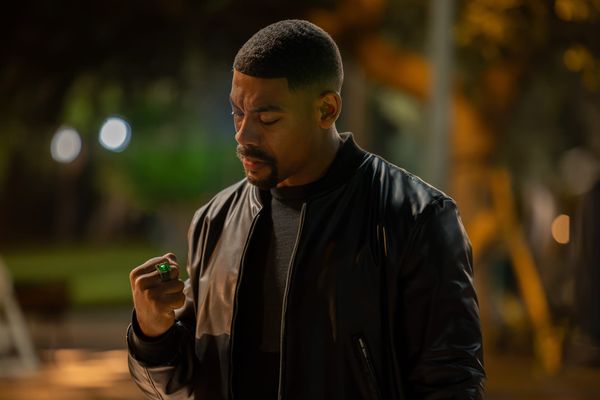
The question of was it worth it lingers as John walks through town with the lantern in one hand and a backpack containing Zoe’s heart in the other. Corpses and severed body parts litter the streets, and many buildings have been damaged or destroyed. Just as Kerry warned, Hal’s actions had consequences beyond anything he bothered to imagine—and John is hardly blameless either.
Lianna the Guardian is waiting to meet him at the town’s bar, where she compliments him on gaining the ring, and then asks him what’s in the bag. “Your sins and consequences,” John replies. Learning that he’s delivering proof that the last Manhunter has been destroyed, she admits that the Guardians made a mistake by creating them in the first place. However, she isn’t prepared for what John will do next. Removing the ring, he rejects the job he’s worked so hard to earn.
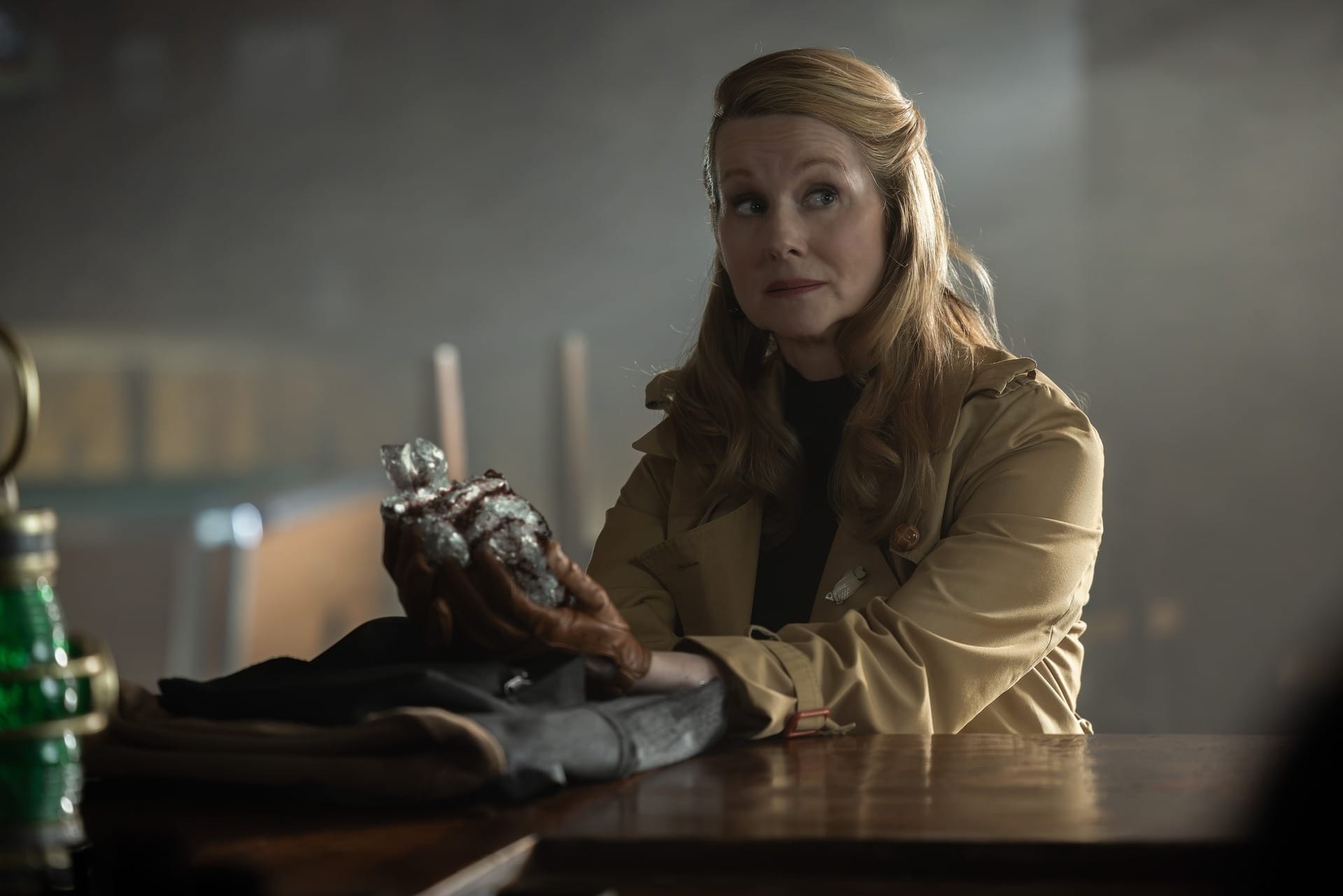
John has spent his entire life imagining what it would be like to become a Lantern, but now it’s finally happened, he just feels empty. “Hal betrayed everything to keep this ring,” he says. “It broke him.” Hal probably doesn’t remember why he wanted the ring in the first place, and now, neither does John.
Episode 1 set out two defining questions for the rest of the season: Who killed Hal Jordan, and how does John Stewart come to be a Green Lantern? Despite all current evidence to the contrary, we can be pretty sure that John will be a Lantern some day—in part because he’s set to appear in the next Superman movie, and in part because it would be a wildly unpopular choice to make a show about a Black superhero and then reveal that he doesn’t get to be a superhero at all. But episode 5 reframes this question from “how” to “why.” After rejecting the ring for entirely valid moral reasons, what will cause John to make a different choice in the future? Can the Green Lantern Corps possibly change that much by 2026?
Interpreting Lanterns as an allegorical twist on the cop-show genre, John and Hal both supposedly want to use their power for good, but are corrupted by the flawed system in which they work. With better resources and better mentorship, Hal might have walked a different path. If the Guardians had a more nuanced understanding of human culture, maybe John would have had a less traumatic childhood. And that’s before we get into the ethical complexities of how the ring selects its bearer.
As we see in the aftermath of Rushville’s destruction, the Guardians don’t particularly care about the wellbeing of human bystanders. Lianna’s main priorities are the death of the Manhunter and the transfer of power from Hal to John. Beyond that, she seems unmoved, failing to realize that John would find this experience traumatic enough to abandon his aspirations to become a Lantern. At present, it seems that the only way to do good work as a Lantern is to simultaneously ignore the Guardians’ values and somehow avoid getting fired for insubordination—a narrow line that John is currently unprepared to tread.