Lanterns: Infiltrating the Weenie
In episode 4, Hal and John plan to sneak onto William Macon’s property in their search for Rushville’s hidden Manhunter.

Sinestro’s supervillain vibes were already off the charts during his brief appearance in episode 2, where he actively encouraged Hal to see John as a threat. We return to this scene in the opening of episode 4 after last week’s flashbacks. Now, Sinestro goes a step further, advising Hal that he’ll have to kill John if he wants to retain control of the ring.
We know that Hal wasn’t always as obnoxious as he appears in 2016. He used to be more dedicated to his Lantern duties, and judging by the friendly demeanor of his decade-old holographic replica, that personality shift took place sometime in the past ten years—potentially in reaction to Sinestro’s betrayal. In 2016, Hal identifies as a lone wolf, stating that personal attachments are a weakness. Yet he appears to be in denial about his own lingering attachment to Sinestro, as evidenced by how easily Sinestro manipulates him during this prison visit.
Hal has traveled all the way to Sinestro’s prison to ask about Manhunters, but Sinestro refuses to answer until Hal has shared his thoughts on John’s traineeship. “All he does is follow orders,” Hal complains, describing John as “too perfect,” and saying that he’s just a “contingency plan” rather than Hal’s potential replacement. Hal’s resentment is embarrassingly close to the surface, and Sinestro’s advice is simple: John is the enemy, and Hal must now defeat him by any means necessary.
At present, John and Hal are hoping to identify the Manhunter in Rushville and hand them over to Antaan, the alien who kidnapped John in episode 2. But Sinestro suggests a different strategy. Hal should continue the investigation alone and deliver the Manhunter directly to the Guardians, thus proving his own worth and disgracing John in the process. (Since John chose not to tell the Guardians about the Manhunter’s existence, this plan would reveal his duplicity while Hal saves the day, offering a valuable asset to his bosses.) Sinestro also advises Hal to pretend that John really is proving himself, in the hopes that John will become overconfident and reckless. “Is that how you fooled me?” Hal asks bitterly.
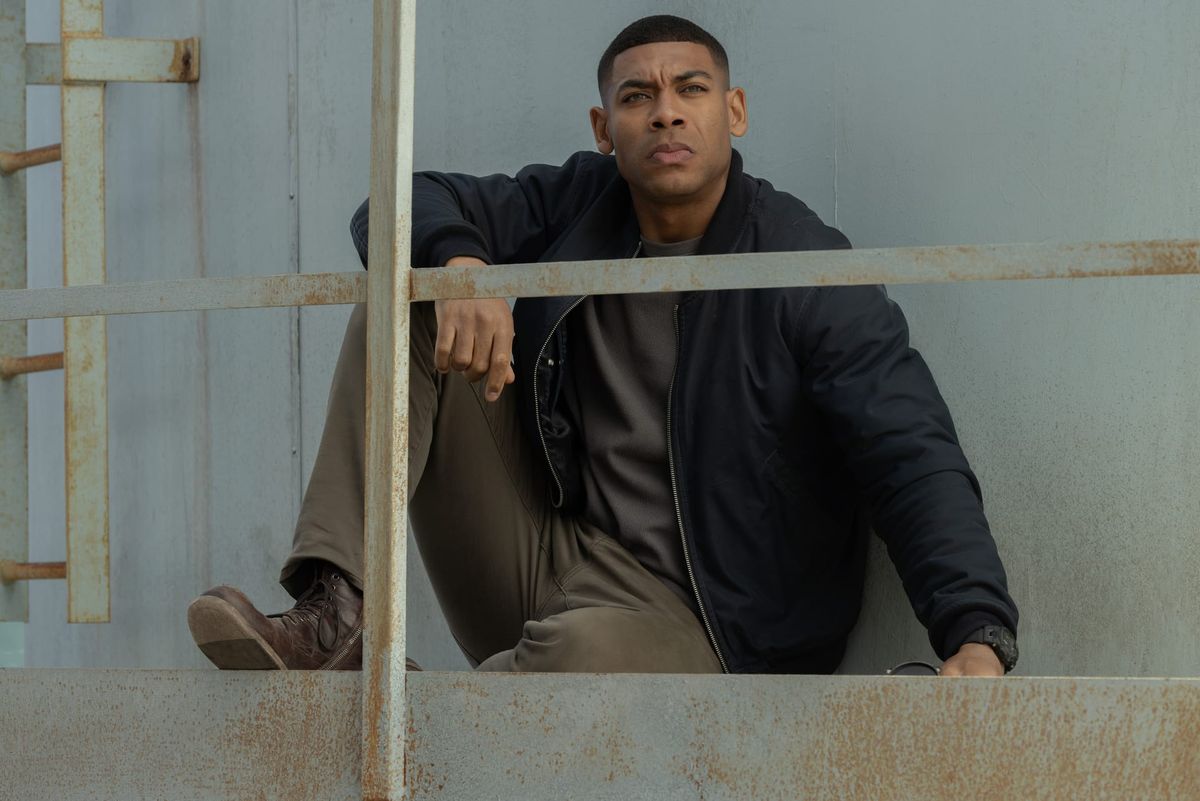
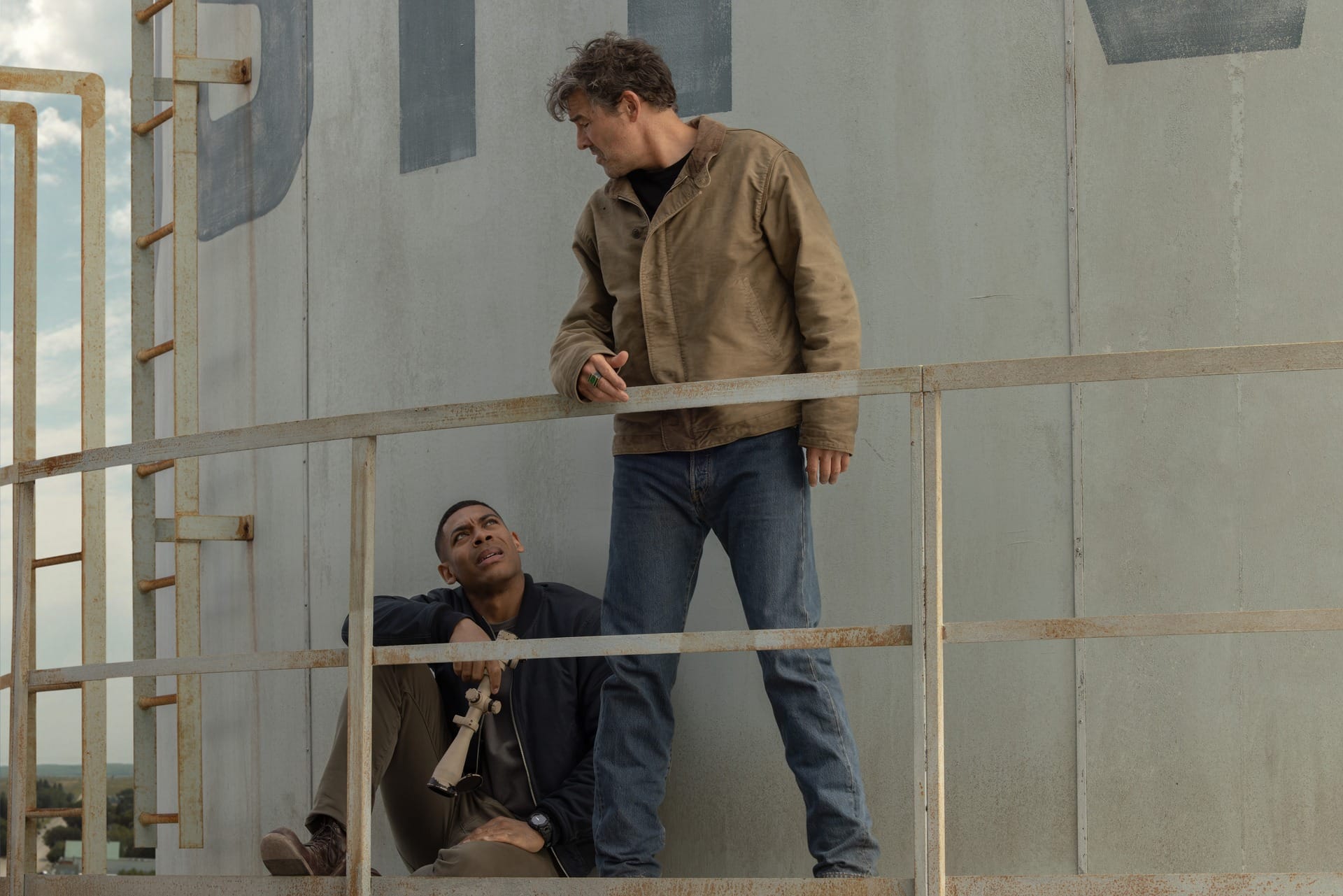
Back in Rushville, John is hard at work. Visiting a local gun store, he buys a sniper scope and installs himself in the town’s water tower, where Hal finds him surveilling William Macon’s compound. Apparently a helicopter keeps visiting Macon’s property at regular intervals, landing in a location that’s visible from Macon’s surrounding watchtowers, but hard to spot from outside. John notes that this is a perfect location for a “weenie,” an architectural term I’m fairly sure the show does not understand.
A weenie is a concept invented by Walt Disney for the theme parks: weenies are designed to attract attention, acting as “visual magnets” to help guide people around a park: the Tower of Terror, the big Disney castles, etc. But John is using the term to describe a building that’s purposefully hidden from outsiders. He only deduces its existence by watching the compound from afar, theorizing that the weenie would be a likely location for Macon’s secret benefactor (i.e., the Manhunter) to hide. Maybe I’m misunderstanding something here, but there’s a significant difference between a visual magnet and a building that’s literally hidden from outside eyes—meaning this episode is named after a reference that doesn't fully make sense. Good word, though!
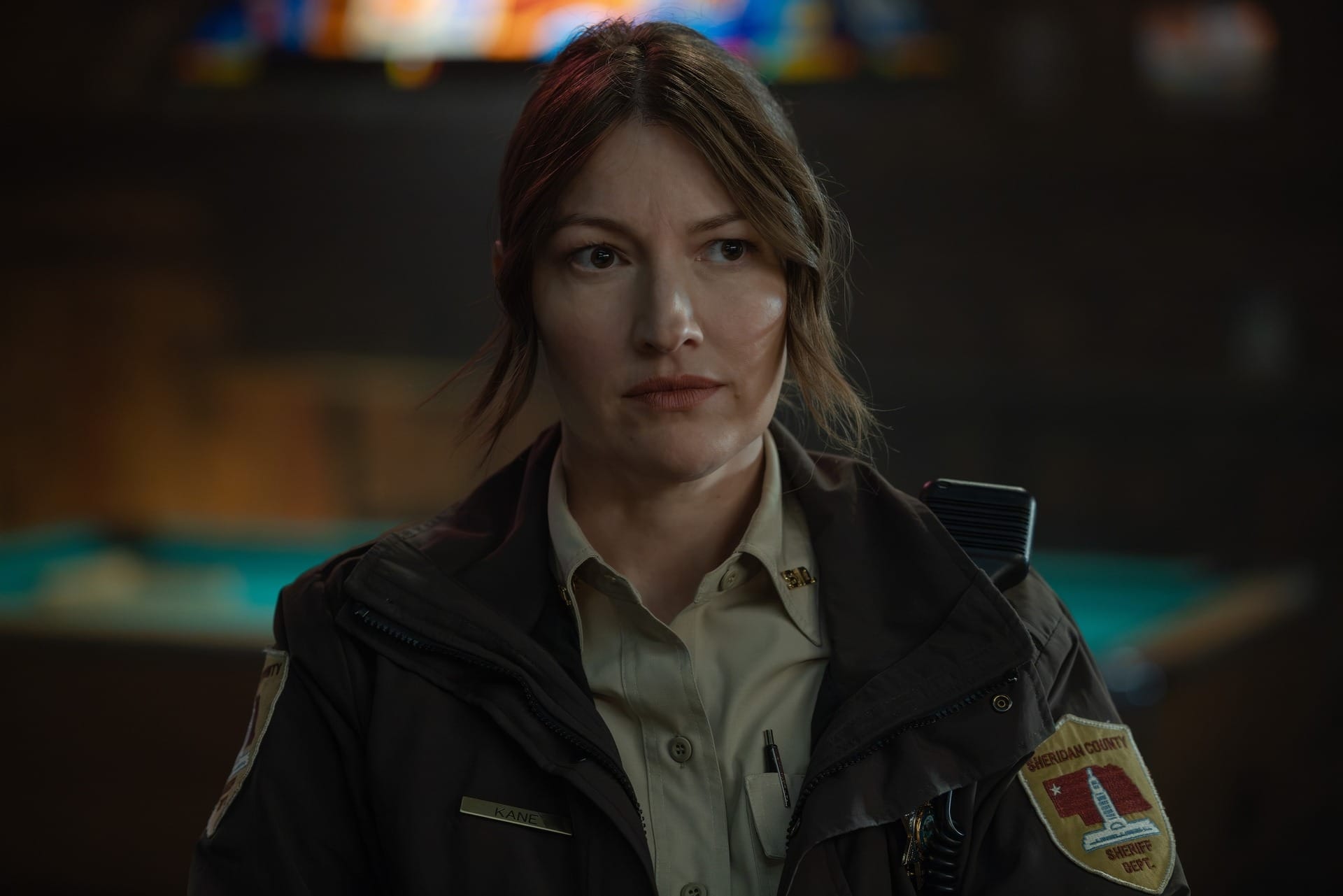
Architectural nitpicking aside, watching the helicopter land near the weenie prompts Hal and John to hatch a plan. They need to infiltrate the weenie. Meeting up with Sheriff Kerry, they tell her about the Manhunter—and about Antaan’s threat to destroy the town if the Manhunter isn’t identified by tomorrow. Conveniently, this scene also eliminates Kerry as a suspect because her personal records date back to before when the Manhunter arrived on Earth with Abin Sur. (Kerry was born in Gotham, and since her surname is Kane, she may well be related to Bruce Wayne’s maternal family.)
Despite her earlier requests that Hal leave town, Kerry now understands the gravity of the situation. If the Manhunter is indeed Macon's secret benefactor, then breaking into the compound may be the only way to catch him, so she gives Hal and John the go-ahead to sneak in tonight.
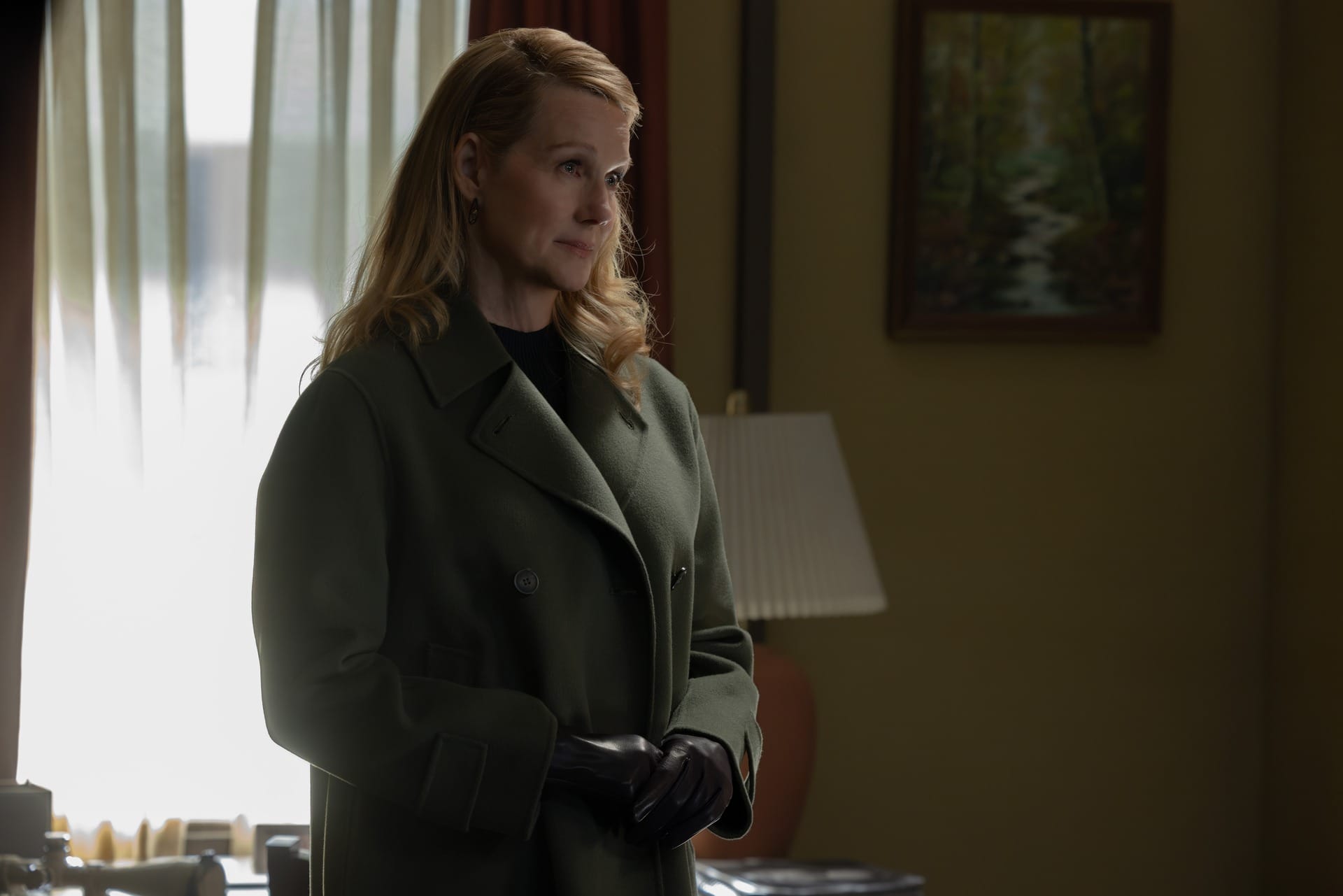
As they wait for nightfall, John receives an unexpected visitor: Lianna, the Guardian played by Laura Linney. Earlier in the episode, John’s father called him to say the Guardians wanted him to get in contact, suggesting that John has been dodging his bosses’ calls. Now Lianna has shown up to ask why he and Hal are still lingering in Rushville—and to tell John where Hal went last night. By visiting Sinestro in prison and “violating his oath,” Hal has accelerated the Guardians’ plan to replace him. Lianna tells John that next time Hal gives him the ring, he should immediately recite the Lantern oath and take over Hal’s position by force.
When John balks, Lianna wonders aloud if John is a suitable candidate after all. Does he share “his father’s weakness” of succumbing to fear? Provoking him a little further, Lianna reveals that Hal has filed multiple reports describing John as weak and uncreative. This is enough to make John abandon his qualms, finally voicing his lack of respect for Hal’s qualifications. “He’s not worthy of the massive power of the ring. He didn’t do shit to earn it, and every time he looks at me, he realizes that I’ll do it better than he’s ever done it before.”
So here we have Lianna and Sinestro acting as opposing forces in what now feels like a factional struggle for control of Hal’s ring, each backing their own candidate without a single mention of the moral purpose of a Lantern’s duties. Yet neither John nor Hal is quite as cutthroat as their respective mentors—in Hal’s case, because he doesn’t want to commit a coldblooded murder, and in John’s case, because he can’t bring himself to fully trust the Guardians. We root for John because he’s more relatable (and more stable) than Hal, but if we take a step back to look at the big picture here, John doesn’t yet reflect the values we tend to expect from a superhero.
The show has already explored the problematic repercussions of John’s loyalty to the chain of command, with John making immense sacrifices for authority figures who are morally ambiguous at best. He’s determined to become a Green Lantern because he’s been told from childhood that it’s his destiny, and because he believes that he’ll do a better job than Hal. But once he wields that power, will he strike out on his own terms to protect the vulnerable, or will he continue to follow orders from leaders who don’t deserve his trust? After all, if he steps too far out of line, then the Guardians may decide that he no longer deserves to be a Lantern, either.
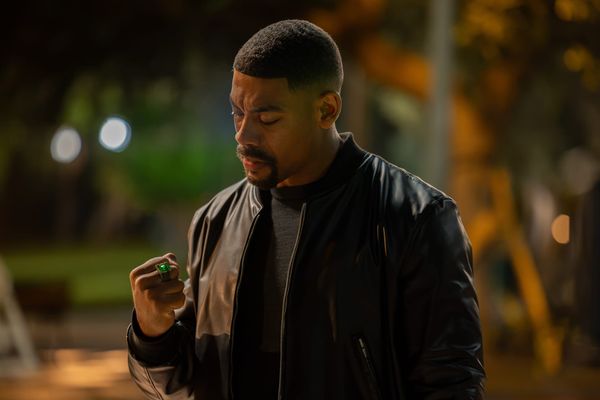
As you might expect, Hal’s initial break-in plan is just to wing it. John comes up with something more technical: a diagram of a complicated tunnelling device, which they can use to dig a hole under the compound and sneak past the guards. This serves two purposes: to show off his artistic expertise to Hal (“I’m creative,” John says drily), and to get his hands on the ring. It’s a good plan, because Hal lacks the technical ability to manifest this kind of complicated construct. Pretending that he’s graciously allowing John to do another training exercise, Hal hands over the ring so John can take charge.
As they tunnel their way into Macon’s ranch—easily the coolest use of the ring thus far—John reveals that he went to art school after leaving the Marines (“Who are you!?” exclaims Hal), and they get chatting about their parents. Both of Hal’s are dead, and Hal claims that it’s better that way: “No ties.”
Arriving at their target, Hal and John climb to the surface and sneak into the weenie, which turns out to be a warehouse full of alien weaponry, confirming that Macon’s benefactor is an alien. Useful information, but they botch their mission almost immediately, triggering a pressure alarm. A squad of guards rush in with guns that emit an opaque black smoke, which nullifies the ring’s powers, indicating that Macon was already prepared to fight a Lantern.
I’ve noted before that Lanterns doesn’t really function on the same level as other primetime HBO dramas like Succession or Game of Thrones. In many respects, it’s a well-conceived reboot of an ailing superhero franchise, but its writing is pretty straightforward and its production values are bland. In this sequence, I was struck by a recurring problem that’s less easy to pin down: the show’s lack of interest in its tertiary characters.
In superhero fiction, we’re used to seeing villains command a loyal army of faceless goons, but by adhering to this trope in a supposedly “grounded” crime drama, Lanterns reveals the shallowness of its setting. Recruited from a small pool of Rushville locals, Macon’s militia are depicted as efficient, obedient, and well-trained, quickly delivering John and Hal to Macon’s office after responding to a late-night alarm.
Does this feel realistic to human nature? I don’t think so. These men aren’t given personalities or motives or flaws, because their role in the story is entirely functional. That’s fine in a Batman movie, but here it speaks to a broader issue that impacts the mystery that John and Hal are attempting to solve. If Lanterns only bothers to flesh out a small number of core characters, then we end up with a similarly small pool of potential Manhunters, undercutting the show’s tension as either a whodunnit or a psychological drama about undercover aliens. Battlestar Galactica, this ain’t.
Playing around with the ongoing theme of masculine insecurity, this confrontation between Hal, John, and Macon begins with Macon stripping naked in the middle of his office. His guards have confiscated Hal’s ring, rendering Hal powerless as they hold him and John at gunpoint. (And, incidentally, removing John’s chance to take charge of the ring.) Macon’s next move is to put on some classical music for ambience, and ask John to show off his art skills by drawing him in the nude; a power move that makes this scene infinitely funnier than a typical “supervillain explains his evil scheme” scenario.
Hal finds this wildly uncomfortable, but John is unmoved, politely instructing Macon on how to pose. When Hal points out that John can draw from memory so it isn’t actually necessary for Macon to have his dick out, Macon remarks that John should therefore be able to draw his wife Zoe as well. So this is a power play on two levels, allowing Macon to keep Hal off-balance while taunting a man who slept with his wife. John is a lot harder to rattle, however—despite the fact that Zoe is here in the same room, witnessing this awkward scene play out alongside Macon’s guards.
Macon can’t kill a Lantern without attracting the Guardians’ attention, so this is his last-ditch attempt to persuade John and Hal to leave town. Previously, Antaan described Manhunters as master manipulators who can insert themselves into any community, and here, Macon lays out how this works for Rushville. The truth is that everyone in town is in on the secret, and they want Macon’s benefactor to stick around. Thanks to the Manhunter’s technology, Rushville’s crops are flourishing, its children are thriving, and nobody gets sick. Hence the empty hospital in episode 2. “He takes care of us in exchange for our protection,” says Macon, clarifying why everyone in town is so opposed to John and Hal’s presence. It’s a Wicker Man situation, just without the horror atmosphere (a subgenre that would have given the show a bit more punch).
Macon explains that his benefactor first approached him when he was dying of cancer, curing him as if by magic. This was also when Macon met Zoe, who was working as his nurse at the time. By this point, it seems all too obvious that Zoe and the benefactor/Manhunter are one and the same, but the show teases things out to an extent that I honestly found quite frustrating.
The mystery of the Manhunter’s identity is only in focus for two episodes, which isn’t enough time to give much emotional weight to the eventual reveal. We also have a limited pool of likely suspects (William Macon, Kerry, and Zoe), and when this episode ruled Kerry out of contention, I immediately had questions. Hal tells us that she can’t be the Manhunter because there are records of her existence dating back to her youth in Gotham, but given everything else the Manhunter can do, couldn’t they also fabricate a papertrail? It just isn’t a very tight piece of mystery writing, but the show needs to keep Kerry onside as Hal and John’s ally—albeit an ally who was in on the town’s secret all along, and only helped them because a bigger threat came knocking.
In the end, Kerry is the only reason John escapes this meeting unscathed. Macon can’t get away with killing Hal, but he could kill John, and things are getting dicey when Kerry shows up to take John and Hal into protective custody, driving them back to their motel. She’s furious, scolding them for whiffing their one chance to save the town. Interestingly, she also reveals that Zoe was the one to call and ask her to mount a rescue.
That night at the motel, John has another uninvited guest: Zoe, whom he greets at gunpoint, demanding to know if she’s here on Macon’s orders. She says that she came alone, and they kiss, falling into bed together—this time for a more intimate sex scene than their rushed hookup in episode 1.
“This has to be the last time,” says Zoe, warning John that if he doesn’t leave town, he’ll be killed. But John won’t be persuaded, saying that he feels like everyone is lying to him these days, even Zoe and Hal. He’s not wrong.
“When I tell you what I know, everything changes,” says Zoe. “I can’t do that.”
“Because of your husband?” John asks. “What do you owe him?”
“I don’t owe him,” Zoe replies. “He owes me.” This adds yet more credence to the theory that she’s the Manhunter, but the show still doesn’t confirm it out loud, segueing instead into a last-minute red herring. When Zoe leaves the motel and gets into her car, a cluster of lasers target her from the sky and blow her car to smithereens.
Woken by the explosion, Hal rushes out of his room and takes off into the sky, returning to Earth with the apparent murder weapon: a satellite that resembles human technology. Kerry traces its origin to a tech company named Atlas Inc., which is connected to Macon, suggesting that he ordered a hit on his own wife.
In turn, this gives John and Hal a new target in their investigation: Atlas Inc.’s boss Hector Hammond, who conveniently owns a “high-tech slaughterhouse” nearby. Quite rightly, John argues that this solution seems far too easy, leading Hal to agree that Zoe’s apparent death wasn’t a threat, it was an invitation. The Manhunter wants to be found. So now it’s time for a midnight trip to a slaughterhouse.
In the car, Hal notes that John seems surprisingly chill for a guy whose girlfriend (Hal’s word) just got blown up. That’s the problem with being a Lantern, Hal adds. “Lonely fucking job.” He’s the only human in the Green Lantern Corps, and his extraterrestrial colleagues all hate him. Although John points out that this may have more to do with Hal’s personality than his status as a human.
Hammond’s slaughterhouse is, in a word, weird. Dressed in white hazmat gear, the staff ignore John and Hal as they wander through the building, eventually reaching a creepily well-lit room with white tiles on every surface. As they stand in the doorway, a portal opens in the wall (similar to the portal John jumped through to attend his Lantern test), and a cow walks through. Guessing what’s about to happen, Hal shields himself and John as lasers come out of the walls and cut the cow into pieces in a spray of gore, ready to be packaged for delivery. “That’s why I’m vegan,” quips John. (In reality, he’s vegan because his father rewarded him with a cheeseburger after each William Tell test as a child—a sense-memory that he now prefers to avoid.)
I wish there were more moments like this slaughterhouse scene in the show, because “alien laser cow execution” is such a funny juxtaposition of the show’s sci-fi elements and foundation in gritty rural Americana. Gifted with advanced alien tech, this is what it gets used for: corporate meatpacking and drone weaponry. It’s a rare detail where Lanterns evokes the dark humor of Damon Lindelof’s Watchmen.
Hal and John find Hammond in his office, waiting for them; his laptop displays an aerial image of John’s family home. He’s set up an automated killswitch, promising to shoot John’s parents using one of his satellites if John doesn’t call Antaan and tell him that the Manhunter is here. Hammond wants to force a confrontation on his own terms. Hoping to divide and conquer, he also says that he’s been surveilling John and Hal’s motel. He recorded John’s meeting with Lianna, and helpfully plays an excerpt out loud, revealing that John is planning to take Hal’s ring by force.
Oddly, this doesn’t provoke Hal as much as you might expect. In spite of his many flaws as a superhero, he’s still pretty competent when the job requires him to be paranoid or confrontational. As John begins to panic, Hal calls Hammond’s bluff on the grounds that he doesn’t personally care about John’s family, joking callously that a hero’s journey doesn’t truly begin until both of their parents are dead. Accusing Hammond of being a decoy for the real Manhunter, Hal asks him what color Abin Sur was—a detail that the Manhunter should know, because Abin Sur was transporting them in custody when his ship crash landed on Earth. The correct answer is pink, but Hammond dodges the question, thus confirming his status as a fake.
The final step of Hal’s strategy is a barefaced threat, explaining that the only way to identify a Manhunter is to cut out their heart, which will crystallize after death. Surrendering, Hammond deactivates the killswitch and admits that he’s actually a human engineer named Hector Gutierrez, hired years ago by Macon to work with the Manhunter’s technology. When asked who the Manhunter really is, he answers that it’s clearly Macon himself: “Isn’t it obvious?”
In the episode’s final sequence, the boys return to their car, where John assures Hal that he wasn’t really planning to keep the ring after they broke into the weenie. (This isn’t entirely convincing, given that John asked to borrow the ring on a flimsy pretext in the slaughterhouse, and Hal turned him down.) In return, Hal admits that John might well be a better Lantern candidate than he ever was. But this long-awaited moment of connection is another bluff. Hal is still in interrogation mode, reminding John that Manhunters assimilate into communities by attacking weak individuals. “Remind you of anyone you know?”
After a long pause, John replies, “Yeah, must be Macon.” Appearing to agree, Hal asks him to call Antaan and arrange a meeting tomorrow morning, so Antaan’s men can take care of Macon and wrap this case up for good. Much like the trail of clues that led them to Hector Gutierrez, however, this solution feels far too easy.
“I really did forgive you,” Hal remarks. “Thought you’d be honest.” He’s been waiting for John to come clean about Zoe, whom he has now realized is the Manhunter. When Zoe’s car blew up, Hal assumed that John’s calm response was proof of his extreme emotional repression. But after witnessing John freak out at the possibility of his parents being assassinated, Hal now understands that John is not, in fact, made of stone.
The most likely explanation for John’s lack of reaction was because John already guessed that Zoe survived. John claims that he wasn’t certain enough to voice his suspicions at the time, but any hope of real trust between these two men has now been destroyed. In a darker callback to their first Lantern lesson episode in 1, Hal then jumps out of the car and leaves it to crash into a telephone pole, knocking John unconscious and bringing their partnership to an abrupt end.
John and Hal have both been lying to each other, and although they each want to protect Rushville from alien threats, their individual strategies are hopelessly warped by their own ambitions. Along the way, that lack of unity has further hampered their ability to do their jobs. By contrast, Zoe’s actions seem primarily focused on de-escalation and mitigating harm. She wants to live quietly in Rushville—and the locals are very happy with that arrangement—but with the clock ticking down toward Antaan’s deadline, we’re reaching a breaking point for her role as a peaceful exile.