Lanterns: Raised To Be Fearless
In episode 3, a series of flashbacks reveal the disturbing nature of John’s childhood—and how he became a Green Lantern trainee.

After introducing John and Hal in the familiar dynamic of a loose-cannon detective and his by-the-book partner, it’s a great relief to learn that John is much weirder than he initially seems. Rather than being a product of his military training, we learn this week that his stoical, goal-oriented nature stems from a truly alarming childhood, raised in what essentially amounts to a one-family cult.
Episode 3 visits two formative periods of John’s life: his childhood and a secret mission that led to his dishonorable discharge from the Marines. Taking a break from Rushville, these flashbacks unfold via the framing device of John’s interview to become a Green Lantern trainee, a conversation that took place about two months before the show’s main storyline begins. We know that John will pass this test, but the circumstances of the interview are a point of curiosity. Why did the Guardians deviate from the typical recruitment method of letting the ring choose its next Lantern—and how was John selected?
We begin on a surreal note, with John falling from midair onto a pile of mattresses in a deserted shopping mall. From here, he follows a series of signs to a cramped backroom office, where a woman (Laura Linney) tells him to wait. Taking this order to heart, he waits all night. The woman is surprised to find him still sitting there when she returns the next morning, but this is clearly part of the test, measuring John’s capacity for patience and obedience. He already seems prepared for what happens next, barely reacting when the woman confirms that she’s a Guardian in human form.
For his part, John already knows the basics of the Guardians’ role when he arrives for this interview: “The ruling body of the cosmos, founders of the Lanterns.” Once there were 12 Guardians, but now there are only 11. One was recently murdered by the former Lantern Sinestro, which is why the Guardians have started interviewing new candidates in person. While the Lantern rings are supposedly able to choose the perfect person for the job, this recruitment method clearly had dangerous flaws.
“This is where most candidates ask, ‘Why me?’” notes the Guardian.
“I know exactly why me,” John replies, and we launch into our first flashback.
The season premiere already offered some unsettling insight into John’s childhood, in a scene where his father (AKA Johnny Stewart) shot an apple off young John’s head like William Tell. This week we go further back in time, to when John was still a baby. In the middle of the night, his mother, Bernadette, gets up to check on one of her other sons, leaving her husband alone in bed. A green light fills the room, and a voice booms out: “Are you afraid?” It’s the exact same test that Hal received from Abin Sur’s ring, but unlike Hal, Johnny fails. He is afraid, descending into a panic attack as the ring abandons him to be discovered by his wife, who assumes that he just had a nightmare. Sometime later that night, the ring will decide Hal is a more viable candidate, and deliver him to the dying Abin Sur.
In the weeks that follow, this experience upends Johnny’s life, leading him to start drinking and lashing out. No one believes what he saw—not even Bernadette, who kicks him out of the house after he pulls a gun in front of his children, shooting the TV in the middle of a news report about Green Lantern’s heroic exploits. Johnny is consumed with envy after failing a test that he couldn’t possibly understand, watching furiously as Hal enjoys his new career as a superhero.
The turning point comes thanks to Laura Linney’s Guardian, who approaches Bernadette outside her home one night. She’s here to apologize for the “emotional turmoil” Johnny faced as a result of the ring’s test—something that several other candidates also shared. Apparently most humans are not equipped to handle the experience. She offers Bernadette a fist-sized diamond as compensation, which Bernadette only accepts after the Guardian proves that she’s really an alien, briefly revealing her natural, blue-skinned form.
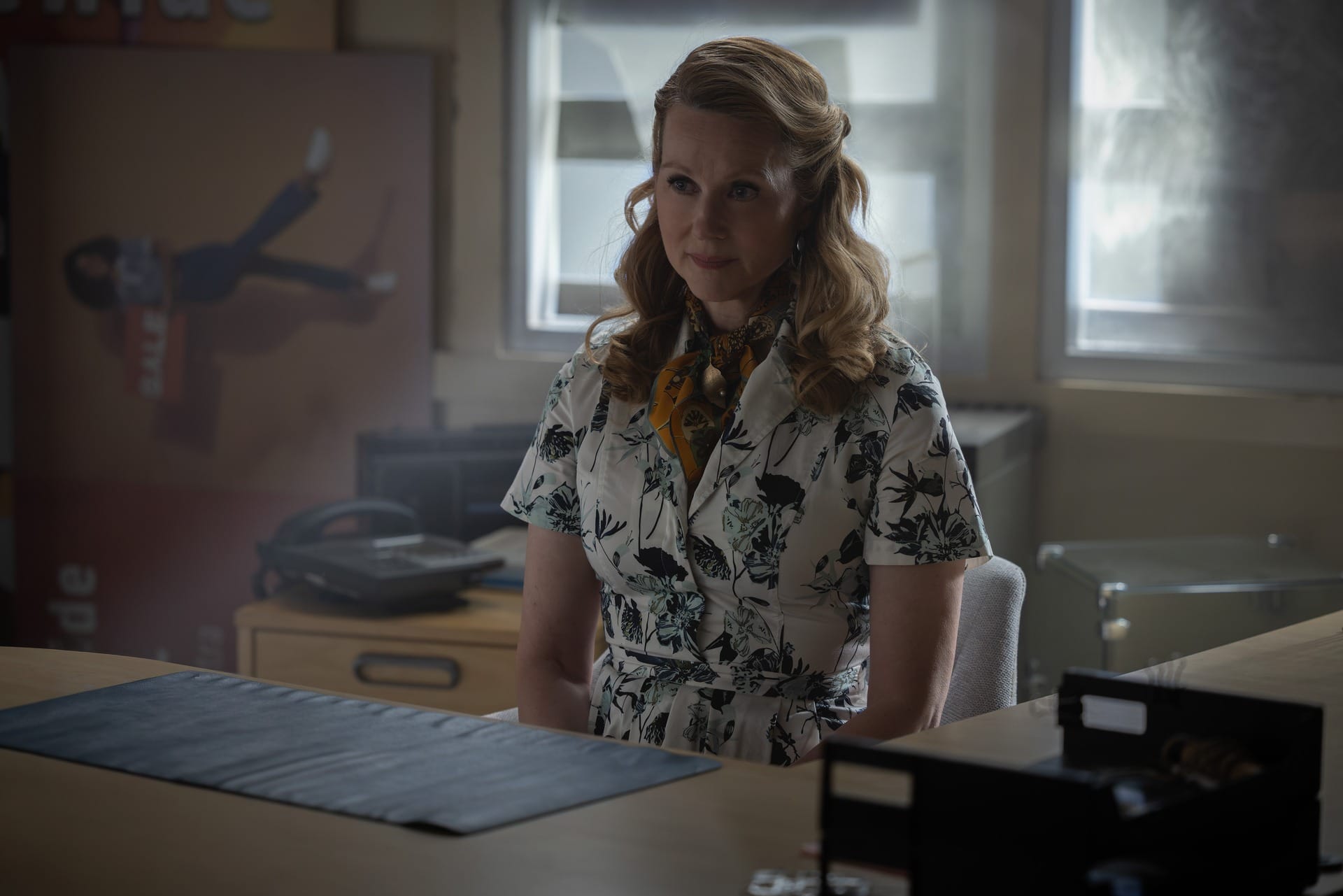
During the interview scene in 2016, this Guardian’s demeanor is certainly a little eccentric, but thirty years earlier, she was far more obviously alien. Her disguise as a well-to-do older lady lets her blend in, to a certain extent, but the Guardians have no real understanding of human culture. Even though she’s visiting Earth to make amends, it’s clear that she did very little research into what that might entail.
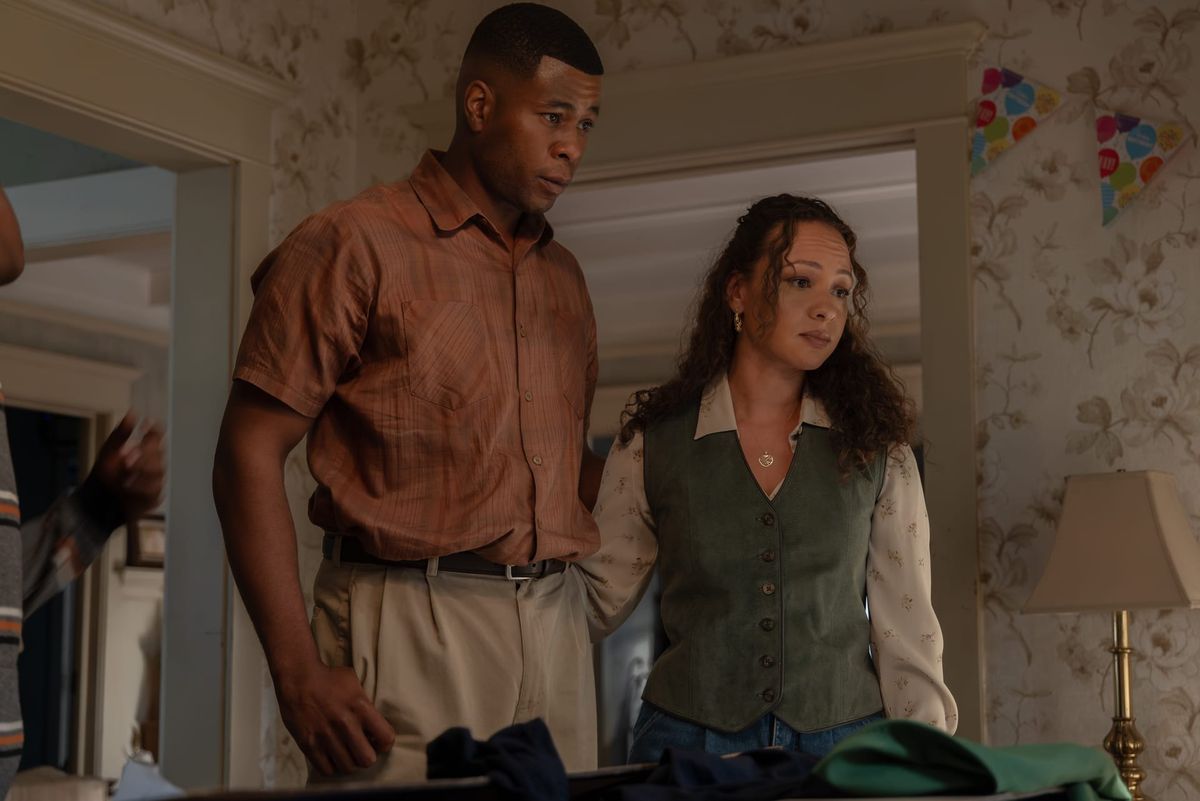
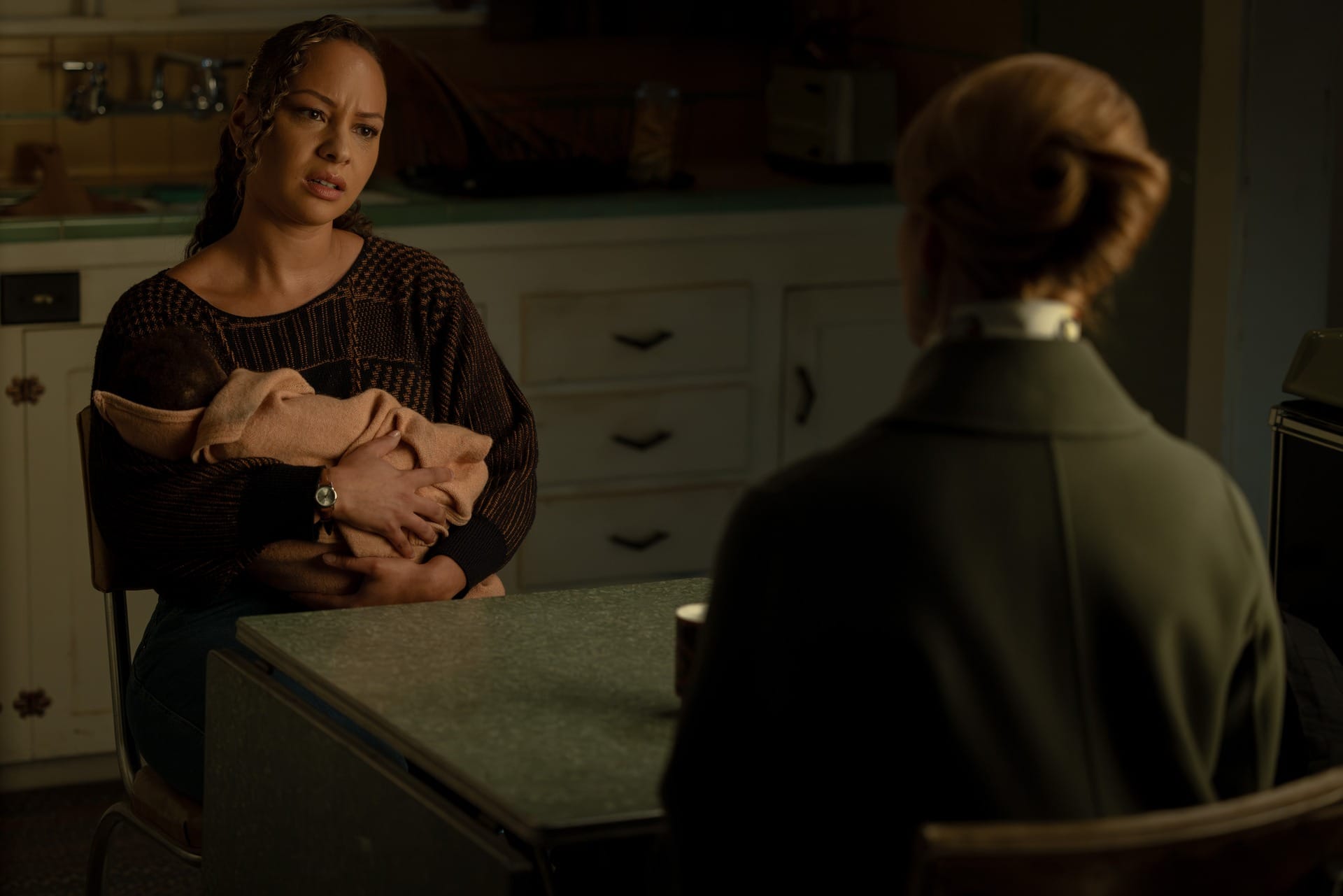
Inviting her into the house, Bernadette explains the dangerous lack of nuance in the ring’s judgment methods. “Do you know the differences in race on Earth?” she demands. “Do you understand how unfair it is to ask a Black man in America if he’s afraid? We are terrified daily of persecution and still show up, sometimes better, than everyone around us.”
This introductory lesson in racism winds up being more effective than Bernadette could ever have predicted. In her curiously detached and calculating manner, the Guardian turns to Baby John in his mother’s arms. “Whatever the ring saw in your husband is in his genetic makeup,” the Guardian says thoughtfully, theorizing that John could be an “excellent candidate” if he grows up without his father’s fear.
Bernadette decides then and there that she will raise John to be fearless. With the Guardian promising to give John fair treatment when the time comes, Bernadette and Johnny reunite over a shared goal, vowing to train their youngest son to be Earth’s next Green Lantern.
Back in the interview room, John informs the Guardian that this journey had a rocky start, because the police intervened when Bernadette tried to cash in the diamond—another example of the Guardians’ cluelessness about human society. Yet this didn’t stop John’s parents from going ahead with their plan, setting the scene for a childhood that left John alienated from his brothers, and worryingly detached from his own emotions.
The idea of “raising a child to be fearless” is obviously nonsense from a psychological perspective. If someone actually enacted the parenting techniques we witness in the coming scenes, the results would be disastrous—more likely to result in persistent paranoia and mistrust of authority than the stoic and confident personality John exhibits in the present day. But in the context of superhero fiction, I’m perfectly happy to pick up what Lanterns is putting down.
There’s something fascinating about the idea of a child being forced to become a superhero. This is a staple trope in other branches of SF/F fiction, but it’s pretty rare in the superhero genre, which is all about characters making a purposeful choice to wield their power in a heroic way—whether that’s power they acquired at birth (like Superman or the X-Men), by accident (like Spider-Man), or by setting out to create a superhero persona (like Batman, although Bruce Wayne’s wealth is also another way of being born into power).
The original Green Lantern mythos wanted us to accept that its heroes deserve the power they receive, but this show is all about critiquing that assumption. As Hal’s behavior has made abundantly clear, fearlessness is not the best criteria for earning a Lantern’s ring. The way the Guardian speaks about genetic potential is also a worrying sign. How can you decide what a months-old baby will be like in thirty years? This whole episode is a thought experiment on the question of nature versus nurture, but I think we can all agree that the Guardian’s judgment of Baby John is absurd.
On his fifth birthday, John’s parents give him a Green Lantern costume and a rifle, informing him that he’s now old enough to learn about his “destiny.” They’ve already been treating him differently from his two older brothers, making them sleep in separate rooms and homeschooling John while his brothers attend regular school. Now it’s time for John’s real training to begin, starting with learning to shoot.
The Guardians will always be watching, Bernadette tells him. They’ll send birds to check in on his training as he grows up. So the bird construct in last week’s episode did have a deeper meaning, representing his childhood belief that he’s being judged from on high. (This belief is, we learn later, based on a total fabrication. Bernadette invented the bird thing to keep John in line, while the Guardians fail to make contact throughout his entire childhood, even after Bernadette and Johnny built a satellite dish to send fruitless messages into space.)
The idea of shooting an apple off John’s head actually came from John himself: a sign of fearlessness that brings a proud tear to Bernadette’s eye. This becomes a recurring test during the early years of his childhood, but when the time comes for John to switch places and point the gun at his own father, he chickens out. Later that night, Bernadette gives him a pep talk. It’s natural for John to love his father and want him to be safe, she says. It’s also natural for him to enjoy drawing, an innate talent that potentially outstrips some of the skills he’s learned during his Lantern training. John’s task now is to work hard at things that don’t come easy. Hal Jordan, she explains, only got the ring because he’s privileged enough to not know fear.
“Sometimes a Black man has to raise his own hand,” says Bernadette. “Doesn’t mean you’re not good enough, doesn’t mean you’re not better. It just means they don’t see us. So we make ourselves seen.” After this, John decides that he’s ready to make the shot—this time aiming at Bernadette. In the garden that night, he shoots an apple off his mother’s head for the first time, proving that he’s no longer afraid to trust his own skills.
Running alongside these scenes from his childhood, John recounts his final mission as a Marine—a black-ops stakeout where he camped out in a Russian forest for months on end. As an elite sniper, he’d been tasked with assassinating a reclusive terrorist known as Gray Wolf, who was hiding out at his vacation home in the Kamchatka Peninsula.
John’s interactions with his commanding officer tell us a lot about his identity as a Marine. Rigidly formal, he shows up to an incognito meeting at a restaurant wearing his uniform instead of casual dress. When his commander starts to explain what Gray Wolf has done to make himself a target, John cuts him off: “I don’t care about the man. Tell me about the mission.” John’s loyalty to the chain of command is such that he doesn’t care about the morality of his orders. He also refuses the offer of a panic button on the grounds that, “I don’t do panic, sir.”
Parachuting into the wilderness, John embarks on a montage of macho survivalist prowess: treating his own wounds, setting up camp, slowly growing a beard as he watches Gray Wolf’s house through a sniper scope. But just as he’s about to make his shot, something zooms down from the sky. Gray Wolf’s house explodes and a luminous Green Lantern bubble expands over the site, as Hal Jordan swoops in, picks up Gray Wolf, and flies back into the clouds. In a matter of seconds, Hal has disrupted John’s mission and, we soon learn, ended his military career.
Back in the U.S., John’s commander explains what went down. Apparently the Deputy Defence Secretary met Hal at a strip club and started chatting about Gray Wolf, inspiring Hal to take matters into his own hands. Instead of a quiet, secretive assassination, Hal’s actions result in an inconveniently attention-grabbing explosion, exacerbating diplomatic tensions with Russia after he personally dropped Gray Wolf off at Guantanamo Bay. Now someone has to take the fall for this mess, and John is the obvious choice, accepting his dishonorable discharge with unnerving serenity.

No one comes out of this story looking good: not the U.S. military, not John, and certainly not Hal. (At least, that’s my take on it. Maybe showrunner and former CIA agent Tom King thinks extrajudicial assassinations are totally chill so long as they’re stealthy.) Back in the interview room, the Guardian highlights this event as an example of Hal’s disruptive history as a Lantern. He’s been told repeatedly that he shouldn’t interfere in Earth politics, which seems like good advice given his hamfisted impact on such a delicate situation.
While these flashbacks give us insight into John’s backstory, the Guardian’s main focus is discerning whether those experiences will lead to the same flaws as Hal: he was the first-ever human Lantern, and his recruitment was a fluke. Can a different human be trusted with a Lantern’s duties? Will he also let emotional bias get in the way? More specifically, given John’s history, does he resent his parents for how they chose to raise him—or resent Hal for ending his military career?
John replies that his relationships won’t cause problems, and that it’s human nature to love the people who raise you, “even if they’re crazy.” But this trait is a concern in itself, because Sinestro was, in the Guardian’s words, “a father figure” to Hal, as the Lantern who took charge of Hal’s early training. Even after Sinestro was jailed for murdering a Guardian, Hal “still harbors a deep affection for his mentor.”
Human love and loyalty remain a troubling mystery to the Guardians, and she’s concerned that the loneliness of the Lantern lifestyle will be difficult for John to handle. He counters by stating that he likes being alone, and won’t miss spending time with his family because he “grew up missing them” anyway. Yikes. When she suggests that isolation is against humankind’s “programming,” he argues that humans aren’t programmed, they’re raised. “I do not understand the distinction,” she replies.
Indoctrinated from infancy, it’s entirely plausible that John really doesn’t consciously resent how his parents raised him. In a technical sense, their plan was a success. He grew up with the right characteristics to become a Green Lantern, and he even says that he “owes them everything.”
However, John’s claim that he has no negative feelings toward Hal Jordan is a lot harder to swallow. Either he’s lying to the Guardian, or he’s lying to himself. Of course he must resent Hal, a man whose recklessness led to John’s dishonorable discharge from the Marines, and who personally represents the racial inequality that John’s parents worked so hard to overcome. Bernadette literally decided to train John because she saw Hal as a beneficiary of white privilege, and in later sequences like the Gray Wolf mission, her theory holds true. John is competent and law-abiding while Hal is disastrously irresponsible, yet Hal is shielded by his power and connections while John takes the fall for Hal’s mistakes.
We must also acknowledge the possibility that the Guardians don’t really care if John hates Hal. The last question of the interview is whether John is willing to begin his Lantern training under false pretenses, introduced as Hal’s backup when he’s actually preparing to replace him. John says that if these are his official orders, then it doesn’t matter if he’s comfortable—a sign of obedience that seals the deal for his future as a Green Lantern trainee.
Our final flashback takes us to the aftermath of John’s dismissal from the Marines. Showing more warmth and compassion than she did during his childhood, Bernadette reveals that she’s applied to art school on John’s behalf, encouraging him to follow his childhood dream. This is just a detour on the path to his true destiny, she explains. It’s time for him to make himself happy.
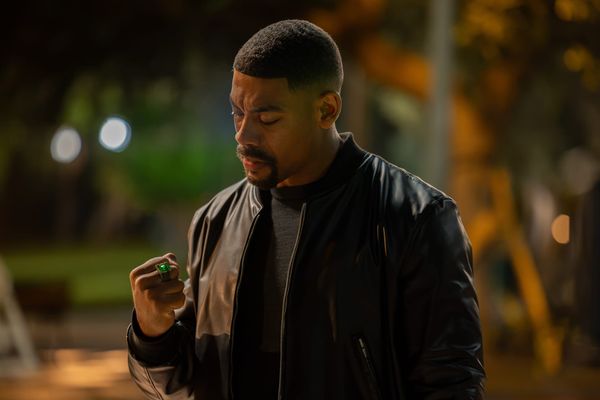
In art school, John flourishes to the extent that he’s singled out for an unusual drafting job, which turns out to be his preliminary Lantern interview. Approached by a strange man, John is asked to draw the art school building from memory, in as much detail as possible. Then the man hands him a Green Lantern ring and asks him to perform a similar exercise in three dimensions, with John manifesting a watch with a functional mechanism. John passes the test, and the man opens a portal in the floor, inviting John to jump through—where he falls into the mall from the beginning of the episode, ready for his final interview.
While John still hasn’t had many opportunities to practice using a ring, this scene highlights the difference between his and Hal’s respective skillsets. The ring is a tool of infinite possibilities, but Hal employs it in noticeably unimaginative ways. For the most part, he just uses it to fly and project shields. On the two occasions when he manifests a detailed object, it’s something simple that he’s seen a million times before: a dollar bill and a bottle opener. By contrast, John was able to create a working watch and a realistic bird that stayed “alive” long after he returned the ring to Hal. Rather than being a distraction from his future duties, John’s artistic talents may be his defining strength as a Lantern, calling back to his original comic-book backstory as an architect.
This show puts a lot of emphasis on fearlessness as a crucial qualifier for Green Lanterns, but the comics are equally interested in willpower. It’s clear by now that John demonstrates an extraordinary level of self-discipline, coupled with a professionally honed ability to think in three dimensions. Paired with his willingness to follow the Guardians’ orders, this makes him a perfect candidate. Meanwhile Hal’s only apparent qualification is his lack of fear, which isn’t necessarily a positive factor at all.
Following his interview, John returns home to give his parents the good news…and finds Hal already sitting at their kitchen table, where Johnny and Bernadette have welcomed him with frozen politeness. Hal’s arrival spoils the most important day of John’s life, and his behavior seems calibrated to toe the line between enthusiasm and rudeness, patronizingly referring to John as “Junior,” and describing John’s parents as “salt of the earth, like the Midwest Huxtables.”
Johnny and Bernadette seem quietly pissed off by this point, while John tries to smooth things over, claiming that he isn’t bothered by Hal’s showing up unannounced. He’s trying his best, but he’s about to learn just how much of an asshole Hal really is.
Dropping the faux-friendly act once they’re alone, Hal announces that he doesn’t want a sidekick or a trainee, and John will only get the ring “over my dead body.” Then he takes off into the air as the credits music rolls: Gasoline Dreams by Outkast. “I think he likes me,” John says drily, speaking to a bird perched on a fence nearby. An underwhelming start to his Green Lantern career.
Lanterns leans hard on the flawed nature of the Green Lantern Corps, using it as an allegory for real-world policing. The people in charge are callous and detached from reality. Hal Jordan, who describes himself as a beat cop, is self-obsessed and clearly can’t be trusted with the power of the ring. And the selection process for his successor is a fiasco, playing into the show’s commentary on race in America
Bernadette makes some slightly clunky statements about racism in this episode, drawing a parallel between her ambitions for John’s future and the way she and her husband worked hard to build a better life than previous generations. However, the results of her and Johnny’s parenting tell a more complicated story than a pure-hearted battle against discrimination.
This whole journey began with Johnny “failing” a test by having a natural human response to a terrifying situation. John’s training is then designed to eliminate that natural response, employing methods that any right-minded person would classify as abuse. In the process, John’s parents create a rift between their children and give John a warped conception of his purpose in life. No five-year-old should be handed a gun and told that he has a special destiny—and as an adult, John is still chasing his parents’ dream with no visible relationships of his own.
There’s a lot to consider here regarding why John still wants to become a Lantern. As viewers, we expect heroes to make moral choices that go against the grain of societal expectations. Many superheroes are actually outlaws, filling the gaps in a corrupt or incompetent legal system.
Yet in order to earn the ring, John must take the opposite approach. His traineeship is formalized when he confirms that he’ll follow the Guardians’ orders even if they make him uncomfortable, echoing the way he agreed to assassinate an enemy of the U.S. government with no questions asked. It’s an intriguingly cynical foundation for the show’s depiction of the Green Lantern Corps, further complicating our view of who deserves to wield the ring.