Lanterns: The Oath
In the season finale, John uncovers another of Rushville’s secrets—and reveals the unexpected culprit behind Hal’s murder.

Hal Jordan returned to Rushville for love—and love was also the motive behind his murder. In the opening scenes of the Lanterns season finale, we see a rough outline of Kerry and Hal’s relationship: a romance founded on the unrealistic hope that they could build a life together after Hal completed his term in prison. Toward the end of the episode, we also learn that she was the one to kill him.
During a date at a restaurant in Rushville shortly before Hal’s death, all of the other diners stare at Hal in stony silence until Kerry stands up and delivers an impassioned plea to her neighbors, arguing that while they may not like Hal, he’s done his time and deserves to have some peace. This romantic gesture is deeply touching to Hal, who likely hasn’t experienced this kind of loyalty in decades, if at all. But Kerry's well-meaning speech doesn’t work. A few days later, when Hal is getting ready for another daringly public date, a group of locals firebomb his house, and he passes out while trying to escape the flames. He should be dead, but he wakes up on a tiled floor beside the machine that Zoe used to heal John’s burns back in 2016. Standing nearby is Noah, who reveals that he is a Manhunter, just like his grandmother.
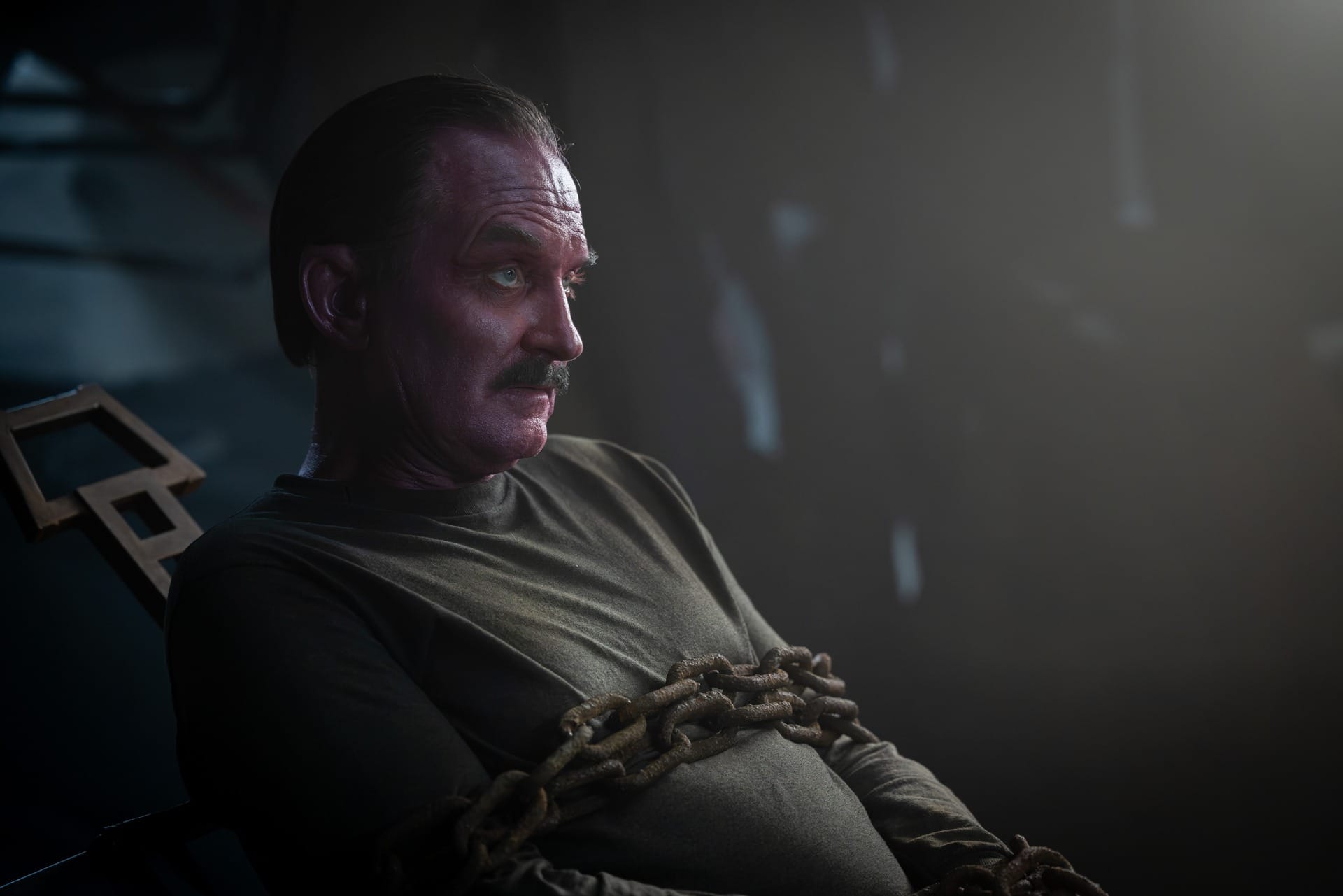
This sequence of flashbacks is recounted by Sinestro, who is currently being held captive by John on Antaan’s home planet. At first, he isn’t keen to explain anything further, but John dunks him in the nearby lake until he surrenders. Apparently the portal between Earth and this planet was created by Zoe, who wanted to visit for the same reason that Hal returned to Rushville: guilt. Sinestro is here now because Noah kidnapped him from prison, recruiting him to build a lantern. Sinestro is the only person who has ever managed to kill a Guardian, and that’s exactly the kind of power Noah must wield if he wants to continue living on Earth.
Conveniently for Sinestro, this lantern also presents a unique piece of leverage over John, who has no way to charge his stolen ring. Echoing the way he encouraged Hal to kill his own protégé back in 2016, Sinestro pressures John to recharge the ring at once, an act that would erase the Halogram from existence, and potentially cause more alarming consequences for John himself. As John notes, Sinestro’s DIY lantern is different from the ones created by the Guardians; forged amid the fear toxins of Antaan’s planet, its source of power is ominous to say the least.
"The Lantern Corps thinks that fear makes you weak," says Sinestro. "They couldn't be more wrong. If harnessed correctly, fear can be the most powerful force in the universe. Fear is just evolutionary intelligence. Show me a species that’s fearless, and I’ll show you something on the extinction list.” In the comics, Sinestro launched his own villainous analog to the Green Lantern Corps, using yellow rings that draw their power from fear.
Sinestro’s argument is a classic example of a supervillain monologue that kind of makes a good point, but clearly comes with major red flags. Can we trust a device built by a manipulative murderer, imbued with a poisonous gas that drove an entire civilization to suicide? Doubtful! John holds off on recharging his ring for now, but this scene raises questions for the choice he makes at the end of the episode—a topic I’ll get into later on.
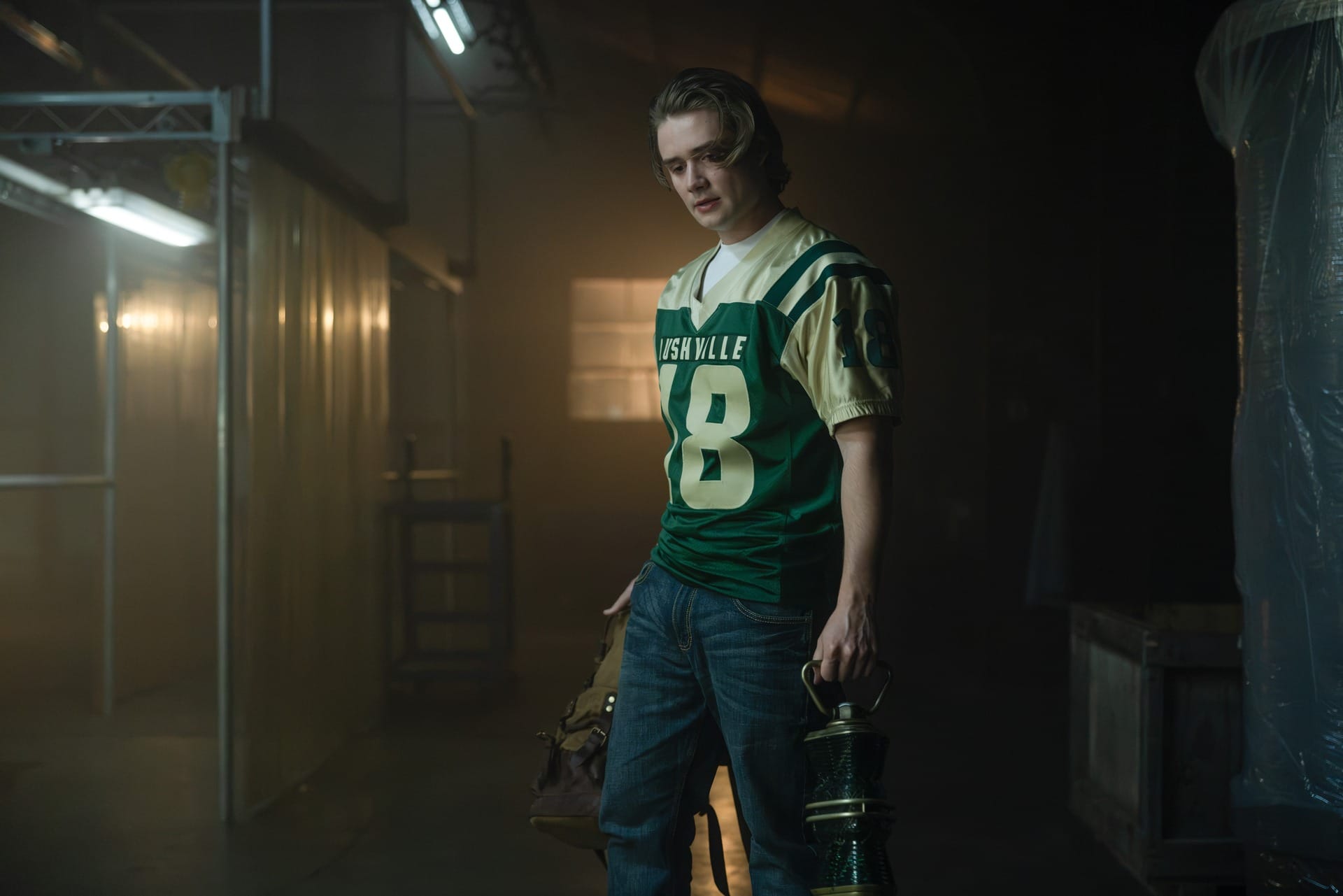
John guesses that Noah wants to seek revenge against the Guardians, and Sinestro responds that Noah is currently torn between nature and nurture. Raised among humans, he has integrated into Rushville’s community in a way that Zoe never truly achieved. Yet his Manhunter programming gives him a terrifyingly ruthless instinct for self-preservation—and Sinestro believes that Noah’s true nature will inevitably overcome his soft human values.
Rowing back across the lake from Sinestro’s hideout, the Halogram tries to convince John to recharge the ring. He’ll need it if he wants to defeat Noah, but John has two very compelling reasons not to use Sinestro’s lantern. Trying another tactic, the Halogram reminds him of what the real Hal said during their final conversation at the diner a few days ago. His last words were a demand for John to keep their meeting a secret, which now seems like a clear attempt to shield John from Noah’s attention.
As soon as John steps back through the portal, we know something’s wrong. Instead of arriving in the abandoned water tower from which he and the Halogram left Rushville, he falls onto the floor of Hector Gutiérrez’s old slaughterhouse, where Noah has evidently relocated the other end of the wormhole. Taking John by surprise, Noah is able to beat him up and steal his ring, ordering him to get in his car so they can talk while driving back into town. What transpires next is a scene that reveals Noah as one of the most interesting characters in the show…for the two episodes where he receives a meaningful role.
In the latter half of the season, I’ve become increasingly annoyed by Lanterns’ structure and pacing, which sometimes seems expressly designed to sabotage the development of supporting characters. Zoe and Noah are the most frustrating examples because the Manhunters play such a crucial role in our understanding of the Guardians, and by extension our understanding of the moral choices made by John and Hal. Introduced as a child in episode 1, Noah only came to the foreground last week. So while the reveal of his secret identity is intriguing, it doesn’t hold as much emotional weight as it should. To be honest, we barely know this guy.
Driving back into town with John, Noah explains the painful reality of his existence as a Manhunter on Earth. His cultural background is that of an average small-town teenager, yet he’s besieged by thoughts that emerge from his Manhunter programming: fantasies of seizing power through any means necessary, and killing anyone who gets in his way. “If you could see the inside of my head, you’d never stop screaming,” he says.
Weeping, he tells John that he killed Hal because Hal had started following him after learning that he was a Manhunter. If Noah wanted to protect his secret, Hal had to die. We already know how this mindset played out for Zoe and the people of Rushville, and John now views Zoe’s death in a different light. He believes that she let him kill her, knowing that death was the only way to stop her from causing further destruction.
Now, Noah wants John to do the same thing to him. Taking off the ring and placing it on the dashboard, he asks John to kill him after tonight’s football game, giving Noah a chance to make one last happy memory before his death.
Obviously John isn’t going to commit cold-blooded murder against a teenage boy. Earlier in this conversation, he pointed out that Noah already rebelled against his programming by saving Hal from the fire. He believes that there’s hope for Noah, and on top of that, he has a vested interest in the idea that people can move beyond the circumstances of their birth and upbringing.
Rife with scenes where people explain the show’s themes out loud, this episode is keen to hammer home its point about nature versus nurture. After sixty years of following his father’s self-destructive example, Hal finally found peace by allowing himself to let go and be vulnerable—even if it led to his death. As he reaches the coming-of-age ritual of high school graduation, Noah is struggling to figure out whether his free will can override his instincts as a Manhunter. Meanwhile, John’s rebellion against his destiny is about to come full circle, acknowledging that while his parents’ methods were flawed, he does still want to be a Lantern. He’ll just do it his own way, instead of shaping himself to fit other people’s expectations.
On the sidelines of Noah’s football game, John finds Kerry and begins to tell her about his relationship with his mother. When he was a kid, Bernadette did all kinds of outlandish things to eliminate his sense of fear, like abandoning him in dangerous neighborhoods so he’d have to find his own way home. Only later did he realize that she was terrified the entire time, living in fear on her son’s behalf.
This is, he notes, surely how Kerry must have felt throughout Noah’s childhood. The jig is up: Kerry knew that Noah was a Manhunter all along. Eyes welling up with tears, she agrees that she was terrified that Noah would be discovered. So when Hal informed her that he’d learned the truth, she flew into a panic.
Seguing into a flashback to the night of Hal’s death, we see Hal approaching Kerry in the stands of the football field. His first question is whether there are any other Manhunters hiding out on Earth, and she promises him that Noah is the only one. Back when Kerry first arrived in town, her deal with Zoe involved Kerry cutting off her own finger, which Zoe offered to regrow. In the process, Zoe used her Manhunter technology to impregnate Kerry with a child.
Despite her fears about Noah growing up to be a monster, Kerry did her best to raise him well. “Don’t tell him,” she pleads to Hal, who is understandably baffled. Kerry has been operating under the assumption that Noah is totally ignorant of his own origins, unaware that his Manhunter instincts have already kicked in.
“Kerry, he knows and he’s planning something very dangerous,” replies Hal. Demonstrating how much he’s changed since 2016, he offers to help her and Noah flee the country. He doesn’t want to harm his girlfriend’s son, even if that son represents a potentially cataclysmic alien threat.
But Kerry doesn’t want to leave town. The more Hal pushes, the more she breaks down, eventually pulling her gun and shooting him in the head. So Hal’s death was a crime of passion, spontaneous and regretted almost immediately by the perpetrator. When Noah took responsibility for the murder earlier on, he was attempting to protect his mother. Meanwhile, Kerry was still looking out for him.
Back in the present day, John and Kerry watch Noah play football, surveyed by various college scouts in the stands. He’s an upstanding kid, she explains. The reason he delayed his college announcement was so the recruiters would show up today, giving his teammates an extra opportunity to earn a scholarship. It’s hard for rural kids to get that kind of attention, and Noah likely intended this to be his final act of goodwill before his death. Evolving beyond his grandmother’s transactional arrangement with the town, he’s a true benefactor to his community.
In a way, John is playing a similar role to those football scouts. Accepting the possibility that he might figure out that she’s the killer, Kerry invited him into town to scope out Noah as an outside observer. She wants to know if she’s raised a monster—and John now feels able to deliver his verdict. He won’t kill Noah. Kerry has raised a good kid, and although Noah has deep-seated anxieties about the Manhunter urges lurking in his hindbrain, he’s managed to restrain himself so far. John trusts him to make his own way in life.
As Rushville wins the game and the players’ families rush onto the field, Noah accepts a hat from one of the scouts. He probably intends this as a gesture to make his parents happy before his impending death, but he’ll soon learn that he’ll be going to college after all.
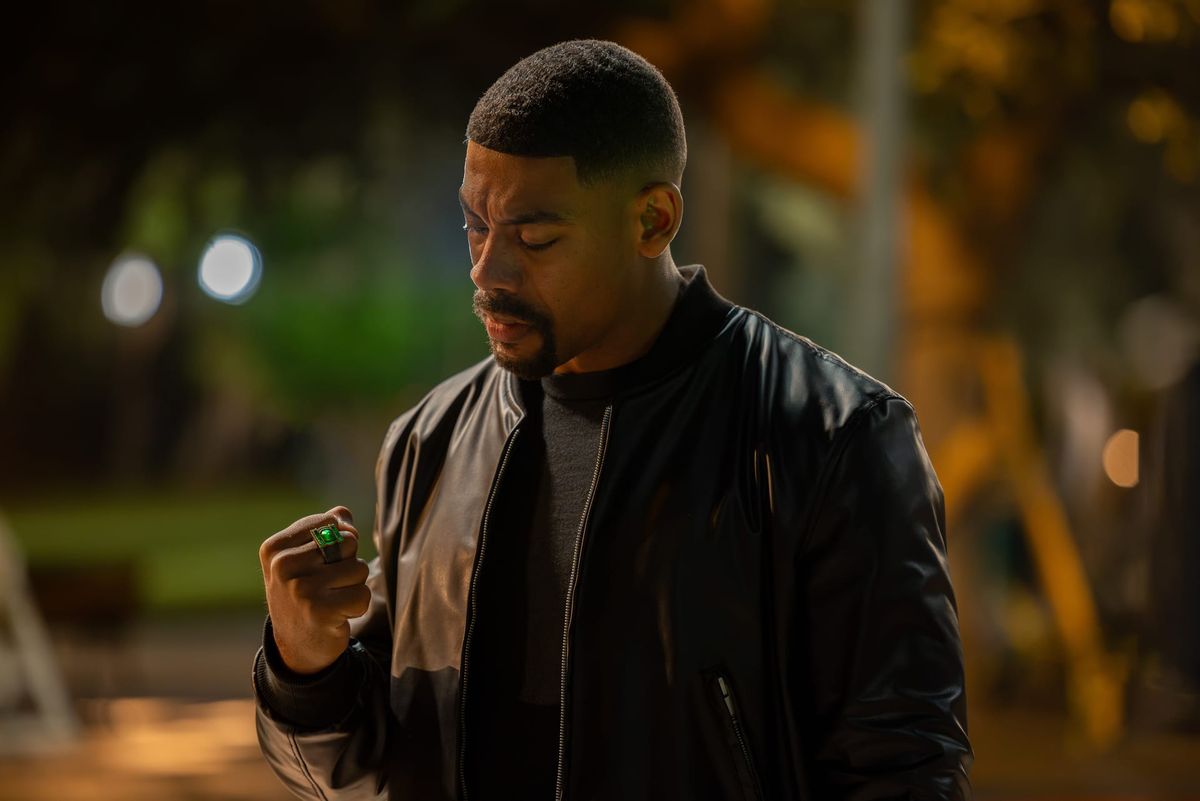
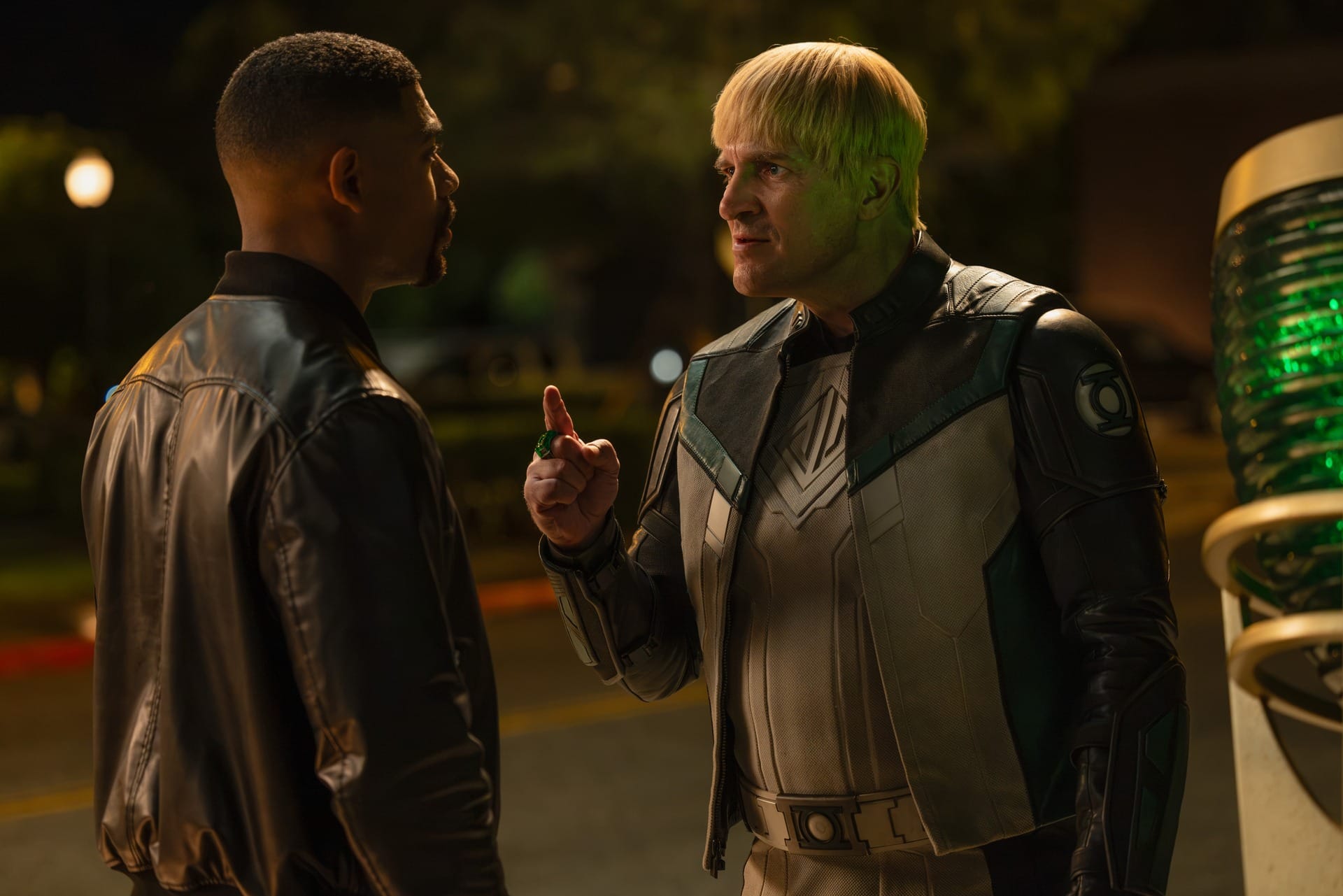
After choosing to leave Noah with his parents, John goes to activate Rushville’s Green Lantern beacon, summoning a disgruntled Guy Gardner. John informs him that he’s solved Hal’s murder, adding that all Guy needs to know is that Hal died a hero. The more relevant issue now is the fact that John has Hal’s ring, and has acquired an unsanctioned lantern to recharge it.
Horrified, Guy warns him that as soon as the Guardians find out, they’ll send an army to take him down. John isn’t so sure. In fact, he seems confident that the Guardians will leave him alone, asking Guy to pass on a coded message: if the Guardians “search their hearts,” then “they’ll find it within themselves to let me be-”—a reference to the Manhunters’ crystalline hearts.
Rather than inserting himself into the official Green Lantern chain of command, John sets out a plan for him to function as an “independent contractor.” From now on, John will take care of Earth while Guy handles the rest of the sector. Keen to avoid a confrontation that he’d almost certainly lose, Guy agrees, and flies out of town.
With only a couple of minutes left before the ring runs out of charge, John conjures up the Halogram one last time. Benefiting from a more positive attitude than the Hal that John worked with in 2016, the Halogram gives John his blessing to become a Lantern, telling him that he’ll probably do a better job than Hal ever did. “Don’t be afraid to be afraid,” the Halogram advises.
His other tip concerns the Green Lantern oath, which John isn’t entirely comfortable about reciting: a necessary part of the process to charge the ring. “Write your own fuckin’ oath!” the Halogram exclaims. In his final moments, he asks John what Hal said to Kerry before his death. “I love you,” says John, and Hal—always happy to get the last word—replies, “I love you too, Junior.”
In the episode’s closing montage, John hands off his compensation money to Maggie the diner waitress, and returns home to greet his family, embracing his tearful mother. He’s finally made good on her lifelong dream. But the real sendoff, is, of course, the oath, which John rewrites from its most well-known iteration. Rather than being a promise to fight against evil, John’s version focuses on his personal values as a hero. “In brightest day, in darkest night, I embrace my fear, I’ll do what’s right. I choose this ring, I choose this fight, in service to this lantern’s light.”
As I noted last week, this is the only way Lanterns could end in a satisfying manner, relaunching John Stewart as a hero who acts independently from the Guardians and the power structures they allegorically represent. His journey begins with him being obsessively stoic and obedient, attempting to prove himself to a series of unworthy authority figures. That ends when he finally discards the damaging lessons of his youth, freeing himself from the belief that heroism is something you earn by compromising your values for a higher power. Taking a step back, it’s a story about a man from a military family trying to become a cop, and then realizing that conventional law enforcement is too corrupt to countenance.
As an architect—and as a man who has been let down by the institutions he was taught to respect—John wants to build a different way of life, displaying a more responsible kind of independence than Hal Jordan’s loose-cannon rebelliousness. However, this final scene skips over any logistical questions about the lantern itself. Built by a supervillain and influenced by a deadly fear toxin, John’s new lantern doesn’t seem like the most reliable of foundations for a career in superheroism, leaving us to question whether he’s just sworn an oath to a cursed object. The idea of John “embracing his fear to do what’s right” is the conclusion this entire season has been working toward, but while it works in a poetic sense, we’re left with some lingering qualms about the practical side of how this plays out.
Co-showrunner Tom King (the show’s primary expert in DC lore) has already given interviews explaining how John’s lantern calls back to comicbook storylines about the fear-themed supervillain Parallax and the Sinestro Corps. With Sinestro now free from prison, he’s likely to be a key villain in season 2, which will also presumably explore how John’s powers differ from the official Lanterns.
But if you’re coming to Lanterns without that level of familiarity with DC canon, this epilogue may feel more ambiguous than the creators intended. On the surface, John’s oath comes across as a definitive (and positive) conclusion to his origin story, marking a turning point as he begins to forge his own path and reject the flawed teachings of his parents and mentors. Yet he’s embarking on this journey with a lantern built from the pollution of an alien genocide, delivered to him by a character who simply cannot be trusted.
At the start of this recap series, I noted that Lanterns is part of HBO's pivot to genre franchise programming. I already had mixed feelings on that issue two months ago, and now the Warner Bros./Paramount merger has gone through, it’s harder to feel positive toward the parts of Lanterns that I actually did enjoy.
Until recently, HBO played a specific role in the TV ecosystem, specializing in carefully developed and impressively produced original adult programming, and building a back catalog of hits that swept the Emmys and dominated on best-of lists. The introduction of HBO Max-produced shows muddied that brand, but under the tenure of Warner Bros. Discovery CEO David Zaslav these past few years, it often seemed like HBO’s parent company was determined to destroy it entirely. Things are likely to get even worse following the Paramount merger, which is expected to bring a greater emphasis on politically conservative content under Skydance CEO David Ellison.
I’m curious to see what this means for James Gunn as the figurehead of the DC franchise, a guy who is (by Hollywood executive standards) fairly outspoken against the Trump administration’s values, and who has greenlit various projects that embrace progressive themes in a mainstream entertainment framework. Lanterns, with its commentary on racism in America, is one of those projects. We’re about to find out how the new Paramount/Warner Bros. hybrid will balance the conservatism of its ownership with the company’s drive to make a profit. For a bit of ominous context, consider what has happened to the Paramount-owned CBS News over the past year. It’s weird and dispiriting to consider the possibility that Lanterns, a largely middle-of-the-road drama, might well be considered edgy a couple of years from now.
As the TV industry contracts, it gets harder for creators to find funding for original stories. Every streaming service is now pouring money into their own big-name IP adaptations, but this obsession with profitable nerd media is only half of the problem. The other half is the fact that these shows just aren’t held to a high enough standard, which feels especially awkward as HBO attempts to market The Penguin and Lanterns as “HBO shows.”
Instead of delivering the franchise spinoff equivalent of Succession or Chernobyl (or True Detective, the show that Lanterns wants to be), HBO’s slate of Warner Bros. franchise titles is solidly mediocre: Dune: Prophecy, IT: Welcome to Derry, The Penguin, and now Lanterns. DC’s streaming-only shows on HBO Max, Peacemaker and Doom Patrol, don’t seem to be aiming for the same kind of prestige drama tone, and may well have turned out better as a result.
Clearly some people enjoyed Lanterns a lot more than I did, but as John finally dons the ring in the last few minutes of the season finale, I’m left with a lot of the same complaints I had in episodes four or five. Again and again, this show introduces compelling concepts that remain underdeveloped and then dissipate into the background. Manhunters, Zoe and John’s relationship, Antaan’s quest for revenge, the internal politics of the Guardians, and now Noah’s crisis over his alien/human identity. All of these elements feel like an outline rather than a final draft. The only thing that does receive enough attention is the central arc for John and his relationship to the ring: a smart remix of his comic-book origin story, rooted in twisted parental relationships and a takedown of the Lanterns’ traditional role as space cops.
It makes sense for John to be the best part of the show, because superhero origin stories are an inherently protagonist-focused genre. But Lanterns is also desperate to convince us that it’s a gritty rural crime drama—without being able to deliver on the goods. For some reason, in the serious-minded world of HBO’s DCU For Adults programming, this approach is preferable to the idea of a Green Lantern show where the main guys get to do some real Green Lanterning. I guess John will finally get to use the ring in season 2.