Lanterns: Inside the Failsafe
In episode 7, Hal’s murder investigation picks up speed and the show makes a welcome pivot to Green Lantern’s spacefaring roots.


It comes as no surprise to learn that Hal Jordan had a messed up relationship with his father. Taking a brief detour to 1975, we meet young Hal in the aftermath of a disastrous baseball game, where he provoked a brawl with every other boy on his team. They wound up forfeiting the game because Hal refused to let go of the ball, protesting his coach’s decision to replace Hal with a supposedly inferior player. The coach now wants Hal to apologize and make amends to his teammates, but Hal stands his ground, firmly convinced that he’s in the right.
When his dad arrives to pick him up, it becomes clear where Hal’s attitude came from. Martin Jordan defends his son’s actions, arguing that Hal being the better player is “all that matters” in this situation. The ensuing dispute soon escalates into a fistfight between Martin and the coach: like father, like son.
Ironically, there’s not a great deal of distance between the parenting philosophies of Martin Jordan and Bernadette Stewart. Both believe in success and excellence above all else, regardless of whether their sons are happy or socially well-adjusted. From here, it’s easy to see how Hal ended up the way he is as an adult: isolated, confrontational, and incapable of respectful collaboration. His post-incarceration apology tour of Rushville is a tragic case of too little, too late.
Sporting matching bruises from their respective fights, Martin and Hal go to a local airfield for a heart-to-heart, where Martin tells Hal about his own father. When Martin was a young boy, his dad went to war, leaving Martin a key to a safe containing money, keepsakes, and private documents: his “failsafe.” When Martin’s father died overseas, Martin was ready to handle the responsibility of being the man of the house.
Now it’s time for Martin to do the same thing for his own son. “Shouldn’t mom have this?” asks Hal when Martin hands him a similar key. “It’s not something she can carry,” Martin replies. “But you can, Hal. It’s in your blood. The Jordan boys’ legacy.”
Martin then assures his son that he’ll live to 100, but we know this isn’t true. Martin will soon die in a fiery crash during his job as a test pilot, making this their last important conversation, concluding with Martin advising Hal to throw away his baseball because holding onto it forever would be “fucking exhausting.” It’s a mixed message that Hal clearly fails to internalize, given his unrelenting grasp of the Green Lantern ring in 2016. Learning from his father’s example, Hal developed an inflexible belief in his own superiority, leading to his eventual downfall in Rushville.
Picking up where episode 6 left off, John and the Halogram reunite over Hal’s grave. At first, John attempts to lie about his own present-day role in Hal’s life and death, playing into the Halogram’s reasonable assumption that John is the new Lantern. But this plan doesn’t last long—in part because John is forced to admit that he can’t recharge the ring, and in part because the Halogram quickly pokes holes in John’s fake description of his funeral, which wasn’t the intergalactic celebration that Hal predicted in his outdated eulogy. John may need the Halogram’s help to solve Hal’s murder, but this partnership is getting off to a rocky start, with an exasperated John deactivating the Halogram so he’ll stop asking awkward questions.
The Halogram's main role in John's plan is to open the voice-activated safe in Hal's storage unit, an item that we now recognize for its connection to the Jordan boys’ legacy; this parallel casts John in the role of Hal’s estranged son. Unfortunately for John, the Halogram refuses to cooperate. Increasingly suspicious about John's sneaky investigation tactics, the Halogram demands to speak with local law enforcement, leading to some disruptive revelations about Hal's later life. “I was in jail?” the Halogram exclaims. “I was in love?” As soon as he learns about Hal's relationship with Kerry, he sets out an ultimatum: he'll only cooperate with John once he’s had a chance to speak with her in person.
This demand is easier said than done, because today is the day of Rushville High School's hat ceremony. Everyone in town is on tenterhooks waiting to hear Kerry's son Noah announce his choice of college, offering him a level of adulation that almost feels reminiscent of his grandmother, Zoe. In order to introduce Kerry and the Halogram, John must make his way to the school gym, which is inconveniently full of locals—including Noah's dad, Billy Macon—who hate John's guts.
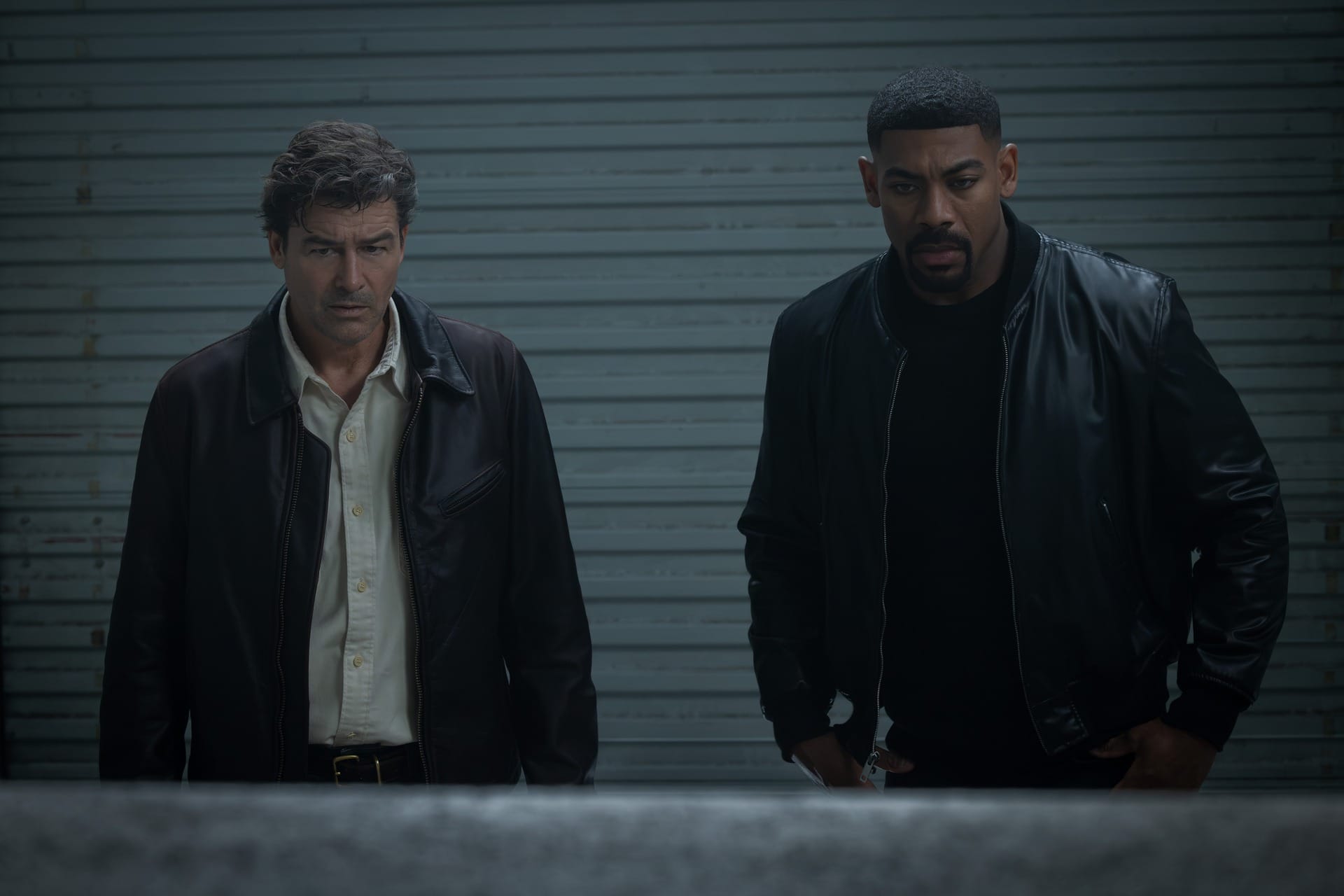
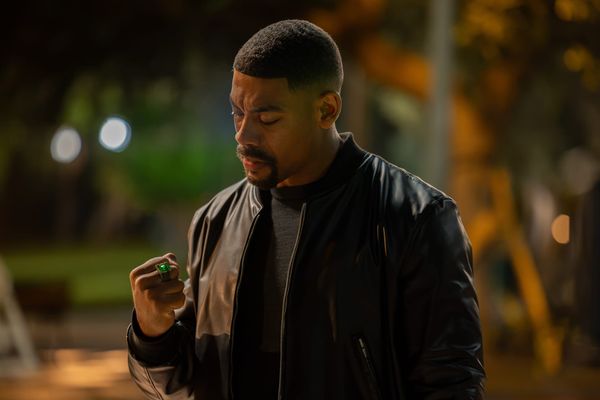
On the way, John and the Halogram each make a new discovery about John’s unusually strong connection to the ring. In the Halogram’s case, he’s shocked and impressed by John’s ability to use the ring even when it isn’t on his finger, praising John’s talents in a way that the real Hal never managed: “Well fucking done, trainee!” Meanwhile, John learns that he has less control over the Halogram than he believed. Rather than requiring an active summons, the Halogram can manifest whenever John thinks about him, leaving John with an irritating companion whom he only manages to dismiss by singing loudly along with a song on the car radio.
The hat ceremony itself is positively overflowing with small-town school spirit, but after Noah’s football buddies come forward to reveal their future schools, Noah makes an unexpected choice, telling the crowd that he’s decided not to announce his college after all. This leaves Kerry in the awkward position of hosting a house party later today for an announcement that hasn’t actually happened, inviting questions about the reasons behind Noah’s indecisiveness. Is he struggling with the pressure, or is there something else at play?
There’s a ticking-clock aspect to this episode, with John facing a pair of deadlines that limit the time he has to solve Hal's murder. First, the ring is running out of power, leaving him with only an hour of remaining “talk time” with the Halogram. Second, he has less than a day to pay off his blackmailer, Maggie, who accosts him outside the high school, and only agrees to an extension after he hands over his watch as a down payment. In the end, he has to call his brother to liquidate the $300,000 required to get Maggie off his back—a hurried transaction that he executes by phone on the way to meet with Kerry in one of the science classrooms.
I’ve complained already about the problems caused by thin writing in Lanterns, but in these last couple of episodes, the bigger issue may actually be direction and editing. John is currently under an immense amount of pressure, attempting to solve a murder, dodge a blackmailer, and juggle several conflicted relationships at the same time. His future career is on the line. There should be a heightened sense of urgency as we draw closer to the finale, but visually speaking, there’s very little intensity to the way Lanterns is directed. Despite the looming threat of our protagonist being arrested for a crime he didn’t commit, it doesn’t always feel like a thriller.
Struggling to come up with a tactful way to introduce Kerry to the Halogram, John fumbles their first meeting until Kerry is essentially jump-scared by the appearance of her dead boyfriend. It’s an intriguing setup: horrifyingly emotional from Kerry’s perspective, while also being existentially unnerving for the Halogram himself. He’s a remnant from twenty years in the past, meaning that he isn’t the man who fell in love with Kerry.
Given Hal’s earlier reticence around relationships, the Halogram is understandably curious about how this romance came about. He also wants to use Kerry as a sounding-board, asking her what the Hal of 2026 thought of John. Kerry attempts to explain the complicated nature of their relationship, saying that Hal viewed John “like a football team who was always giving you hope and letting you down.”
This description succeeds in allaying the Halogram’s suspicions about whether John can be trusted. Instead, as soon as he and John get back to their car, Hal turns around and announces that he thinks Kerry is the killer—a theory based purely on a gut feeling, because he can’t believe that someone would feel so tenderly toward him in real life. John is skeptical, but they agree to embark on the next step of their investigation without Kerry, returning to the storage unit now that John has held up his end of the bargain.
When the Halogram opens the safe, they find a curious collection of items inside: a basic survival kit, a gun, and a paper bag containing a black blob that the Halogram identifies as an Einstein-Rosen bridge, i.e., a wormhole. We’ve seen this technology a few times before, depicted as an inky black portal to locations like John’s Green Lantern interview in an abandoned mall. Here, the Halogram demonstrates its usage a little further, stretching out the portal substance and hanging it in midair to form a doorway. When he sticks his head through to check out what lies on the other side, he announces that it leads to another planet.
Why did Hal leave this portal locked up in a safe in Rushville? There’s only one way to find out. “Ask me if I’m afraid,” demands John, and when the Halogram does so, John replies, “Fuck no,” and steps through the wormhole.
John finds himself in the middle of a vast desert, a setting that embraces Green Lantern’s sci-fi roots while sticking amusingly close to the show’s passion for brown color palettes. Hal doesn’t recognize this eerie landscape, but curiously enough, it feels familiar to John. Soon they figure out why. The only landmarks in sight are a light flashing in the middle of a lake in the distance, and—much more shockingly—a giant city floating overhead. John sends the Halogram up to investigate; when he returns, he confirms that the city is deserted. Meanwhile, John finds a humanoid skull in the sand underfoot, answering the question of where the city’s inhabitants ended up: “They’re all down here.” The desert is full of skeletons.
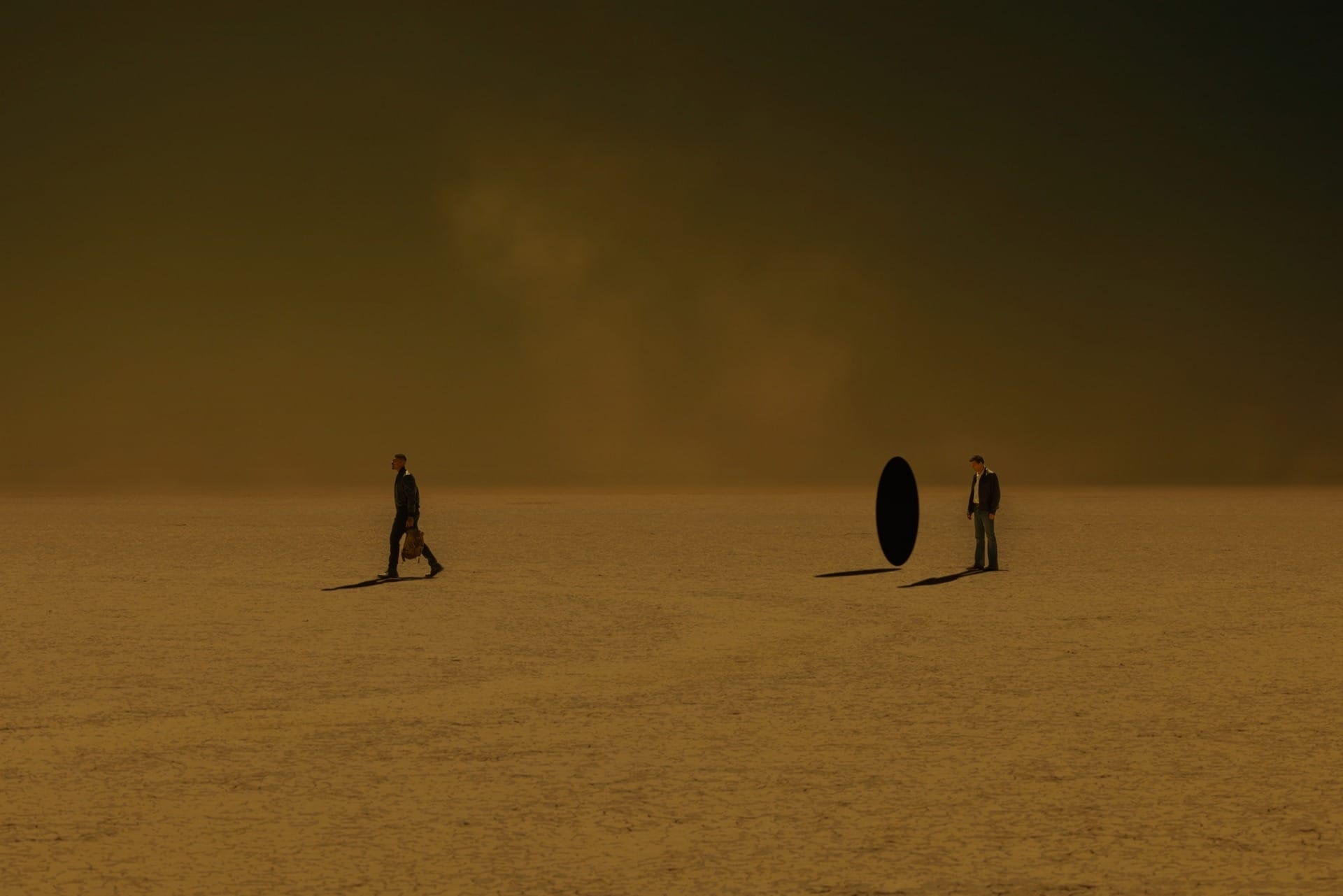
This is, John realizes, Antaan’s home planet. A decade ago, when he and Antaan first met, John was injected with memories of this planet’s destruction. Now that he’s here in person, he’s able to contextualize what he witnessed. He understands that the Manhunter (for reasons that are not explained) unleashed some kind of fear gas on the population, leading to mass murder and suicide as Antaan’s people began to hallucinate their worst fears. The city above is empty because its inhabitants jumped to their deaths.
Strangely, this scene doesn’t really touch upon the fact that this genocide was masterminded by Zoe, a character who was once John’s love-interest. Earlier in the episode, John tells the Halogram about Zoe’s history in Rushville, and the Halogram replies, “I’m guessing I’m not the only one to fall for a Rushville girl.” He even theorizes that John resents him because Hal was the one to kill Zoe, leading John to explain the truth: even at the end, Hal refused to kill, leaving John to make an independent choice to shoot his own lover.
Despite the fact that their relationship was founded on deception and only lasted a few days, John still seems to hold some sympathy toward Zoe. But instead of exploring that question here at the site of her greatest crime, John and the Halogram focus their attention on the more immediate issue of what Hal was doing on an alien planet before his death. So they head toward their only visible clue, the light in the distance. This takes them to the edge of a lake where a rowboat is conveniently moored nearby—presumably Hal’s typical method of transport to the island where the light resides.
Their gloomy journey across the water takes on a gothic undertone, accompanied by rain clouds and a morbid turn to the conversation. The Halogram only has an hour or so left of battery life before he vanishes, and in characteristically nosy style, he wants to use that time to interrogate John. He wants to know why John decided to visit Hal on the night of his murder, prompting John to explain Bernadette’s infuriating belief that he and Hal should reunite. In turn, this leads into a tirade in which John lists the many and varied reasons why Hal pissed him off: getting John fired from the Marines, crashing a car with John still inside, disrespecting the Green Lantern institution, etc.
Increasingly frustrated by the Halogram’s presence, John breaks into song so the Halogram will dematerialize again, leaving John alone in the boat as rain begins to pour down. John starts to hallucinate, seeing apples floating in the water, followed by manifestations of his father and himself as a child. As his younger self yells that he never wanted to be a Lantern, John pulls the gun he found in Hal’s safe…and is promptly shoved into the water and dragged back out again by the Halogram, who informs him that he’d been pointing the gun at his own head. Apparently the rain is to blame. The Manhunter’s fear gas still lingers in the atmosphere, and since John didn’t think to use the rain poncho in Hal’s survival bag, he ended up succumbing to the poison’s effects.
As they make their way toward the shore, the Halogram begins to talk about his father, a topic that has clearly been on his mind all day, as he grasped at straws for potential suspects in his own murder investigation. Putting an even darker spin on the episode’s introductory flashback, he reveals that his father didn’t die in an accident—he killed himself, as did Hal’s grandfather before him.
When Martin Jordan spoke about the “Jordan boys’ legacy,” he was attempting to explain a predisposition toward depression, which Hal inherited as well. Martin was too repressed to directly discuss his own sadness with his family, so he followed in his father’s footsteps by staging a plausibly heroic death, leaving his young son with access to a safe containing his suicide note.
Neither Martin nor his father felt able to confide in their own wives, and Hal’s responsibilities as a Green Lantern gave him an excuse to isolate himself even further, purposefully avoiding close relationships until after he’d been fired and sent to prison. During his brief meeting with Kerry, the Halogram’s first question was whether she and Hal had been “open with each other” regarding difficult topics like his father’s death—a level of intimacy that the Halogram-era Hal Jordan never achieved.
“I’m not fearless because I’m brave,” the Halogram tells John. “I’m fearless because I’m broken.” It’s possible that Hal killed himself and Kerry covered it up to protect his reputation, with Hal leaving behind his own enigmatic version of the Jordan boys’ “failsafe” for John to find. But like the rest of the current theories around Hal’s death, this idea isn’t backed up by solid evidence.
Having finally arrived at their destination, John and the Halogram disembark to an ominous scene: a towering ruin with a murky light blinking overhead, suggesting that someone else may be here as well. Unfortunately for both of them, John dropped his gun in the water, and the ring is very nearly out of power.
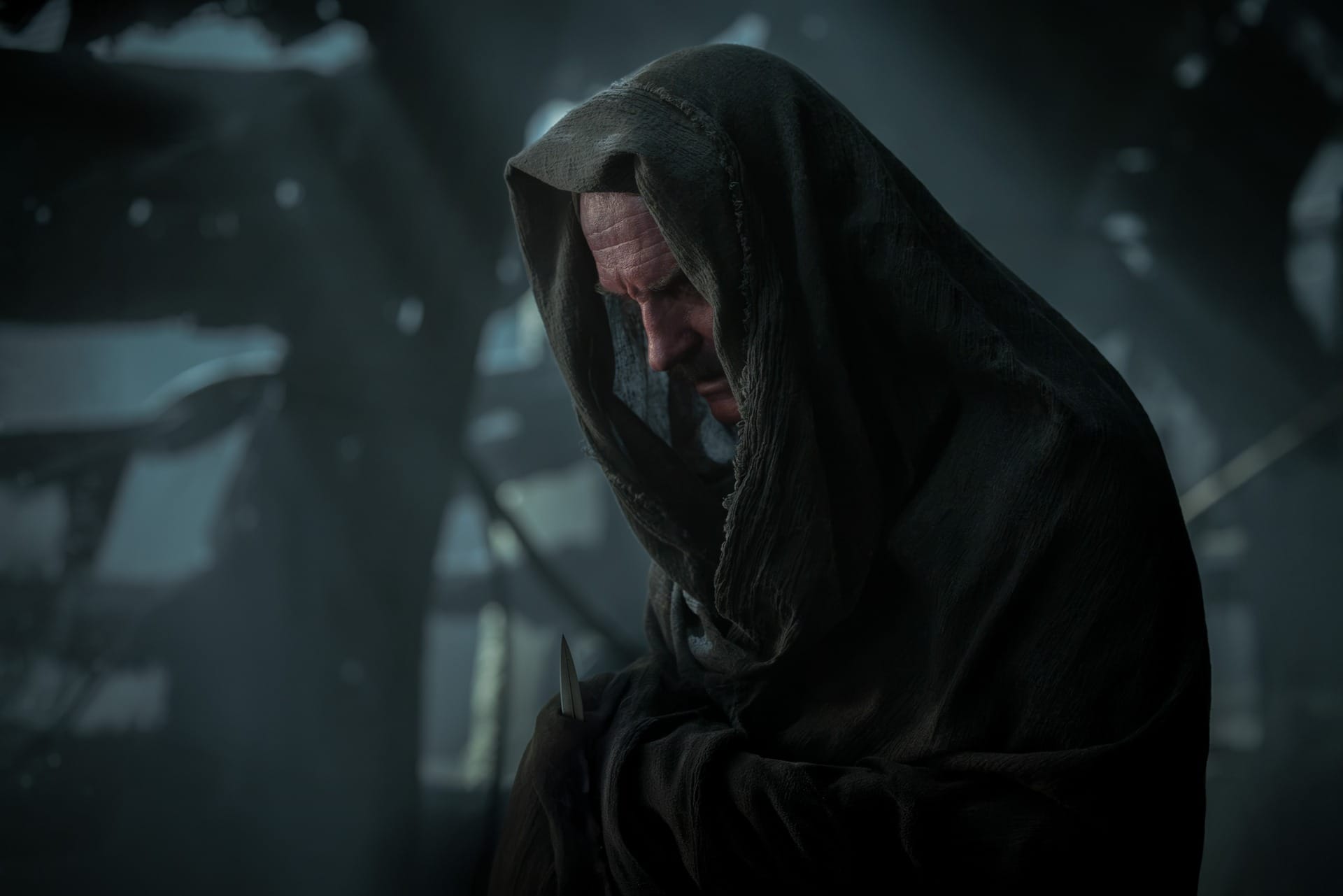
Inside, we barely get a glimpse of the ruined building before someone appears out of the shadows, grabbing the Halogram and holding a knife to his throat. It’s Sinestro, who recently escaped from prison, and presumably believes that this is the real, living Hal. He doesn’t know that he’s making a meaningless threat, and John quickly takes him down by deactivating the Halogram and leaving Sinestro stumbling without a hostage: he’s an old man, and John can easily tackle him to the ground.
For our final scene of the episode, we then return to Hal’s 1970s flashback for an extremely on-the-nose needle drop: “Father to Son” by Queen, accompanying a shot of a grieving young Hal, returning to the airfield to pick up the baseball his father encouraged him to throw away.
With one episode left to go, this alien-planet subplot sets up some promising ideas for the final act of John’s arc, while also highlighting where the show has gone wrong elsewhere. Obviously this is a matter of personal taste, but so far, most of my favorite Lanterns moments were when the show leaned into its sci-fi background.
There’s nothing wrong with a grounded, stripped-down superhero adaptation (this is, after all, what Christopher Nolan did with Batman), but after adopting the general framework of a small-town crime drama, Lanterns doesn’t engage very effectively with the strengths of that genre, either. It doesn’t give Rushville a distinctive visual or cultural personality outside of the broad strokes of the townspeople’s agreement with Zoe, and as I’ve mentioned before, it definitely doesn’t flesh out its supporting cast. Hence my Surf Dracula accusation last week: it still feels like we’re in a holding pattern, waiting for John to take the ring for real.
Like HBO’s The Penguin, Lanterns wants to offer a mature, realistic reimagining of fundamentally outlandish source material. But its realistic side is actually let down by the creative team’s reticent attitude to sci-fi. If we knew more about the Manhunters and Zoe’s inner life as an alien interloper, the earlier Rushville storyline would be more compelling. The same goes for Antaan and his crew. Everything alien is kept at arm’s length in this show, including the culture and hierarchy of the Green Lantern Corps itself. As a result, part of Hal and John’s motivation remains out of sight to the audience.
At its core, this is a story about two men who got screwed over by shitty but well-intentioned parenting, compounded by the insidious influences of toxic masculinity and racism. In another universe, Hal and John might have been friends or allies, but here they’re kept apart by the circumstances that shaped their personalities from childhood. This conflict forms the emotional driving force of the show, but it’s let down by a lack of specificity in the surrounding blend of genres.
Leading into the finale, we’re awaiting the resolution of two arcs: a murder mystery that has only received two real episodes of build-up, and an origin story for a superhero who still has a very ambivalent relationship to heroism. If John accepts the Green Lantern ring and finally makes good on his parents’ ambitions, will we view that as a happy ending? Is it possible for John to somehow jailbreak the ring and start operating as an independent entity? How does Sinestro play into the events leading up to Hal’s death? Was Noah involved, or are we being encouraged to overthink his role in Rushville’s community? That’s a lot to unpack in just one episode, in a show that still hasn’t nailed down what the Green Lantern mantle actually represents.