Lanterns: Are You Afraid?
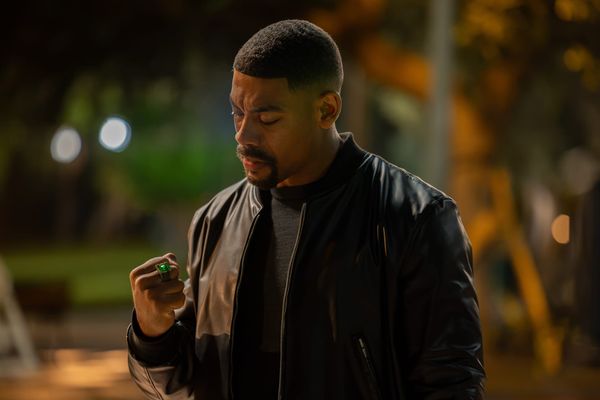
In episode 1, Hal Jordan and his protégé, John Stewart, investigate a shooting in small-town Nebraska.


Warner Bros. has been trying to relaunch the Green Lantern franchise well for over a decade, resulting in a long list of unrealized projects after the poorly-received Ryan Reynolds movie in 2011. Now, Lanterns arrives among HBO’s new wave of big-budget IP adaptations, aiming for a more mature tone than the earlier plan to include Green Lantern in Zack Snyder’s Justice League franchise.
Marketed as a superhero equivalent of True Detective, this show downplays Green Lantern’s sci-fi side in favor of a grounded crime drama set in rural Nebraska, pairing an older Hal Jordan with John Stewart as his trainee in 2016. Their partnership is conflicted from the start, but before we get into that, we meet John as a young boy in 1996, watching with bated breath as Hal reveals his secret identity on TV.
At this point, Hal has been a Green Lantern for about ten years, making him a generation older than David Corenswet’s Superman, who emerges sometime in the early 2020s. Last year’s Superman movie introduced a present-day DCU teaming with heroes including Nathan Fillion’s buffoonish Green Lantern, Guy Gardner. But back in the ’90s, Hal Jordan appears to be operating alone. In the 60 Minutes segment that John and his brothers surreptitiously watch after bedtime, Hal likens himself to a beat cop, recounting a fairytale origin story where an alien came to him in the night and asked: “Are you afraid?” When Hal said no, he proved himself worthy of the Green Lantern ring, a device that allows its bearer to fly and manifest any object by the sheer power of their will.
Even as a young boy, we can see hints of the fearlessness that will one day make John a fitting choice to become Hal’s successor. While his brothers are scared of getting caught staying up to watch TV, John seems curiously nonchalant when their father—a U.S. Marine—arrives home to pass judgment. Up until now, this prologue felt like a prosaic bit of exposition, but things take an unnerving turn as John’s father hands him an apple and orders him to go outside. Standing against a wall in the backyard, John balances the apple on his own head, and his father draws a gun. “Are you afraid?” asks John Sr. “No, sir!” replies young John, and then his father shoots the apple off his head like William Tell.
Even more disturbing is John's reaction after the fact. Instead of being a scene of sadistic parental intimidation, John and his father wrap things up with a smile and a hug. Apparently this is business as usual in the Stewart household.
In 2016, John is no longer so starstruck by Hal, who seems hell-bent on annoying John into quitting as his trainee. The Green Lantern Corps’ alien bosses, the Guardians, went over Hal’s head to recruit John as his backup, and now John has to exercise superhuman levels of patience as Hal shows up late and hungover, refusing to teach him anything useful. If we view Lanterns as John Stewart’s origin story, then Hal is more of an obstacle than a mentor. Two months into his training, he still hasn’t allowed John to use the ring. As the two men drive down a country road, we’re confronted with an uncomfortable dynamic where Hal, an older white authority figure, is purposefully gatekeeping a young Black man from following in his footsteps.
In his three decades as Green Lantern, Hal has evidently done a good enough job that he’s still a beloved public figure. But in person, he seems flaky, irresponsible, and selfish. Earth’s sector of the galaxy only has room for one Lantern, and he has no interest in relinquishing his position to John, whom he derisively refers to as a “substitute teacher.” By contrast, John comes across as disciplined and self-contained, right up until the point where Hal unleashes a reckless test of his potential. Placing his ring on the dashboard, Hal jumps out of the moving car, leaving it to careen off a cliff with John still inside—a true sink-or-swim moment as John grabs the ring to save his own life. It works.
Stranded in the middle of nowhere, an infuriated John phones his dad for a pep talk. “He’s testing you,” says John Sr. “They’re allowed to have tantrums. We’re not. So breathe in, button down, and bottle up.” This commentary on racist double standards is pretty direct, but no more so than we see in a lot of superhero media. It’s probably wise to calibrate our expectations here, understanding that Lanterns is closer to Marvel’s Daredevil or Luke Cage than it is to True Detective.
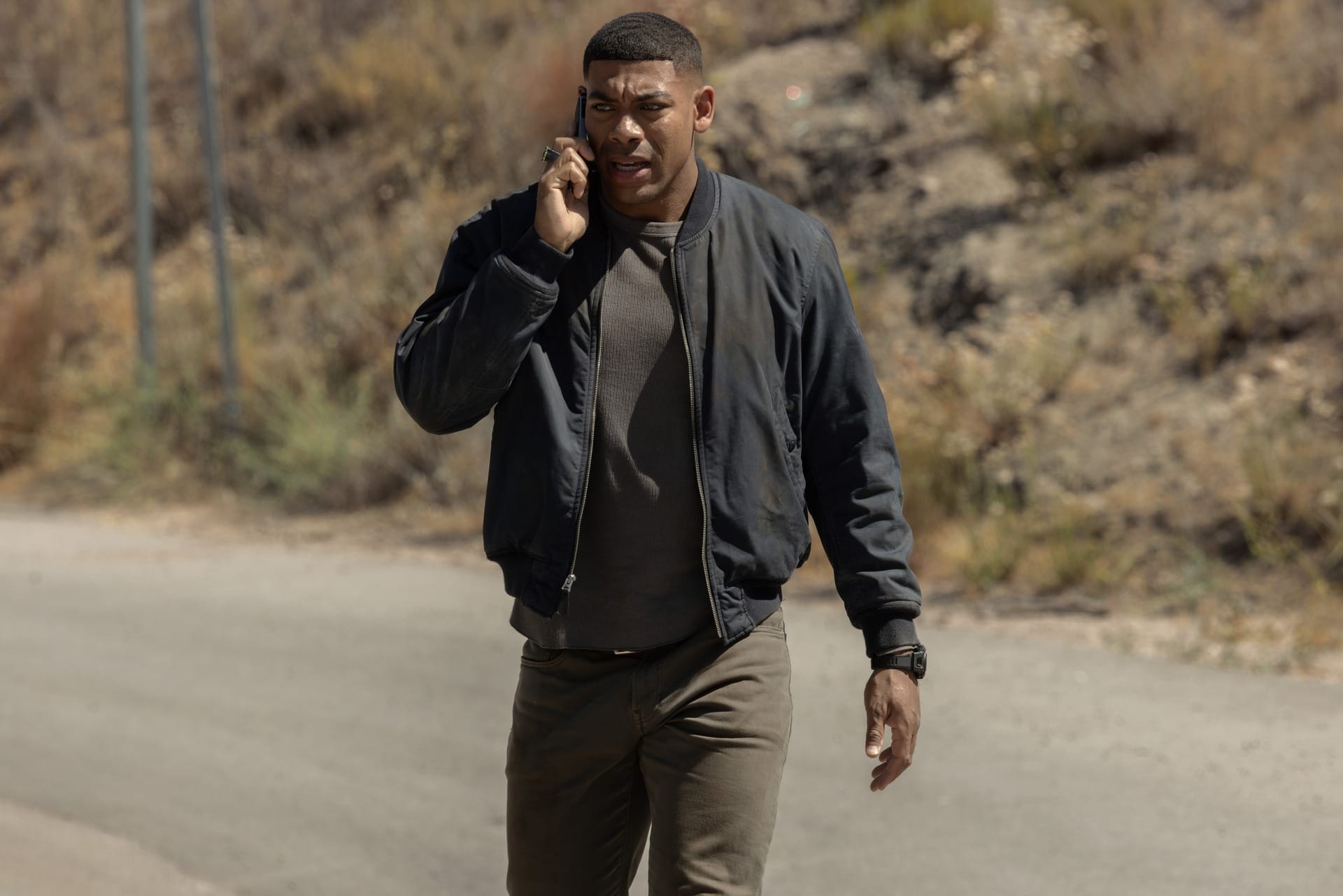
The concept of a gritty superhero reboot with minimal costumed antics now feels like a bit of a throwback, evoking the grounded tone of films like Chronicle and Christopher Nolan’s Batman trilogy. Instead of leaning into the fantasy visuals of the Green Lantern ring, which can manifest anything from a fighter jet to a dinosaur, Lanterns introduces its defining superpowers in a sparing manner. We don’t see John use the ring to escape the car (he mentions later that he surrounded himself in bubble wrap), but while he’s walking down the road to find Hal, he activates the ring and awakens a backup of Hal’s consciousness.
This “Halogram,” as John later dubs it, is a decade younger than the Hal we know in real life: a telling detail because Lanterns are meant to upload their consciousness to their ring once a week. Hal has been slacking, and there’s a visible difference in attitude between this younger, more upbeat version of Hal and the unshaven, hungover cynic of 2016. More importantly, the Halogram has a cryptic message for John to pass on to the real Hal: “There’s hail in Rushville, Nebraska.” When John finally catches up to him a few miles down the road, Hal reacts to this message like it’s a major emergency, zooming off into the sky and leaving John to find his own way to Nebraska.
When John arrives in Rushville, it’s obvious where Hal will be. A mass shooting took place here a few hours earlier, and emergency services are still processing witnesses at the town’s football field, where John finds Hal watching from the stands. Rushville’s sheriff, a woman named Kerry, is already exasperated by Hal’s presence, arguing that Green Lanterns have no jurisdiction here—a fair point because gun crime isn’t part of their extraterrestrial purview.
Here we get our first look at Hal and John’s respective abilities as detectives, with Hal leaning heavily on folksy charm while John, a former Marine sniper, has a good eye for detail. Hal believes that aliens were involved in the shooting, a suspicion that he frames as a gut feeling until John points out that Hal was clearly surveilling the town beforehand, programming his ring to deliver that warning about “hail,” i.e., aliens. So far, there’s no tangible evidence of extraterrestrial activity, but Hal, John, and Kerry all single out the same suspicious man in the crowd: an out-of-towner who spooks when he notices John watching him, leading to a chase and, ultimately, an arrest.
Unfortunately, Sheriff Kerry won’t let Hal interrogate the suspect, so Hal hatches a stupid plan: he'll start a bar fight and get arrested, hopefully landing himself in the same jail cell overnight. Why doesn’t he just break into the jail using his ring? A good question. Possibly this is just a sign of Hal being self-destructive and unimaginative, but that level of lawbreaking also carries a lot of risk, in a location where (as Kerry repeatedly reminds us) the Lanterns have no legal power. Either way, their visit to a local bar gives Hal and John a chance for a heart-to-heart, where Hal shares some more detail on how he became Green Lantern.
Remixing the character’s 1950s origin story, Hal gained the ring under extenuating circumstances. He only got the gig because his predecessor, Abin Sur, crashed his spaceship a few hundred miles away, and Hal was the closest qualified candidate. Sur survived just long enough to pass on the ring and its attendant responsibilities, but in Hal’s description of this experience, he doesn’t paint himself in a flattering light. On the night in question, Hal was “sleeping off about nine too many” when Abin Sur’s ring dragged him out of bed and flew him to the crash site. So that’s how Earth got its first Green Lantern: a test pilot with a drinking problem and no training for the task at hand. (Notably, Abin Sur crashed a few miles away from Rushville, which is why Hal has been keeping an eye on the area ever since.)
Hal refers to this as getting the job “the old-fashioned way,” rolling his eyes at the idea of John going through a formal interview process with the Guardians. John, meanwhile, makes the valid point that maybe Green Lanterns should have to prove themselves instead of “getting randomly selected.” The contrast between these two men couldn’t be more obvious, with John referring to Hal as “sir” and proclaiming his respect for the chain of command, while Hal uses his superpowers to manifest a fake banknote for the bar’s jukebox.
As Hal proceeds with his bar-fight scheme, John strikes up a conversation with a woman sitting nearby, and they ultimately hook up in her truck outside. Their sexual chemistry isn’t particularly convincing, but more importantly, this woman was sitting right within earshot the whole time Hal was yapping on about Green Lantern business—an issue that becomes more of a concern a few scenes later, when we learn her true identity.
It turns out that Sheriff Kerry saw right through Hal’s plan, locking him in a separate room from the suspect overnight. With bail set at $200,000, Hal only gets out thanks to the interference of a shady rich guy named William Macon, whose money comes with strings attached: he wants to meet Green Lantern. So Hal and John set off to Macon’s home, a massive compound with some kind of militia practicing their shooting on the grounds.
The vibes are off from the start, with Macon presenting an image of faux-cowboy masculinity as he butchers meat for a barbecue and thanks John for his military service, making it clear that he’s already done a background check on his visitors. Macon’s house is more like a mansion, and his influence over the town goes beyond guns and money. His son is the lawyer who got Hal out on bail, and that son is married to Kerry, connecting Macon to two different branches of the local legal system.
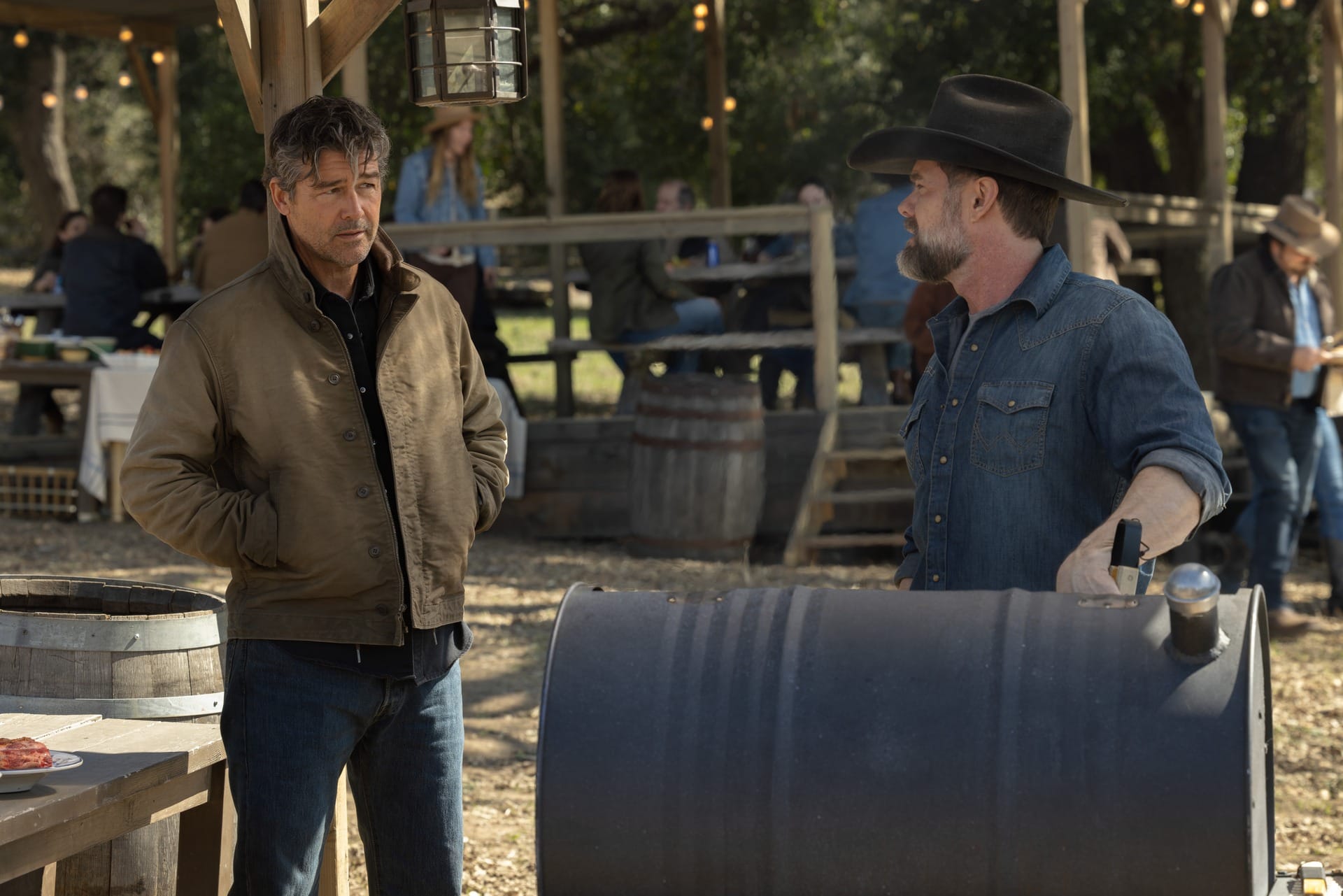
Intriguingly, Macon describes himself as “just the caretaker” of his sprawling compound, which is owned and funded by an anonymous benefactor. Aware of how this all looks, he asks Hal, “You think we bailed you out to enlist you in some wackadoo war with the feds?” That’s a fair assumption, but Macon’s true motives are more peculiar: like Hal, he believes that the men at yesterday’s shooting were aliens. This revelation raises more questions than answers—as does the arrival of Macon’s wife, Zoe, who we discover is the woman John met at the bar last night. So that maybe wasn’t just a random coincidental hookup.
Playing host by the grill, Macon delivers a rather on-the-nose speech about his fear of alien colonization. “I’m not some isolationist crackpot…but I am a student of history.” His ranch stands on land that once belonged to the Kiowa and the Sioux, “but across the ocean, boats were coming.” His militia are preparing to battle an invasion, and he suspects that the man currently sitting in Rushville’s dinky little jail is part of an alien advance team.
It’s kind of funny to see a character literally announce the subtext of the alien invasion genre, which can often be interpreted through the lens of colonial guilt, overlapping with post-apocalyptic fiction about protecting the homestead from outsiders. At the same time, Macon’s role alludes to real events like the Bundy standoff, gesturing toward right-wing extremism without engaging very deeply with realistic politics.
Now seems like as good a time as any to take note of Lanterns’s showrunners, the most well-known of whom is obviously Damon Lindelof. His movie work includes Cowboys & Aliens, World War Z, and Star Trek Into Darkness (lol), offset by critical acclaim for HBO's Watchmen and The Leftovers, both of which suggest an ongoing interest in American conspiracy politics.
On Lanterns, he pairs up with Chris Mundy (showrunner of Ozark and co-producer of True Detective: Night Country) and the prominent DC/Marvel writer Tom King, who is known for writing major DC comics like Batman and Supergirl, and now plays a key role in the construction of James Gunn’s recently rebooted DCU. King’s other claim to fame is his former career as a CIA counterterrorism officer during the Bush administration, where he apparently “loved” serving in war zones in Iraq and Afghanistan. He draws from his CIA experience in a lot of his creative work, so make of that what you will.
One of the recurring conversations around recent superhero media is how to depict “crime-fighting” in an era of growing skepticism toward law enforcement. Like HBO’s Watchmen, Lanterns goes the route of highlighting the flaws of the system. The Green Lantern Corps’ recruitment methods are clearly problematic, and John’s role invites comparisons to racial discrimination in human policing, a theme that played into his 1970s origin story in the comics. Instead of a mythic tale where the Green Lantern ring selects a worthy hero like Excalibur with King Arthur, Lanterns positions Hal as a man with dubious qualifications, clinging to unearned power.
The best scene of the episode arrives in the final act, when the sheriff (persuaded by Macon) allows Hal into an interrogation room with their suspect. He’s an entirely average-looking white guy named Waylon Sanders, and Kerry is very skeptical of Hal’s belief that he’s an alien, pointing out that Waylon has a five-year work history as a truck driver. Hal counters this with the argument that numerous alien races can disguise themselves as humans, and they’re also fully capable of getting false IDs.
For most of this episode, the traditional elements of Green Lantern’s job have largely remained offscreen. There are casual mentions of Hal rescuing people from a meteor strike and going on diplomatic missions to other planets, but we don’t see him doing much superhero-ing in 2016. For the most part, he comes across as unreliable and insincere, often pretending to be less intelligent than he actually is. He also doesn’t seem to have any personal relationships, which Kerry sees as a red flag, saying that Hal is only fearless because “he doesn’t care about anybody.” As a wife and mother who is responsible for maintaining calm in the wake of a mass shooting, she’s coming to this case from a very different perspective.
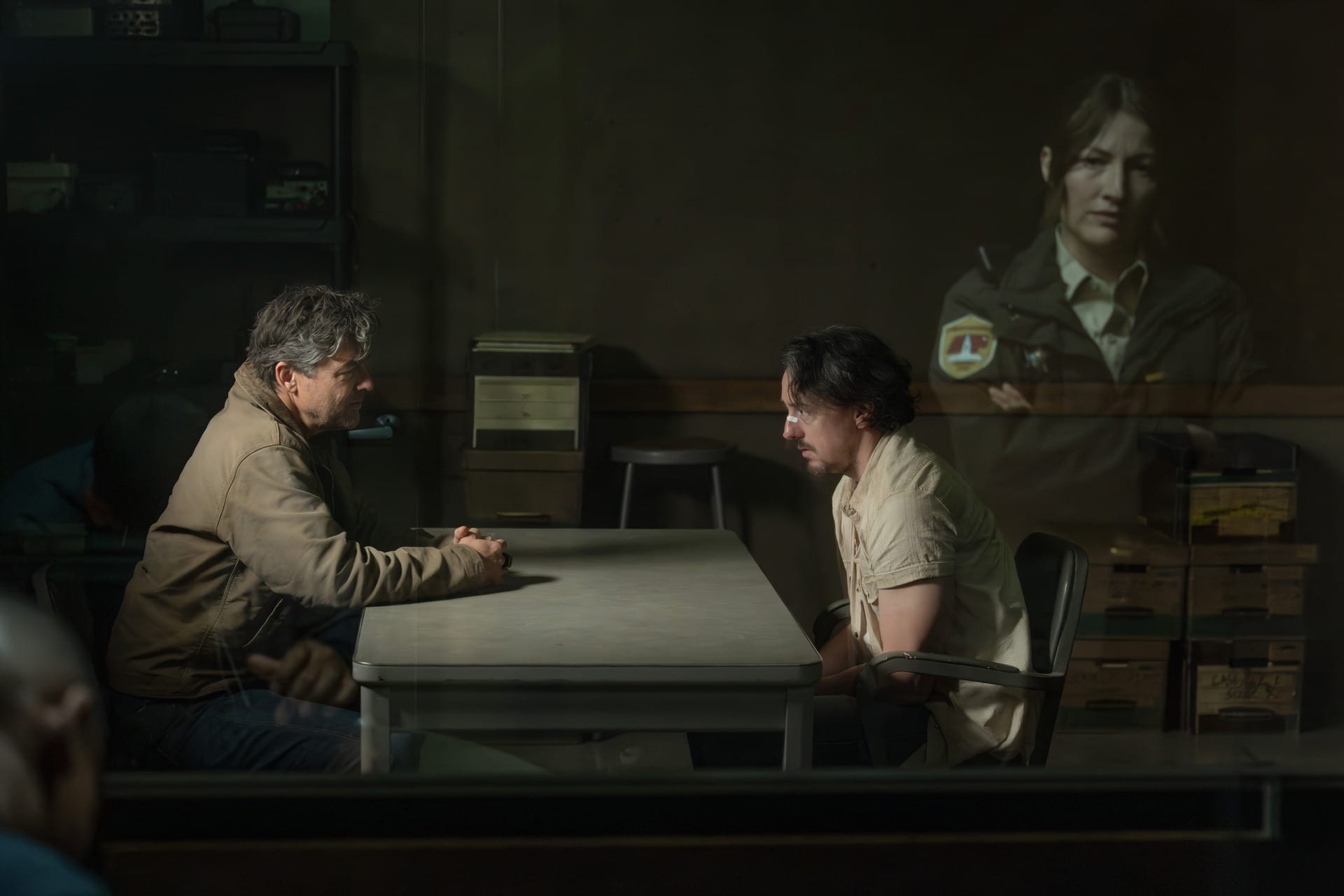
In the interrogation room, Hal begins by asking Waylon Sanders some football trivia, testing his cover story as an out-of-town fan who is supposedly visiting Rushville for a rivalry game. Waylon knows plenty of football stats, but things start to go off the rails when Hal shifts focus to general knowledge. “Where did Harry Potter go to school?” he asks. Waylon is stumped. Waylon also has no opinion on Barack Obama beyond the fact that he’s the 44th president of the United States, a highly implausible viewpoint, Hal notes, for a man of Waylon’s demographic in 2016. “Oh shit, you are an alien,” Hal remarks. This line of questioning is a tactic that could only come from his Green Lantern experience, which John and Kerry obviously lack.
Abandoning his trucker persona, Waylon suddenly becomes more eloquent, pointing out that if he went to all this trouble to blend in as human, he must surely be here for an important purpose. He also has no interest in cooperating with a representative of “a galactic peacekeeping organization,” on the grounds that his mission “concerns the exact opposite of peace.”
Revealing that he has a bomb woven into his skeleton—a bomb that comes with the rather cartoonish element of a ticking countdown—he gives Hal just enough time to contain him inside a green forcefield before he explodes. So aliens have come to Rushville, Nebraska, but we have no idea why.
True Detective is getting namechecked a lot in the promo for this show, but HBO’s Watchmen feels like an equally relevant comparison. Watchmen and Lanterns both use superhero IP to explore race and law enforcement in America, but where Watchmen delivered an edgy and thought-provoking (albeit imperfect) tale about anti-Black racism and the conflicted legacy of vigilante justice, Lanterns aims for a more conventional crime-drama format.
As for the True Detective connection, the similarities are obvious—including the time jump I’m about to discuss in this episode’s final scene. But I’m not sure it was a smart idea to encourage direct comparisons to one of HBO’s most popular titles. Lanterns and True Detective share a lot of DNA as crime dramas about rural Americana, masculinity, and the fallibility of law enforcement. Both revolve around difficult partnerships between two (kind of) cops on a (kind of) murder investigation, and HBO even attempted to cast Matthew McConaughey as Hal Jordan.
But Lanterns features far less sophisticated characterization and direction than the iconic debut season of True Detective, centering on relatively straightforward reimaginings of John Stewart and Hal Jordan. That doesn’t mean Lanterns is a bad show, but it definitely plays into the inside-baseball media commentary about HBO embracing mainstream franchise material.
In its final few minutes, the pilot episode makes a True Detective-style jump from 2016 to the present day, confirming that the main storyline is actually unfolding in retrospect. Set in 2026, the epilogue sees an older John Stewart return to Rushville in the dead of night, driving through a wintry landscape to meet with Kerry, who is still the sheriff.
Echoing John’s first visit to the town, Kerry takes him to the football field, where Hal’s dead body is now sitting in the stands. He’s been shot in the head, and John’s first move is to check his hand for the ring. It’s missing, raising a multitude of questions about John’s aspirations to become the next Green Lantern. On the surface, the most obvious explanation is that John isn’t a Green Lantern in 2026, but the sixty-something Hal still is.
Of course, there are plenty of other possibilities here, including a hypothetical (albeit unlikely) scenario where John expects Hal to have the ring because he stole it from John. DCU fans will also know that a) Guy Gardner is an established Green Lantern by the mid-2020s setting of James Gunn's Superman, and b) John Stewart is slated to appear in the Superman sequel, presumably also as a Green Lantern. So while John doesn’t have a ring in this scene, the episode leaves things open-ended regarding the identity (and number) of Green Lanterns operating in the present day.
To borrow another hero’s catchphrase, this episode wants us to consider that great power comes with great responsibility. Hal has already established himself as an irresponsible figure, although maybe he wasn’t always this way. The Halogram’s cheerful demeanor certainly suggests that he’s changed over the past few years. Meanwhile, John is easy to root for as a more competent replacement, but he hasn’t yet faced a true test of his mettle.
Then there are the broader questions about the worthiness of the Green Lantern Corps itself—an organization with a flawed recruitment system and obscure ideals, which positions a Green Lantern ring as a supernatural version of a cop’s badge and gun. Behind all this, the future role of Guy Gardner hangs around like a bad smell. James Gunn’s Superman (2025) depicted him as vain and stupid, undercutting any lingering belief that Green Lantern rings are automatically awarded to the worthy. So as John attempts to prove himself as Hal’s successor, we have to wonder what that honor actually represents.