The Death of the Artist Alley?
For smaller artists, increased costs and outsized merchandise expectations are putting convention-selling out of reach.

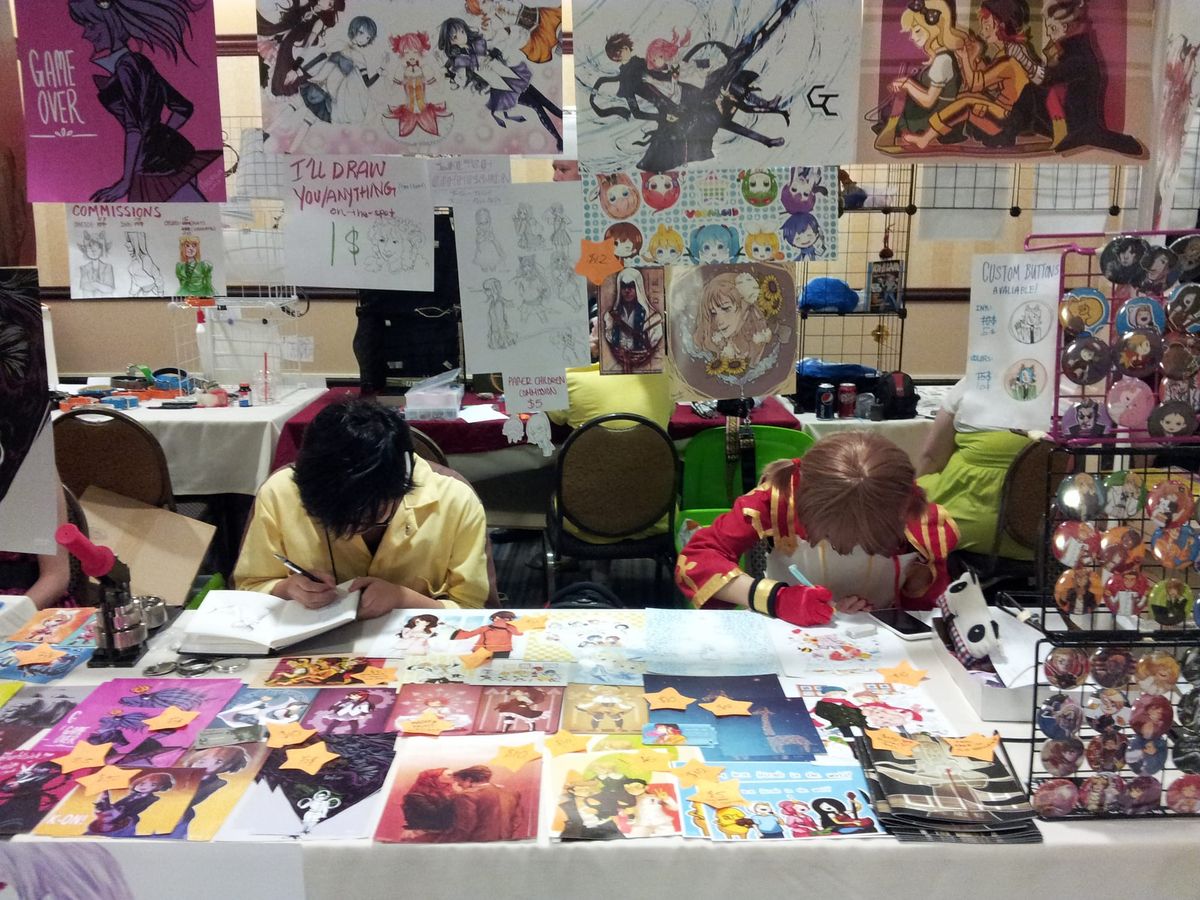
Anime, comics and pop culture conventions often have a section of the show floor dedicated to “artist alley”—a place for independent artmakers to sell their wares, distinct from the dealer’s hall where one would find licensed media and specialty collectors. For many convention attendees, the artist alley (AA) is the primary draw of attending a convention. Dozens to hundreds of independent artists, sharing unique interpretations of established media properties or wholly original work, with a diversity of style and merchandise on offer. There really is something for everyone…or is there?
Over the last 15 years, artist alley tables have gone from something teenagers can do on weekends with homemade merchandise to elaborate, multi-level setups that require thousands of dollars before they can even start. The new realities of the industry make it difficult to continue to table as a hobby—and even more difficult to turn it into a sustainable art career.
I started attending anime and comic conventions in 2012 and tabling at comics and zine festivals in 2018, selling primarily comics, prints, and stickers. I’ve split a table with my friends at Anime NYC and helped organize the first zinefest at the Princeton Public Library. In my years of attending and vending at these types of shows, I’ve made a lot of friends and seen a lot of changes. For this piece, I’ve interviewed a number of fans and artists from all over the country with a wide range of experiences, asking what they’ve noticed about artist alleys over time.
A major reason for the increasing inaccessibility—one almost all of my interviewees mentioned immediately—is the rising costs of attending cons. Since IRL anime and comics conventions came back in full force after COVID-19 lockdowns ended, the events have only gotten more expensive for both visitors to attend and aspiring exhibitors to vend at, at rates far outpacing inflation.
Tabling at cons has become much more expensive and competitive, with many seasoned AA vendors complaining that they’re unable to get tables at shows they used to be able to do every year, forcing them to do smaller, more local anime conventions and other types of events such as craft fairs and flea markets. This, in turn, pushes out the artists who specialize in those smaller events—and this pattern forces hobbyists and newcomers out of the space, leading to a more homogenous, stagnating scene.
When I tabled at Anime NYC in 2019 with my friend, we paid $245 for three days, and we each made back our half of the table fee easily. But when we got accepted again in 2024—just five years later—the table fee had nearly doubled, increasing to $400 for three days. We ended up splitting the table three ways to make it affordable.
Artist and event organizer Faiell, who has been vending at artist alleys as a hobbyist since 2014, told me that, “From a vendor POV, the increase in cost is very obvious—I used to expect tables to cost $100-300 depending on the convention’s size and attendance. Some tables cost $600-700 now. The other main thing is the number of vendors doing AA has gone up astronomically. Acceptance rates are therefore at an all-time low. It’s difficult to lock down anything these days, especially at cons that are more established.”