Sam Wilson Deserved Better Than Brave New World
Marvel wants fans to care about lore without thinking too deeply about themes and emotions—the things that brought them to this fandom in the first place.

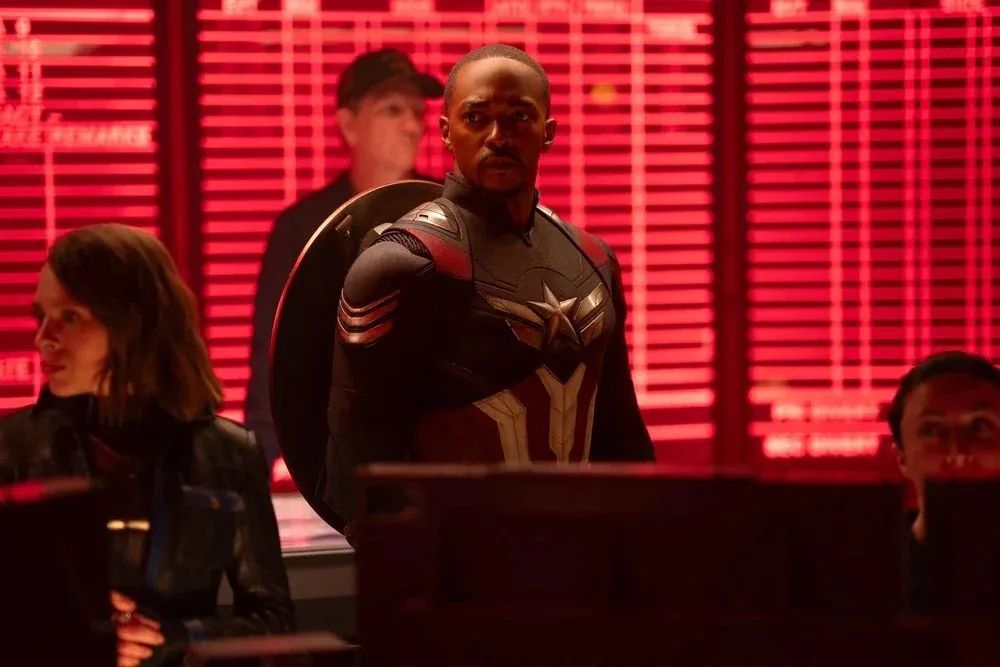
Captain America: Brave New World is something of an experiment for the MCU: the first time they’ve passed the torch of a major franchise from one character to another. Over in the comics, Sam Wilson adopted the Captain America mantle in 2015, a decision that attracted a lot of media attention (and bigoted backlash) in conjunction with other revamped titles like Miles Morales as Spider-Man and Kamala Khan as Ms. Marvel. DC Comics already had a long history of recasting classic superheroes (for instance the ever-growing roster of Robins), but these Marvel reboots were more directly geared toward diversifying the publisher’s ensemble cast—and by extension, its audience.
Ten years later in the MCU, fans were well prepared for Sam Wilson’s reintroduction as Captain America. Already an established Avenger, he recently starred in his own TV series The Falcon and the Winter Soldier, which segues into Brave New World as his first solo movie. In the comics, this kind of reboot tends to arrive with a bang, acting as a mission statement for why fans should care about a new hero replacing their old fave. Brave New World was meant to do something similar. It’s still a big deal for a Black man to embody Marvel’s symbol of American patriotism, and this was a chance to give Sam a more distinctive voice than he received as a supporting Avenger.
But when you watch Brave New World, it rapidly becomes clear that Marvel doesn’t really know what to do with Sam Wilson. The film seems more interested in decade-old MCU lore than it is in Sam’s personal journey—never mind his potential as the figurehead of an overtly political franchise. While the comics courted controversy with bold storylines like Captain America battling a right-wing border control militia, Brave New World only makes vague allusions to hot-button issues.
As someone who was unironically invested in the mid-2010s heyday of MCU fandom, it’s frustrating to see Sam Wilson’s writers fail to learn from the strengths of those early movies. The first two Cap films are still among the MCU’s best, establishing Steve Rogers first as an old-school Nazi-punching hero, then as a more sombre protagonist in the present day, willing to stand up to powerful enemies no matter the cost.
Steve’s whole schtick revolves around the contrast between his image (a blond, muscular man who wears the stars and stripes) and his personality as a scrappy underdog with an unshakable hatred of injustice and authoritarianism—an idea that fanfic writers enthusiastically expanded, envisioning him as a champion of leftist values. Captain America: The Winter Soldier saw Steve discover a fascist conspiracy in the heart of the U.S. government. He and his allies (including Sam!) end up dismantling the law enforcement agency S.H.I.E.L.D., leaking classified documents to the public, and destroying a malevolent flotilla of surveillance vessels. It remains one of the most popular movies in Marvel’s transformative fandom, not just due to its fruitful worldbuilding, but because (let’s be real here) it hinges on Steve’s intense relationship with his best friend Bucky.
Sam doesn’t really have a person like that in his life, and Brave New World fails to introduce a relationship with similar narrative impact. From a shipping perspective, fandom tends to pair him with Steve (who is canonically out of the picture) or Bucky (who appears here for a five-minute cameo), but for the purposes of this movie, his main supporting character is the new Falcon Joaquin Torres, squarely positioned in a quippy sidekick role. This lack of a compelling emotional hook makes Sam’s story less memorable than it should be; a below-average entry in an ongoing franchise where we’ve already seen several other movies with overlapping themes.
In 2025, when audiences are already losing interest in the MCU, that just doesn’t cut it. If anything, Sam deserved a solo reintroduction with a similar energy to Black Panther or Guardians of the Galaxy—movies that grabbed the public’s attention because they did something new, confidently committing to a specific theme or aesthetic.