Putting Away Childish Things
In The Book of Dust trilogy, Philip Pullman does what few authors for young readers ever attempt: he lets his protagonist grow up.

“The universal skepticism she’d learnt … made her sternly reject the world of dreams and occult significances. They were childish things, worthless rubbish.”
So says Lyra Silvertongue, the heroine of Philip Pullman’s His Dark Materials trilogy, in his 2019 follow-up novel The Secret Commonwealth.[1] Part of a sequel trilogy known as The Book of Dust, The Secret Commonwealth reintroduced readers to a very different Lyra than the one they’d first gotten to know in The Golden Compass, published in 1995.
Fansplaining is part of the Bookshop.org affiliate program. If you click on any of the book links in this piece and buy through our shop, we get a commission! ↩︎
In The Golden Compass, Lyra is a brash child who makes up elaborate stories on the spot, using her “silver tongue” and moxie to get herself and her friends out of a series of harrowing situations. Over the course of the original trilogy, which ended with The Amber Spyglass in 2000, Lyra passed through the crucible of adolescence in the most dramatic way possible: along with her friend Will, she traveled through countless other worlds, freed the trapped souls in the world of the dead, and killed God. An enormously ambitious book, The Amber Spyglass became the first and, to date, only novel for children to be longlisted for the Booker Prize.
The Secret Commonwealth, the second installment in The Book of Dust, was published 19 years after The Amber Spyglass. Like the children who grew up reading about her adventures as His Dark Materials was published, Lyra is now a grown-up. In The Golden Compass, she scrambled around on the roofs of Oxford’s colleges as a ward; now, she’s a student herself. She’s also older and more jaded, and has come under the sway of influential philosophers who question the existence of the supernatural forces she encountered as a young person. As she reflects, “She thought she’d been certain about things when she came back from the north, but the things she’d learnt during her adventures there seemed so far away now; all that remained was a scatter of vivid impressions.”
The most elemental supernatural component of Pullman’s world is the existence of daemons, externalized souls that take the form of animals like Lyra’s beloved Pan, who takes the form of a pine marten. It’s a mark of how far Lyra has traveled from her younger self that she even goes so far as to consider the work of a philosopher who insists that daemons don’t exist. Appalled by Lyra’s increasing cynicism, Pan rebels and flees to “find [Lyra’s] imagination.” In the wake of his disappearance, Lyra realizes that “exalt[ing] reason” has led to “the deepest unhappiness she had ever felt.” In The Secret Commonwealth and the final book in the new trilogy, The Rose Field, which was released late last year, Lyra sets out to reunite with Pan and to find her imagination again. But these quests won’t be easy.
Meeting Lyra as a college student is a jarring experience. As a child, I read and adored His Dark Materials. Unlike some writers for children, Pullman never felt like he was talking down to me as a reader. Equally important, he was willing to deal with serious topics, like religion and death. But most of all, I was drawn to Lyra. She was haughty, like her noble father, and I could be haughty (and obnoxious), too—I was supremely confident in my own smarts and creativity. But I was also shy, and meeting other kids made me nervous. Lyra, who charmed nearly everyone she met and could walk into any situation and make up a story that was not only believable but got her and her friends out of trouble, amazed me. I wanted to be like her.
Lyra isn’t infallible in His Dark Materials: she experiences fear, grief, and moments of failure, as when she inadvertently leads her friend Roger to her father in The Golden Compass, only for her father to kill Roger in order to use his life energy to open up a pathway to another world. But after suffering these failures or moments of terror throughout the original trilogy, she rallies. In The Book of Dust, by contrast, Lyra doubts herself and is skeptical about how the world works. It’s startling to read these passages and even more distressing to read about her experiencing profound unhappiness as an adult, even if those experiences aren’t unusual for adults in the real world—especially adults who, like Lyra, have lived through serious childhood trauma.
By returning to an older Lyra, Pullman made an unusual choice for an author of children’s literature: he followed his protagonist, like her readers, into her adult life. As a result, the tone, structure, and essential philosophy of The Book of Dust are starkly different from that of His Dark Materials. The novels that make up the original trilogy are remarkably complex for a young adult series, grappling with questions about religion and authoritarianism, and showing Lyra’s parents as bad people who ultimately come together to protect their daughter. As sophisticated as these books are, however, they are ultimately targeted at children. The philosophical questions Pullman raises are resolved, and though the end of the book may be sad, it’s also emotionally satisfying.
The Book of Dust, which is aimed at the adult readers who read His Dark Materials as children, has a different approach to storytelling. The plotlines of the second two books in the trilogy, which focus on Lyra as an adult, are diffuse, complex, and can’t be easily resolved. Like most adults in the real world, Lyra’s problems are as internal as they are external. Pullman’s commitment to showing adult life as it really is, skewed through the lens of a former YA heroine, is startling and novel. But this change of pace has also made The Book of Dust unsatisfying to many of his readers.
The fact that Pullman’s reintroduction of his child heroine as an adult protagonist feels so surprising speaks to the novelty of his approach. In addition to His Dark Materials, the major touchstones of children’s or young adult literature for most millennials are Harry Potter, The Hunger Games, and Twilight.
All of these book series have been transformed into franchises: Harry Potter now boasts four theme parks around the world, a hit play, multiple film franchises, and an upcoming television series; The Hunger Games has spawned multiple film franchises and a prequel novel; and Twilight became a juggernaut film series with a companion novel. Of these three, only Harry Potter has generated a work that follows the characters as adults, the play The Cursed Child, and even that work primarily focuses on the next generation of children. Furthermore, since it was not actually written by J. K. Rowling (though she contributed to the story), it feels less like a real sequel than an exercise in brand management (and profit-making).
While His Dark Materials has also been adapted for stage and screen, it never dominated pop culture in the same way as these other, more popular franchises. The first movie adaptation, 2007’s The Golden Compass, starring Nicole Kidman, was unsuccessful at the box office, and its sequels were canceled; more recently, a BBC and HBO television adaptation that ran from 2019 to 2022 felt like it was being forgotten even as it was on the air.
When an author writes a series as successful as His Dark Materials, they tend not to branch out. Suzanne Collins and Stephenie Meyer have not written extensively outside of their own hit series; J. K. Rowling has, but she used a pseudonym to write her mystery novels (even if her identity was rapidly leaked to the press). (Recently, Rowling has expended vastly more time and energy on her crusade to eradicate trans people than on her fiction, though she continues to publish.)
But Pullman’s inability to let go of Lyra and her world has felt especially acute. In the 17 years between the publication of His Dark Materials’ final entry, The Amber Spyglass, and La Belle Sauvage, the first installment in The Book of Dust (a prequel that takes place when Lyra is a baby), he published several standalone short stories set in Lyra’s world. When the new trilogy was announced, Pullman said, “Little by little, through that story the idea of what Dust was became clearer and clearer, but I always wanted to return to it and discover more,” referring to the metaphysical particle that drives much of the religious war in His Dark Materials. I can’t say that I finished The Amber Spyglass preoccupied with this question. This was a man consumed by his own worldbuilding.
Yet like many people who can’t leave their finished projects alone, Pullman’s continued tinkering with the world he’d created in The Book of Dust raises more questions than answers. At the end of The Amber Spyglass, Lyra and her companion (and love interest) Will, who has learned how to open windows into other worlds, realize that in order to preserve the universe from soul-eating Specters, they must close all the windows but one. They choose to preserve a window that lets trapped souls out of the world of the dead, allowing them to merge with their daemons and find peace. As Pullman writes in that novel, after spending an eternity in the world of the dead, souls “allowed their atoms to relax and drift apart, at long, long last.” This means that Will and Lyra must separate, and return to their own worlds: people who stay too long in other worlds die prematurely. They will never meet again.

It is therefore bizarre that in The Rose Field, many more openings between worlds appear, and now are considered a good thing. The Magesterium, the nefarious religious organization that rules Lyra’s world, is hell-bent on destroying them, and according to a witch, that’s bad in part because “the openings have been important … in, among other things, preserving the goodness of the air.” Lyra, meanwhile, thinks they’re important because one opening allows for the transfer of rose oil, which allows people to see the mysterious Dust and “understand the truth about things”; she concludes, in a brief rumination that isn’t revisited, that the angel that explained the danger of Specters to her and Will in The Amber Spyglass was wrong about the risks of the windows. Pullman has, therefore, chosen to fully retcon his own work. This isn’t the only element of worldbuilding that Pullman changes, but it’s the most significant.
While some mainstream publications reviewed The Rose Field glowingly, others were not so pleased. The Financial Times griped about the retconning, and some readers expressed similar dismay: as book blogger Wet Broken Things writes, “In The Rose Field, Pullman wants windows open again, but it doesn’t feel tied into the plot, nor was the effort put in to set up this retcon. It just feels like undoing something big and beautiful by authorial dictat.” On Goodreads, people were even more incensed, with one reviewer writing, “the realization that the windows should stay open to allow imagination to flow between worlds completely undermines Will’s and Lyra’s sacrifice. … I don’t think I’ve ever been more frustrated with a book”; and another saying, “A book and ending so poor it has goaded me into making this account and writing my first ever review for GoodReads because I feel the public deserves a warning. This book is not only badly written, it is a moral failing.”
I didn’t have such an extreme reaction to The Rose Field: Pullman’s skill as a writer is undiminished, and more than twenty years after The Amber Spyglass, he’s still more than capable of writing a gripping story, even if that story is made up of plot threads that don’t all cohere.
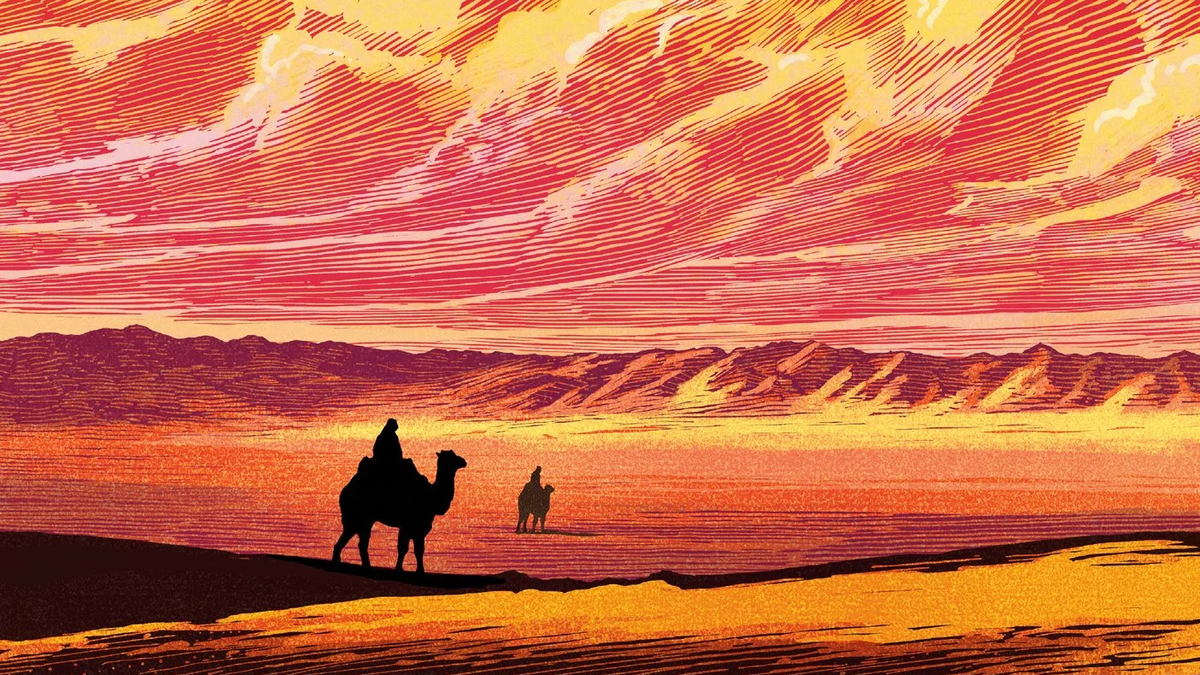
In The Rose Field, Lyra makes her way through the Middle East on a quest to reunite with Pan; as she travels, she must dodge agents of the Magesterium and assume a false identity. Pullman, an avowed fan of John le Carré, draws more strongly on the tradition of espionage fiction in this novel than fantasy fiction, though the novel also includes a delightful plotline involving gryphons fixated on acquiring gold. Fans of His Dark Materials, expecting a repeat of the more propulsive and dramatic plotting of those novels, might reasonably be disappointed by the pace and tone of The Rose Field, to say nothing of the adjustments Pullman has made to his worldbuilding.
Yet even as I acknowledged these flaws, they didn’t really bother me. The Secret Commonwealth and The Rose Field are clearly inferior to His Dark Materials, but like many sequels to famous series, they exist both as a part of and separate from the original texts. Pullman himself said the series was “not a sequel, and it’s not a prequel, it’s an equal.” While it may not be an equal in terms of quality, it exists in an odd parallel space alongside His Dark Materials: most of the characters are new creations, and the series’ tone is extremely different from the original books. I felt that I could appreciate these new novels on their own terms, while allowing His Dark Materials to remain untouched in my mind, a kind of doublethink that is often required when reading or viewing new installments in a franchise years after the originals.
Many fans, myself included, have been disappointed or simply nonplussed by continuations of beloved properties. Any fan of superhero films has recently grown accustomed to multiple “canon” realities existing simultaneously within the same franchise. This is a norm for comic books, which are relatively inexpensive to produce and can spin off countless series; in a more costly film franchise, canon is more restricted. Yet recently, in the interests of synergy and continuing to feature popular actors, studios have incorporated multiple versions of the same character, brought back characters from the dead, and bent narratives to force multiple universes to fit into a single storyline. The effect of these machinations can be torturous for the viewer. While the recent spate of Star Wars films and TV shows have worked to keep a single coherent canon intact, meanwhile, it’s hard to take all these shows and films equally seriously given their ludicrously wide range of quality. Given Hollywood’s current penchant for rebooting or reanimating every once-profitable franchise, more and more fans will have to find ways to square the stories they love with the larger commercial apparatus around them.
The Book of Dust is different from franchises that expand and change largely due to corporate mandates: these books exist because Pullman couldn’t stop thinking about Lyra and her world. Yet the effect on a dedicated reader is similar. Die-hard fans, who know every detail of Lyra’s quest and world by heart, will understandably be frustrated by the changes Pullman has made to his universe. Though I found myself raising my eyebrows while reading, I also felt able to take these books as they are. This mindset stems from my very different position as a reader and person approaching the new series. I was younger than Lyra reading The Amber Spyglass and looked up to her; I’m now considerably older than she is in The Rose Field. Reading about her crisis of faith, her near-suicidal depression, and her confusion at what her role should be in the increasingly complex wider world reminded me of how I felt in my early twenties, but also resonated with things I feel now at 36.
The most radical and successful element of The Book of Dust trilogy is its most elemental: these books are no longer books for and about children, but books for and about adults. The Amber Spyglass is incredibly complex for a children’s book, and it ends tragically—an unusual choice for a children’s writer. But Pullman mitigated these daring elements of his work by providing his characters with a sense of full emotional resolution. After Lyra’s previously dastardly parents decide to become good to protect her, they die: their story is over. And though Lyra and Will are separated at the end of The Amber Spyglass, their separation is for the good of all mankind. In normal life, when lovers are separated forever—usually, by death—there’s no similar consolation.
As a novel aimed at adults, one that engages with the complex personal and political realities that adults in both Lyra’s and our world live with on a daily basis, The Rose Field doesn’t offer such a straightforward solution. While crucial elements of the Magesterium have been undermined, it remains powerful; while Lyra has slowly become reunited with the power of imagination and storytelling, forces that help cure her existential malaise, fascism and capitalism remain in ascendance. As a child, Lyra had the power to change the world as a single person. As an adult, she’s just like the rest of us, struggling to figure out how to live in a world where change is very difficult to effect.
That’s why the end of The Rose Field, though frustrating to some, felt so right to me. The focus of the novel’s climax isn’t on overtaking the Magesterium, or killing God (as in The Amber Spyglass); instead, Pullman finally reunites Lyra and Pan, who have been separated for almost two whole books. “She and Pan whispered murmurs of love and relief and silly happiness. Maybe everything was difficult and dangerous,” Pullman writes, “but for the moment she was content to rejoice in her daemon again.” Lyra learns a great deal in her journey throughout The Book of Dust, but the most important thing she learns is not external but internal. It is a lesson that should resonate with all adult readers: Lyra has learned, after a long struggle, to love herself.