Pokémon Fangames Evolve Beyond Their Origins
For fangame creators, the work they develop and the communities they inspire are inextricably tied.

Pokémon is one of the most adaptable and flexible media franchises in the world. Since it started as a video game over thirty years ago, Pokémon has gotten an anime series, a manga, live-action movie adaptations, loads of toys, and a tabletop card game.
These days, there seems to be a Pokémon game for every type of person. People who like to go outside can catch Pokémon out in the world in Pokémon Go; die-hard strategists can play Pokémon Champions; self-proclaimed cozy gamers can enjoy the adorable Minecraft-like game Pokopia. And, of course, there are the dozens of mainline games where players catch, train, and battle Pokémon that form the core of the franchise fans know and love today.
The first set of Pokémon games, Pokémon Red and Pokémon Green, were released in Japan in 1996. English speakers got their first official introduction to the Japanese video-game franchise when Pokémon Red and Blue were localized and released in North America in 1998. Pokémon is divided up into what the developers call “generations.” Each generation introduces a new region for players to explore and a new set of Pokémon to collect. The most recent generation, gen 9, debuted in the Pokémon Scarlet and Violet games in 2022.
Outside these core titles, spin-off games take the recognizable characters from the Pokémon series and adapt the IP for different concepts. Pokémon Pinball thoughtfully reimagines pinball to include its monster-catch mechanics. Pokémon Unite is a top-down multiplayer online battle arena game reminiscent of League of Legends, except you battle as the Pokémon themselves instead of fantasy heroes. One of my personal favorites, Pokémon Channel, is a pet-simulator game where you take care of a Pikachu that refuses to touch grass.
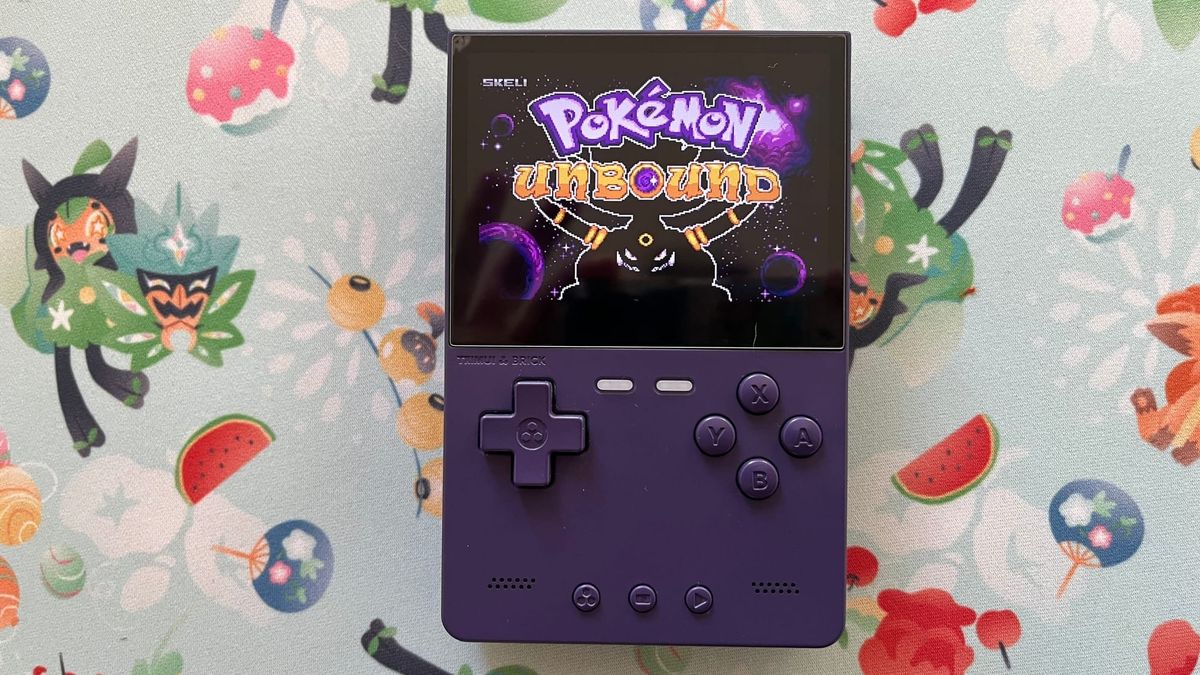
Despite the plethora of officially licensed offerings, fangames have flourished throughout much of Pokémon history. As of today, there’s never been a comprehensive survey of this kind of Pokémon fanwork. Some fan-run wikis suggest that thousands of Pokémon fangames have been released over the decades. According to Bulbapedia, in the 1990s, developers used the ROM-hack method, modifying Game Boy games like Pokémon Red to make minor changes to dialogue. These mods expanded the base content of Pokémon Red, and by the 2000s, they started to gain notoriety and became well-documented within fan communities. Developers like KoolBoyMan created ROM Hacks like Pokémon Brown, which used Pokémon Red as a base and added a new region to explore, a larger PokeDex, and new attack moves.