K-Pop’s Demons, Real and Fictional
KPop Demon Hunters has seen massive mainstream success in the U.S. What does that mean for real K-pop artists and their fans?

In 2012, Rolling Stone published predictions for the top 10 K-pop artists most likely to break through into mainstream U.S. fame in the near future. The list was focused on bands that had already been dominant for years—Girls’ Generation, 2NE1, Big Bang.
Missing from the list were recent rising stars EXO and the newly formed BTS, now generally considered to be the bands that ushered in the “third generation” of K-pop, with fresh new sounds and a general leveling-up of talent. Completely off the radar was the artist behind the major phenomenon that dropped exactly two months after the list: Psy, whose “Gangnam Style” became the first music video in YouTube history to reach one billion views.
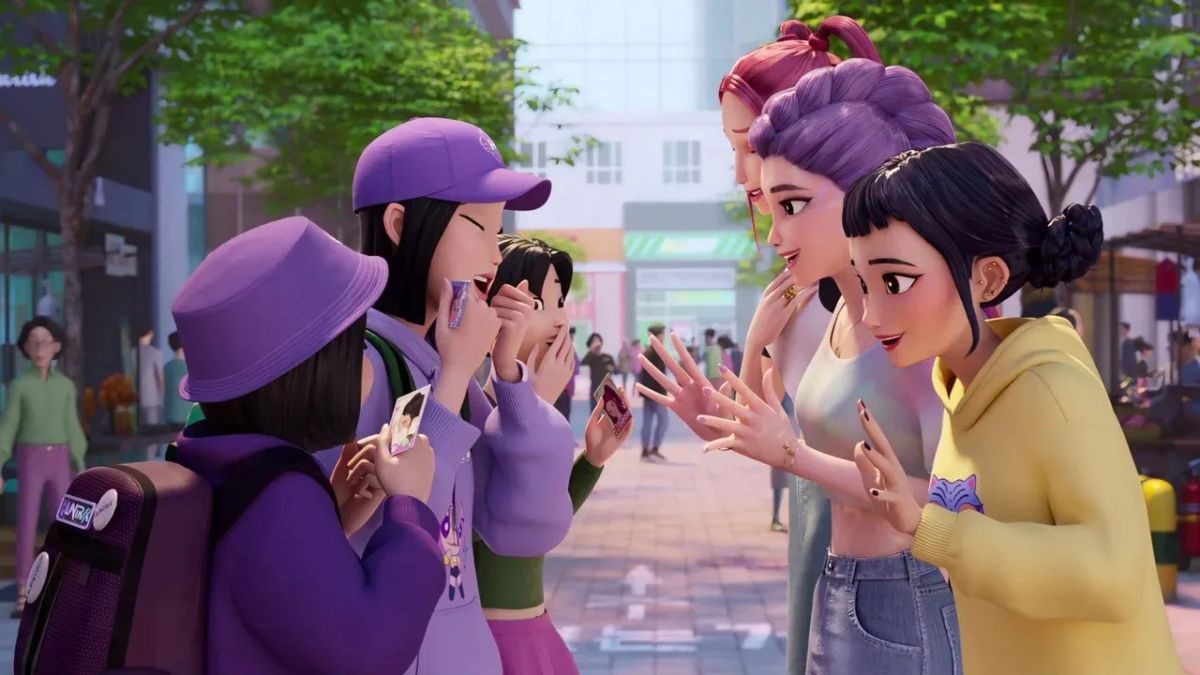
It’s a sign of how little has changed in the years since that no one, not even Netflix, had KPop Demon Hunters on their radar as the global phenomenon it became. In a year where smaller-scale, non-franchise movies have triumphed, the film about a demon-fighting girl group benefited from its broad appeal, the ease of repeat viewings, and one of the most successful soundtracks ever composed. The KPDH fandom sprang up fully formed overnight, eager for more content and in-theatre singalongs—all signs of just how badly the producer, Sony, missed the mark when it essentially gave away KPDH to Netflix despite the film’s flashy $100 million budget.
While the film owes a great deal to its genre-spinning combination of anime tropes, Korean folklore, and a dash of Disneyfication, the media has granted most of the credit for the film’s wild popularity to its K-pop soundtrack. In fact, the film’s success seems to have erased months of handwringing throughout the first half of 2025 about whether K-pop is “in crisis.” The narrative of an underrated Cinderella film, buoying the global rise of K-pop with its smash-hit soundtrack, is a hard one to resist.
But if no one expected KPDH to take over the latter half of 2025, does that mean it’s a game-changer for K-pop as a whole, or a fluke that has nothing to do with the broader K-pop fandom? There’s no question that the film is a cultural watershed. But Korean culture has been down this road before, with breakout series Squid Game and Oscar-winner Parasite, only for follow-ups to fizzle while little has changed at the industry level.
Meanwhile, for K-pop and K-pop fandom, the timing of all this couldn’t be odder—or the stakes fuzzier.