How Boy Throb and Its Fandom Got Famous—and Got a Visa
Was the boy band’s fame a result of Darshan Magdum’s visa, or was his visa a result of the boy band's fame? Yes.

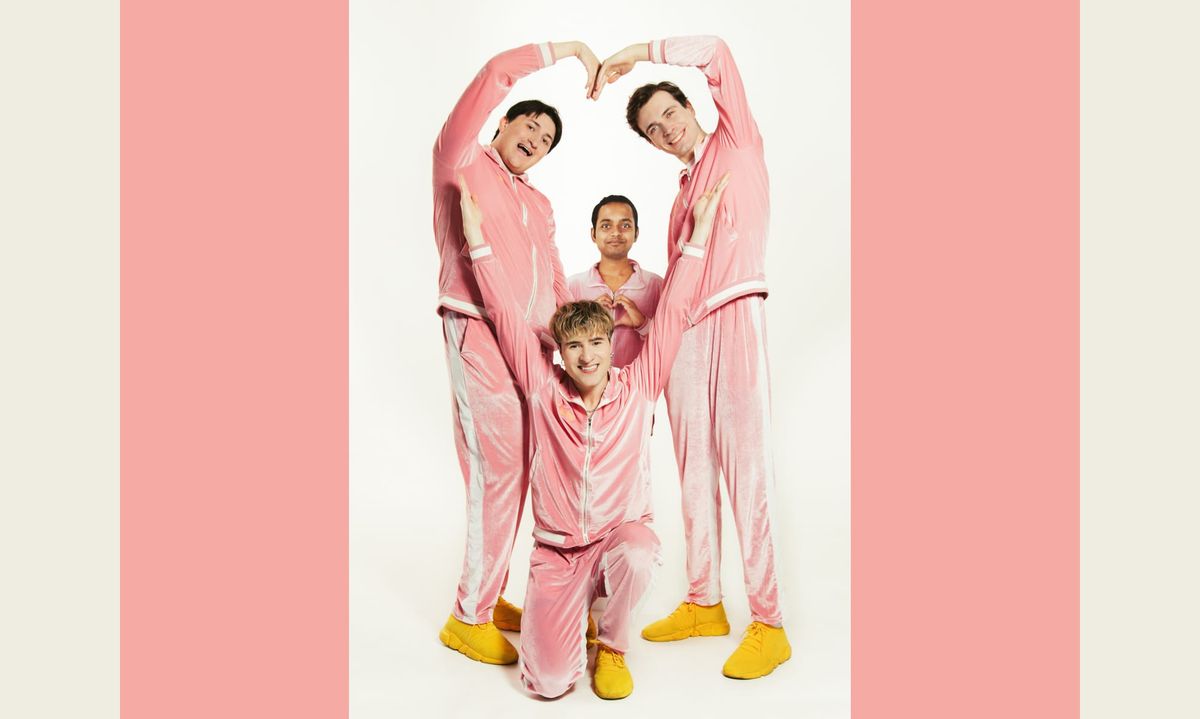
When Boy Throb posted their first video on Instagram in October 2025, they didn’t look quite like any boy band we’d seen before. Members Anthony Key, Evan Papier, and Zachary Sobania bopped around their Hollywood rental property’s backyard in pink velour sweatsuits, explaining that they were “the world’s next biggest boy band,” and that they planned to win a Grammy. They also didn’t yet have a group name, asking viewers to suggest one.
But the soon-to-be-dubbed Boy Throb had a more serious dilemma than a name: Darshan Magdum, their fourth member and the only one who wasn’t a U.S. citizen, was stuck in India. Boy Throb hoped accumulating one million followers would help Magdum get an O-1 visa, a nonimmigrant work visa for individuals with “extraordinary ability.”
The internet didn’t quite know how to react. Sure, the boy band trappings were there—matching outfits, aspirationally synchronized choreography, unabashed enthusiasm—but there was a glorious awkwardness to Boy Throb’s execution that Simon Cowell or Lee Sooman would never let past the practice stage. They seemingly weren’t trying to be Gen Z cool: their thorough embrace of smooth harmonies and slick music video production values were overtly inspired by ’90s-era boy bands like *NSYNC and Backstreet Boys rather than more modern cultural phenomenons. And unlike company-backed boy bands, the members weren’t shiny heartthrobs. When they danced, you could see the effort. Magdum had to Zoom in wearing a pink shirt because he was still waiting for his sweatsuit in the mail.
Paired with the immigration storyline, commenters wondered if Boy Throb might be an elaborate bit, perhaps undertaken by The Rehearsal’s Nathan Fielder, a comedian known for docu-reality TV series that blur the line between the real and fictional in awkwardly profound ways. In the Comedy Central series Nathan For You, Fielder played an eccentric version of his business-school persona, offering “help” to real-life business owners in the form of outlandish marketing suggestions. In The Rehearsal, a Peabody Award-winning comedy series on HBO, Fielder and his team go to elaborate lengths to help people practice difficult moments in their lives. An immigration angle would also tie into Fielder’s own backstory: the Canadian creator worked in the U.S. on a visa before becoming an American citizen last year.
Bit or not, 10 months later, Boy Throb has over 1.3 million followers on TikTok, and they’re approaching the same number on Instagram. People are actually listening to their music, too: they now have more than two million streams on YouTube Music, and an original track with Kesha. In May, they performed their first concert, dubbed Throbcella, to a capacity crowd at Bowery Ballroom in New York City. They’ve released branded content with DoorDash, Canva, and Cerave without sacrificing their aura of silly earnestness. They’ve hit the stage with boy band legends New Kids on the Block, and last month, they completed a mini-tour across the U.S. Former NPR host Ari Shapiro wants them to do a Tiny Desk concert.
Through it all, Magdum has had to Zoom in (and/or appear in cardboard cutout format) to join the Boy Throb adventures. For live performances, he’s pre-recorded his parts, calling in to say hello but never getting to dance alongside his fellow band members on stage. This physical absence has made for an outsized emotional effect: Magdum’s story has struck a chord with fans, some of whom have personal experience with the U.S. immigration system. In the current climate, it’s a particularly striking component of the band’s story. Fans don’t just get to be a fan of Boy Throb’s music; they get to be a small part of helping Magdum get his visa.
Last week, Boy Throb’s relentless months of work paid off: Magdum announced his visa application has been granted. He’s coming to the U.S. to meet his bandmates in person, and to move from cardboard cutout to corporeal in the group’s performances. The TikTok video announcement has over 442,000 likes as of the time of publishing, as fans celebrate both the victory and a future in which Magdum is finally together with the rest of the band.
But what will that future look like? What happens when a fandom at least partially built on an immigration quest achieves their collective goal? How would a Nathan Fielder connection reveal, should it come, affect the band’s relationship with their fans? In a reel-driven pop culture climate in which attention can turn with the slide of a finger, can the passion of boy band fandom keep the boys throbbing?
The United States immigration process has never been an easy one, but since Donald Trump took office for his second term in January 2025, it has become significantly harder. The administration has issued a partial or full travel ban on citizens from 39 countries, and a pause on immigrant visa issuances for 75 countries. They also suspended the refugee program, restarting it only for white South Africans—a halt which led to a roughly 90% decline in refugees admitted into the U.S. These restrictions are all occurring alongside ICE’s often unlawful and frequently violent sweeps in immigrant communities and communities of color across the country, creating a climate of fear among documented and undocumented immigrants alike.
For those who do still qualify for visas amid the Trump administration’s immigration chokehold, staffing cuts and rule changes mean the process is taking longer and has become more expensive. Amidst new vetting guidelines, student visas are down by 40%, which has already contributed to the closure of some colleges and universities. Though a judge recently ruled that Trump’s imposed $100,000 application fee for H-1B work visas, which are used heavily by the tech industry, exceeded his executive office authority, its implementation has led to a 27% drop in registrants. (There’s only been a small drop in H-1B visas issued, though, as the higher fee did not apply to foreigners already inside of the U.S. as students; additionally, most companies are simply choosing not to pay the higher fee.)
It was in this political climate that Boy Throb made Magdum’s immigration efforts a central part of their narrative from the start. They performed songs outside of the Los Angeles Immigration Office. They attempted to bolster the strength of Magdum’s application by garnering media coverage in mainstream outlets, such as Teen Vogue, the BBC, and Cosmopolitan. And, when they received a letter in March from the U.S. Citizenship and Immigration Services (USCIS) requesting more evidence for Magdum's application, they shared its contents and their disappointed reactions with fans via YouTube.
When I interviewed the American members of Boy Throb around their concert in May, they said they had hoped for Magdum to already be with them by that point. “Honestly, we were kind of expecting Darshan to get here after the first application,” said Sobania, who is currently attending law school when he is not writing, recording, and performing as one-fourth of Boy Throb. “We were planning to be performing live with him now.”
The O-1B visa is specifically designed for “individuals with an extraordinary ability in the arts or extraordinary achievement in motion picture or television industry.” To qualify, applicants must prove “sustained national or international acclaim,” and “distinction” in a field of arts as “evidenced by a degree of skill and recognition substantially above that ordinarily encountered, to the extent that you are prominent, renowned, leading, or well-known in the field of arts.” It’s not tied to a specific employer, and it can be extended indefinitely if the worker has qualifying projects. Many notable figures have come to the U.S. via an O-1, including Benedict Cumberbatch, Lionel Messi, and Elon Musk.
Social media has become a powerful marketing and distribution tool for artists and performers in the digital age, and the USCIS now takes this into account when making O-1 visa decisions. “Obviously, a lot of what I've dealt with over the years has been more traditional media, where you know they’ve got records, they've got Grammys, they’ve got sold-out performances in multiple cities,” Kirk Carter, a Massachusetts-based lawyer who specializes in business immigration, told me in an interview. “For the O-1, there’s an international sort of acclaim or notoriety that has to be sustained and demonstrated. In terms of the standards themselves, they really haven’t changed much, but the guidance memos and directions that immigration are providing have evolved, and they do now take into account social media and TikTok and various other avenues of popularity.”
Magdum’s immigration situation got a lot of attention online. An early-era Boy Throb TikTok from user ozakazam asking “can someone get their immigration lawyer on the phone to explain why getting 1M followers will get Darshan a visa” garnered 240,000 likes and a comment from the official Duolingo account that proclaimed, “well i believe boythrob.” One popular user comment stated: “If my friends don't make a fake boy band to get me a visa to immigrate like boy throb they aren't real friends smh.”
But while the USCIS may be getting more hip to the nuances of TikTok culture, it’s unlikely the system has a complex interpretation of fandom and its connection to a performer’s “extraordinary ability.” Magdum proved himself able to bring in the likes and reposts, both as a solo social media creator singing Taylor Swift covers and as one-fourth of Boy Throb. But streams and likes are only one metric—one that can be overstated as a meaningful expression of fandom. Virality can represent fannish enthusiasm, or it can represent the tightly controlled algorithms of the attention economy. This is why Throbcella mattered so much—it was evidence that Boy Throb could get users off of the internet and into a good, old-fashioned IRL space.
At Boy Throb’s Bowery Ballroom show, fans logged off and came out in full force to support Magdum’s quest. Nora, a 35-year-old fan who got to the venue hours early to ensure a good spot, remembered passersby asking what the concert line was for. “A lot of them didn’t know much about the band, but they did know that [the members] were trying to get Darshan his visa, so the immigration aspect seems to have even reached people who might not even be fans of the music,” she told me.
Nora thought that Boy Throb’s underdog vibes played a role in their growing popularity. “Everyone loves to root for something, and pop music is a really great unifier, so when you combine the two, it’s pretty inevitable that Boy Throb is going to bring a lot of people together,” Nora said. “I would say I have learned a bit more about the [immigration] process from following them, and I think that’s true for a lot of their fans, because maybe in some way, by giving people the ability to sing about immigration to the tune of Sabrina Carpenter, it makes the topic a little more accessible to some people.”
Like many Americans, Gabby, a 17-year-old fan who skipped school to wait in line for the Boy Throb concert, has her own experience with the immigration process. “As a daughter with an immigrant parent, I feel very seen and connected to Darshan,” she told me, adding that she helped her mom with her application. “[I also feel close to] the other boys for being so supportive and kind and shedding light on the process and how tedious it truly is.”
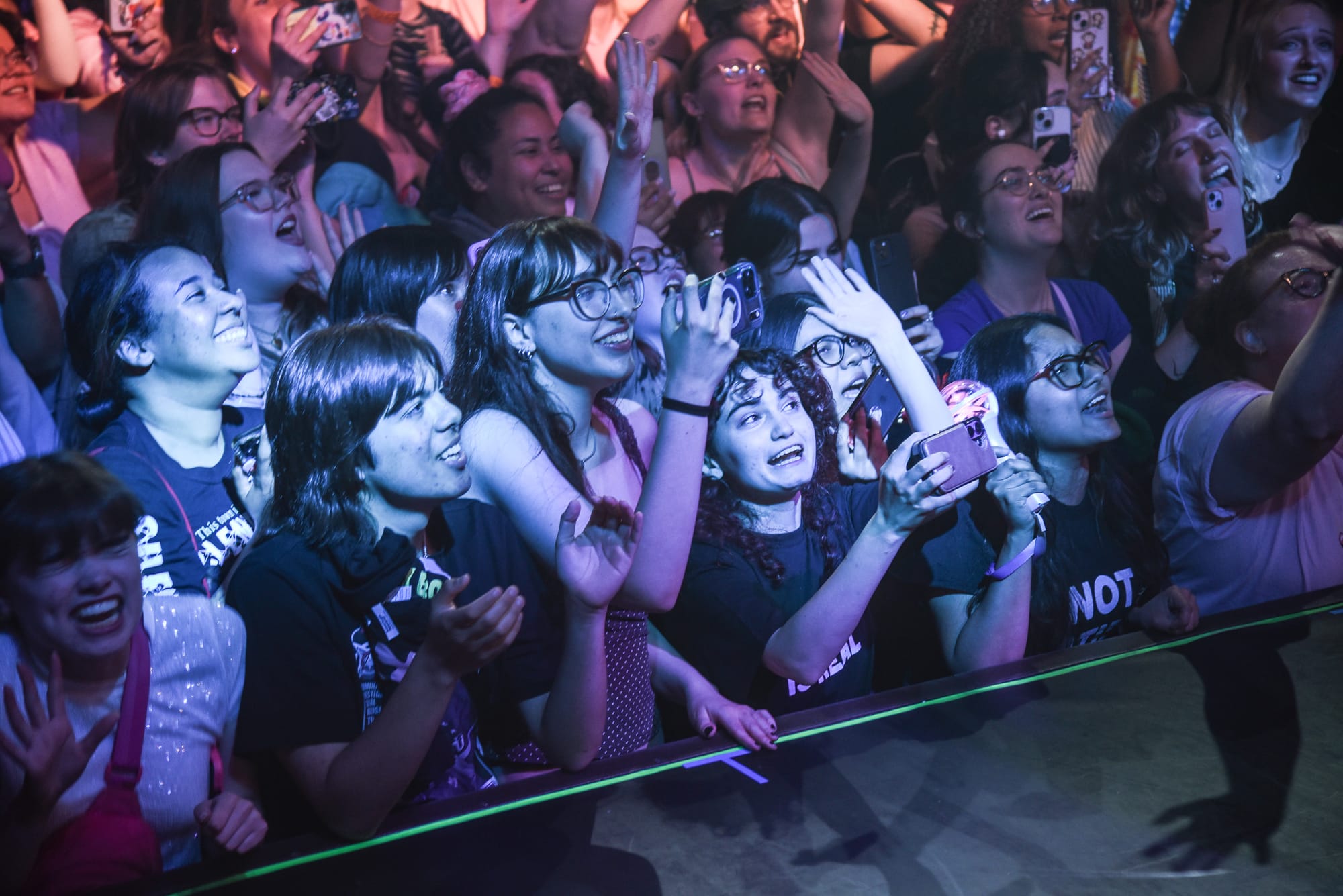
For those who identify as Boy Throb fans (aka Throbbers or The Throb Mob), the draw goes beyond any one aspect of Boy Throb’s story or music. “[I like] the fact that they're a boy band that doesn't have the regular look that society wants a boy band to have,” Gabby said. “For me, that look doesn't matter. It's talent that drew me in.” She first learned about the group from her older brother. “He told me about them, and then we listened to ‘Finger’ together, and I was like, ‘Wait, they're really good.’ I've been hooked ever since.”
Nat, a 19-year-old fan, had a similar fan trajectory. “My interest in Boy Throb started out with finding them endearing and their goal of being with their friend really sweet, and it’s grown into being a genuine fan of their music,” she said. “I don’t think they would have gotten as popular as they did if there wasn’t so much bad stuff happening in the world right now, especially in the U.S. I think they skyrocketed partially because their entire persona is so uplifting and fun, which is a refreshing break against the backdrop of corruption and turmoil in the world right now.”
Like Nora, she noted Boy Throb’s underdog vibes. “Darshan’s goal of getting a visa has definitely played a huge role in my interest in Boy Throb,” she told me. “Their videos are very upbeat and genuine, and I think that style of video editing has attracted a lot of people as well. From my experience from being on the internet, people, especially Gen Z, will want to rally for the underdog, and Darshan is the underdog of Boy Throb.”
As the immigration quest marched on, so did theories about Boy Throb’s potential connection to Nathan Fielder and The Rehearsal. Possible Fielder sightings at Boy Throb events or in behind-the-scenes videos popped up on social media platforms. When the group announced their trifecta of summer shows would be called the “Rehearsal Tour,” with the final stop dubbed “The Apology Show,” speculation spiked. Boy Throb claimed the tour was just a “rehearsal” for when Magdum properly joined them for a live show, and that the “apology” was directed towards the segment of NYC fans who didn’t make it into the Bowery Ballroom for Throbcella.
Still, the evocation of the word “rehearsal,” given all of the online speculation, seemed too pointed. It was enough for us to delay the publication of this article, in case the shape of the Boy Throb story shifted definitively. As Boy Throb prepared for their mini-tour, many netizens, myself included, wondered: Would the NYC-based show end with a big, Fielder-shaped reveal?
The questioning of Boy Throb’s authenticity is a classic boy-band dilemma, which has made the combination of the members’ choice to become a boy band specifically and the immigration-driven quest for legitimacy so gripping.
As they detailed on the Zach Sang Show in February, Boy Throb began when Papier slid into Key’s DMs following their failed auditions on American Idol. Both men were boy-band fans (Key performed BTS’ “Dynamite” for his American Idol audition, and Papier selected One Direction’s “Night Changes” for the Throbcella setlist), and thought the format might work. But they needed the rest of their band of boys. Key and Papier cast a wide net, asking other social media creators known for singing and/or dancing to join their project. Sobania, a Berklee-trained musician, and Magdum, the most-followed of the members on social media at the time, responded.
While Boy Throb’s story may be a unique chapter in boy-band history, it definitely feels like part of the same well-read book. As has been covered by Fansplaining and elsewhere, boy bands get a disproportionate degree of criticism due to their perceived and/or actual proximity to teen girls and women. Mainstream culture loves to question the value of boy band music, performance, and fandom, and they often do so by pointing to a group’s origin as a commercial product. With this argument, if a group was put together by a management company or a television show, their work has minimal artistic merit and is not worthy of discussion past its status as inauthentic.
On the face of it, Boy Throb is harder to discount because they seemingly don’t come from the same corporate backing. While questions about Boy Throb’s origin, methods, and goals may not be totally driven by an impulse to dismiss their music, it’s likely that many people are still deeply uncomfortable with the sincerity of a boy band and are looking for a familiar way to dismiss it. If Boy Throb is Nathan Fielder’s latest project rather than a more organic coming-together of four social media stars who like performing, then a certain type of cultural consumer secures a framing that would allow them to either a) legitimize Boy Throb in spite of their boy-band identity or b) finally dismiss Boy Throb as “fake.”
TikTok creator ohgoditsmicah addressed the urge to question Boy Throb’s authenticity in a reel this past spring: “I’m genuinely sad that Darshan’s visa got declined, and I honestly believe that the visa got declined because you guys made it a discourse whether or not they were a real band or not, whether they were really trying to seek success or it was just a satire group,” she said. “And I honestly believe that if they looked like Jacob Elordi or Timothee Chalamet when he was in his prime, or anyone who fits the ‘beauty standard,’ or at least the beauty standard that Hollywood set, they would have been taken seriously.” Boy Throb commented, “THANK YOU.”
In the grand tradition of boy band fandoms before them, many of Boy Throb’s fans aren’t particularly concerned with questions about the group’s authenticity. “What is the definition of a real boy band?” asked Verity, a 19-year-old fan I interviewed at Throbcella. “Who gets to decide whether someone as an entity is like a legit band or not? I think that people are doubting [Boy Throb] because they see that they don’t take themselves too seriously.”
Last month, “Rehearsal Tour” came and went without any major on-stage reveals. Perhaps Fielder isn’t involved, and the internet-savvy Boy Throb is playing into the rumors for fun and eyeballs. Or maybe Fielder is connected, but the plot twist is being saved for The Rehearsal Season 3. Either way, the speculation has become a fun, fannish activity that, with the naming of the “Rehearsal Tour,” the members of Boy Throb themselves seem to be encouraging.
As the fandom kept growing, the immigration storyline continued apace. In June, Boy Throb introduced a new character in their story: Jonathan, an immigration lawyer who has offered support in Magdum’s O-1 filing. (Dana, the stone-faced lawyer from Boy Throb’s early videos, seemed to have vanished for a period, only recently returning in a celebratory reel.)
“The government was not wrong in wanting to question this case,” Jonathan told us in the video after an intro from the boys. “Darshan’s rise to fame through internet sensation is unique. It’s different. But what’s happened over the past three months since the initial filing, and what I reviewed in preparing this RFE response, is nothing short of amazing. From the positive press, to the sold-out concert, to the growing fanbase, and even the ability to collaborate with well-known popstars, Boy Throb’s rise to fame is truly based on their ability and Darshan’s ability as an extraordinary singer. And this is what we’re trying to show to the government.”
Six weeks later, it finally happened. Boy Throb posted a video to their social media accounts depicting the sweet moment Magdum told Key, Papier, and Sobania that he received visa confirmation. Key immediately started jumping up and down in excitement. “Dude, I’m gonna frickin’ cry, man!” he told Magdum, offering his congratulations. Magdum made it a group victory: “We did it. We did it, guys.” Magdum’s visa approval has led to celebration across the fandom, marking a transition away from the immigration plot that had simultaneously delivered fodder for fans as well as real-life upheaval for Magdum himself.
He won’t be the only Boy Throb member on the move: in the past week, both Key and Sobania have posted videos on their solo social media accounts announcing that they are moving to Los Angeles, from Indiana and Minnesota respectively. (While Magdum has been the most physically distant member of the group, the other three have lived in three different regions of the U.S., necessitating Zoom sessions for much of their practice and planning.) The updates are reminders that Boy Throb’s self-described status as “the people’s boy band” is built on a collective story of perseverance; it’s like the U.S. immigration process in that way, which usually requires a team of people working together, even when it is unsuccessful.
Magdum has his visa, but what does that mean for Boy Throb and their fans? A key element of the group’s narrative has been wonderfully resolved. They could throw more energy behind their other original stated goal of winning a Grammy; Boy Throb’s current manager, Detroit-born rapper Gino the Ghost, has six of them as a songwriter and producer.
But would this challenge have the same appeal? The Grammy Awards have been a hot topic in recent weeks following K-pop group BTS’ collective decision not to submit their album “Arirang,” seemingly in response to the Recording Academy’s introduction of a separate “Best Asian Pop Music” category.” Unlike BTS, Boy Throb is not a once-in-a-generation, paradigm-shifting pop culture phenomenon—but few musical artists are. That doesn’t mean Boy Throb can’t shift conversation in their own way.
For Leslie, a 40-year-old fan from Seattle who flew to NYC for Throbcella and arrived early to be the first one in line, the immigration question was just one part of Boy Throb’s story. “Darshan's visa doesn't really affect my personal interest in Boy Throb,” she told me. “It’s definitely in the back of my mind, but I’m more interested in Boy Throb because all the members are underdogs. I want him here for his talent, but mostly because I don’t want the group to disband.”
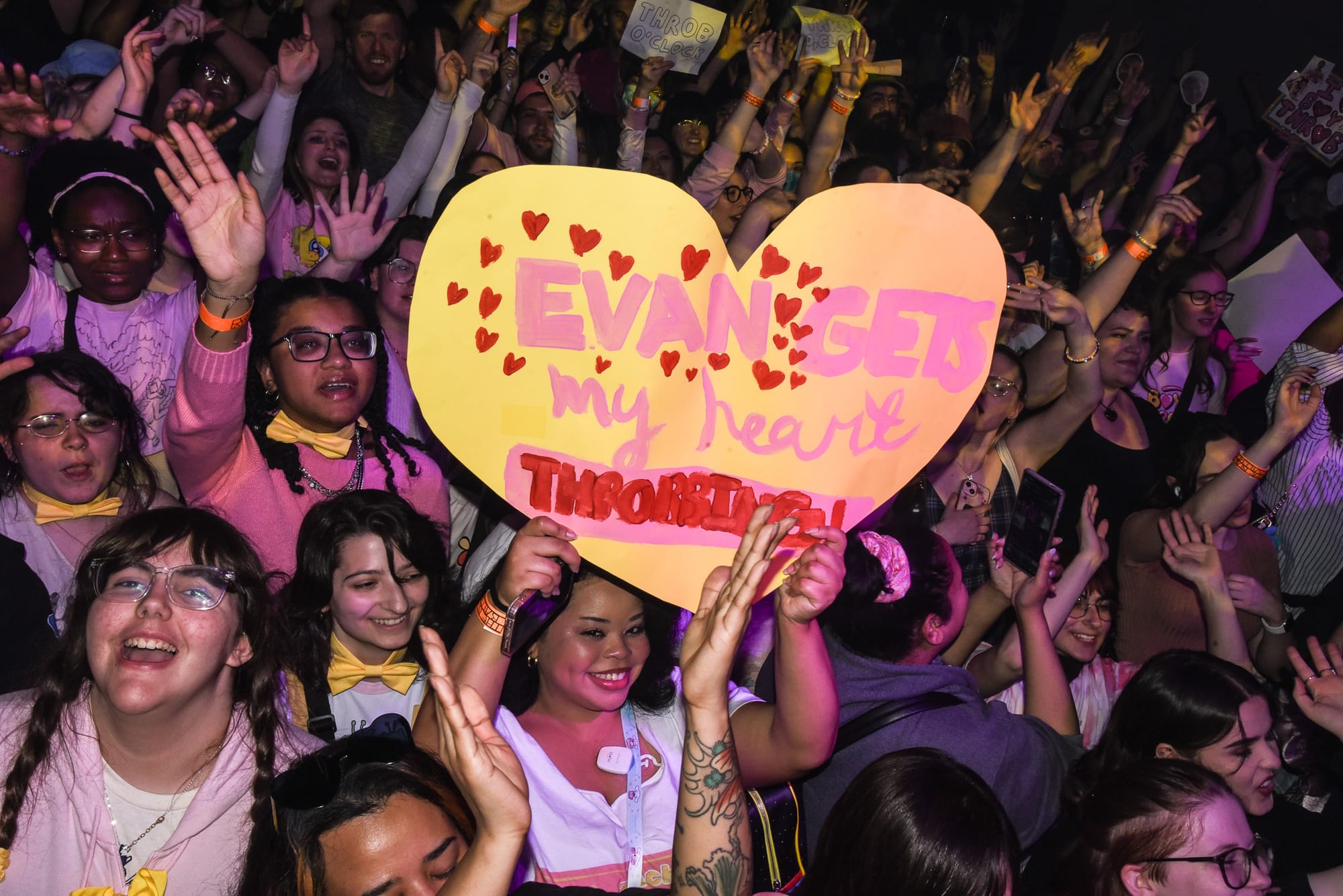
For Nora, a ’90s kid who grew up with groups like the Backstreet Boys and *NSync, it was more about what Boy Throb does have in common with other boy bands than what they don’t. “This feels like going to a boy band concert, which is the most fun part about it,” she said of Throbcella, the first boy band concert she’d attended since she saw Hanson decades prior. She’d made a sign that said, “Can’t Stop the Throb Mob” to hold up in the crowd. Another carefully crafted sign in the audience read, “You fill us up with joy!”
It’s that sense of joy, more than any other element of Boy Throb’s persona, that cuts through the noise—whether in the group’s wholehearted enthusiasm in pursuing Magdum’s visa quest, or via music videos designed to make viewers laugh out loud. For fans living on an internet increasingly designed to upset and divide its users, Boy Throb gives us all something to smile about.
“This song reminds me of happier times,” wrote Reddit user darthjoey91 in a /popheads subreddit post linking the group’s collaboration with Kesha, called “DJ Turn It Down.” “Like the late 2000s/early 2010s. So when Kesha became big.” User epicKBlamb makes a call to action to “get Darshan that visa!” but not before outlining the broader joys of Boy Throb as a musical act: “This is a club BANGERRR idc what anyone says, very 2010s recession pop and I love it. Definitely needed rn. I’ve loved seeing the rise of Boy Throb, they have such a fun and genuine energy, and I’m happy they’re making moves like this now. Their songs are genuinely bops, really hope we get an album soon.”
Whatever comes next for Boy Throb, the post-visa announcement is a time of collective celebration in the fandom and beyond. Banana Ball team The Party Animals posted a triumphant video of the players dancing to “Can’t Stop the Throb” on TikTok. Fans are sharing meme photos of Paul Revere spreading the good news, while others are planning out their dream Boy Throb-K-pop interactions. “I fully believe we are witnessing history right now,” writes commenter itsseansacramento on the Instagram announcement video.
For many, the emotional response is complicated by the harsh realities of the immigration process, and the broader political upheaval it speaks to. “I can[’t] believe I’m this happy for someone going to the USA,” commented user jufp_ on the Instagram post. In another much-liked comment, user sincerelyyhannah laments: “It only took a million of us to get this one guy his visa, but hey everyone else should ‘just get a visa.’”
While one chapter of Boy Throb’s story has come to a close, there’s anticipation amongst the Throb Mob for chapter two. “I hope they still stay together and continue with the music,” comments cheesykitty_party2 on the TikTok announcement video. “they literally have to, it’s a work visa,” formulawoof helpfully replies. “I’m gonna need Darshan to do a performance where he’s the only one live and everyone else is on iPad just for fun when he gets here,” suggests nturavgsupershero. Others are making requests for Boy Throb’s world-tour stops.
There’s fannish buy-in for achieving Boy Throb’s next goal, whatever it might be. “[C]ongrats guys your hard work has paid off now its time for that grammy,” user imdiscount commented.
Sentiments like this one underscore just how much Boy Throb has made the musical act’s challenges feel like a group project—an integral factor in any boy band’s success. “Proud to say I helped make this happen,” trashpandaire writes on the group’s recent post about the visa victory. For now, Boy Throb’s struggles and triumphs belong to all of us; in the current climate, it feels nice to be even just a small part of something good.