Can Fandom Make Us Better Tourists?
In an era of overtourism, South Korea’s Jeju Island and international BTS fans are building bridges of mutual respect.

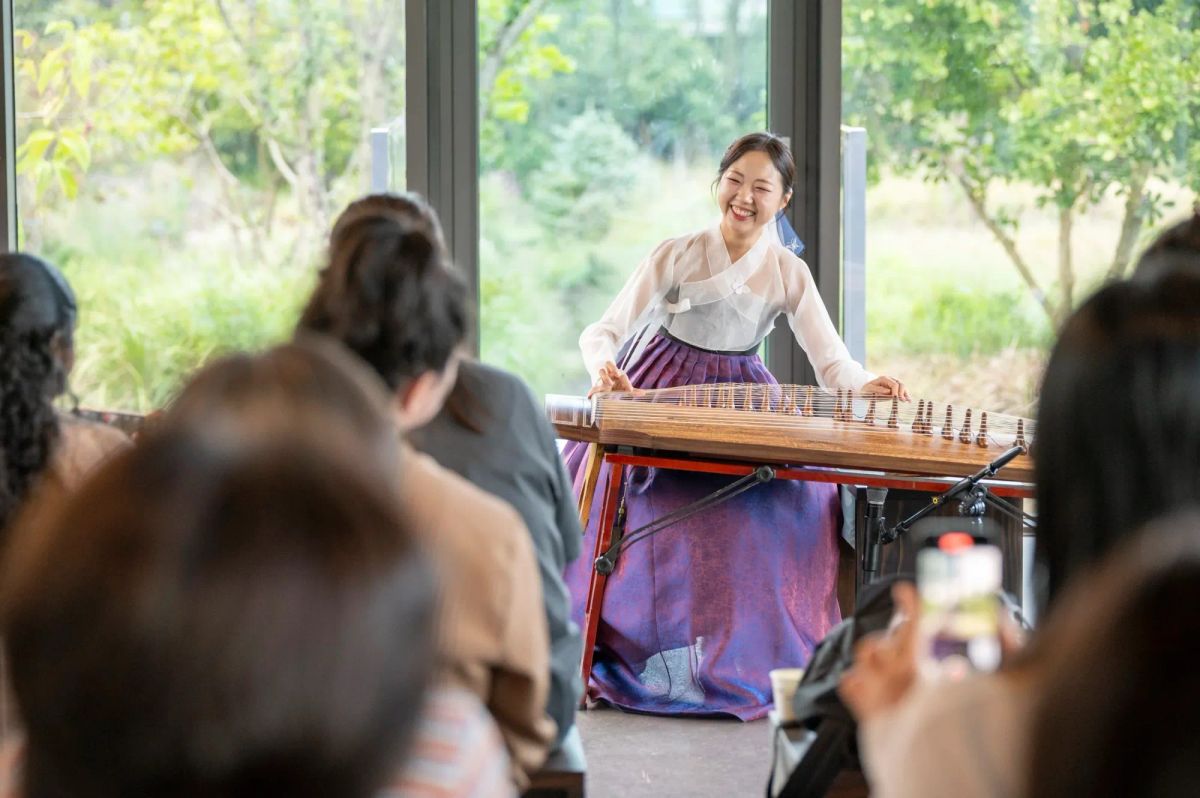
The first time I ever hear a gayageum played in person, the Korean zither is being used to pluck the melody of “Mikrokosmos,” one of my favorite BTS songs. I am on South Korea’s Jeju Island, gathered with other BTS fans as part of a two-day event called Purple Festa—“purple” for the official color of BTS and their fandom (known as ARMY), and “festa” like the term used to describe the group’s debut anniversary celebration every summer.
Hosted by the island’s local tourism organization, Purple Festa is designed to connect the pop culture that inspires fandom with the rich cultural traditions of Jeju and South Korea more broadly. Gayageum player Oh Hyun-ji is a good fit: the Jeju-born musician performs under the stage name Yaguem Yageum, interpreting K-pop and other trending music on what is perhaps Korea’s most famous traditional instrument. Also, Jungkook follows her on TikTok.
South Korea is the world’s fastest-growing tourist destination, on track to see a record number of visitors this year. Though not every tourist visits because of its pop culture—the broader “Hallyu,” or Korean wave, which includes K-pop and K-drama—roughly one-third of them do. Because of this, it isn’t just a tourist destination: increasingly, it’s a fan tourist destination.
Fan tourism can take many forms. At its most basic, the term describes any travel behavior driven by fannish enthusiasm. When Game of Thrones fans visit Croatia to explore the real-world backdrop for Westeros, that’s fan tourism. When European soccer fans fly to Spain to watch one of the much-anticipated El Clásico matches, that’s fan tourism. When Sex and the City fans take photos on the steps of Carrie Bradshaw’s Manhattan brownstone—even when the property owner asks them not to—that’s fan tourism.
Not every K-pop fan is lucky enough to live in a city, country, or even continent where artists tour, which means traveling for a concert is a cornerstone of K-pop fan tourism. But some fans take it a step further by actually going to the country that created the culture they love.