The Global Crackdown on Creativity
Governments around the world are censoring—and criminalizing—the currents in which fanworks flow.
On April 28, 2026, an Australian woman narrowly escaped jail time for writing an erotic romance novel centered on the roleplay lifestyle kink known as “daddy dom/little girl.” The author, Laura Ashley Tesolin-Mastrosa, had been awaiting trial for over a year after she was first charged in 2025 with possessing, disseminating, and producing child abuse material under the law in the state of New South Wales.
A judge ultimately determined that the book’s depiction of infantilization kink between a 45-year-old man and the 18-year-old woman about whom he’d fantasized since she was very young was tantamount to an actual depiction of child abuse between an adult male and a toddler. This representation was illegal per a recently expanded NSW legal statute that criminalizes any material that sexualizes a person who “appears to be or is implied to be” a child. While the judge sentenced Mastrosa to an 18-month community corrections order instead of the potential 10-year prison sentence she could have received for the offense, she made it clear in her ruling that fiction was not a defense, nor was the fact that M fictional characters were adults: in the eyes of the law, Mastrosa had created child sexual abuse material.
Less than a month later in Yekaterinburg, Russia,, Alexandra Kuzyk, an adult writer of explicit male/male Stray Kids fanfiction, faced a judge for the charge of “illegal pornography.” Queer “propaganda” in Russia has been criminalized since 2022, and queer-positive media and websites have been legally sanctioned and banned. Kuzyk was sentenced to 18 months of forced labor for her Stray Kids fic; prosecutors had asked the court to sentence her to up to four years in prison for her crime.
Kuzyk, who pled guilty, told Parni+ that she was targeted by the state after the mother of one of her readers discovered her fanfic through her daughter’s account on the messaging app Telegram (which has since been banned in Russia). The reader’s mother allegedly traced the story from Telegram back to the fanfiction platform Ficbook—which is hosted in Latvia and which has been banned in Russia since 2024—taking screenshots of sex scenes and reporting the fic to the Russian agency responsible for media censorship.
At a glance, these two incidents in disparate corners of the globe might seem unconnected. One involved the robust prosecution of perceived child sexual abuse material (CSAM) in a democratic nation, and one was an act of homophobic state terrorism under an authoritarian regime. Yet in both cases, the axe blade swung extremely close to the neck for creators of fiction—and doubly so for creators of fanworks.
Right up until she unknowingly crossed a line from “subversive” into “criminal,” Mastrosa was writing fiction that was totally unremarkable until it wasn’t. The warnings she reportedly used as a guideline for readers could have been lifted straight from AO3 tags: “age gap, daddy kink, infantilisation, physical abuse, profanity, sexually explicit scenes and slut-shaming.” Meanwhile in Russia, Kuzyk was operating in as lowkey a fashion as she could, using VPNs to post her fanfiction for free on platforms hosted outside of the country, where her content had legal protections. These precautions didn’t spare her from community surveillance, nor from punishment.
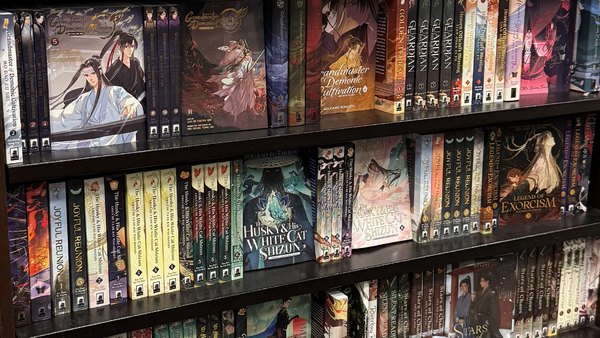
With a barrage of new and expanded laws plus harsher enforcement of existing ones, governments around the globe are criminalizing more and more forms of creative expression. It’s no longer far-fetched or hyperbolic to say that at any given moment, depending on what country you’re in and what government you’re up against, individual works of fiction—including fanworks—could be criminalized for being queer, or pornographic, or generally deviant.
How far the law typically extends seems to be entirely arbitrary, but in recent years, we’ve seen regressive censorship and punishment nipping at the heels of fanworks. Online platforms and payment processors then often comply with these laws by instituting sweeping content bans, further marginalizing women, queer and trans people, and sex-positive communities—the currents in which fandom flows.
People can be very irrational about sex and the many subcultures that encompass sex and sexuality. Queer and trans people, kink communities, furries, otherkin, Bronies know all too well how quickly stigma attaches to anyone whose freak flag flies even at half-mast. And then there’s transformative fandom—fanfiction, fanart, and other fanworks—residing at the center of this very large cultural Venn diagram.
“Fanworks are not created with commercial audiences in mind, and so they can run the gamut of subject matter that might not ever be greenlit by a mainstream distributor,” Stacey Lantagne told me in an interview. She’s a Professor of Law at Suffolk University; she’s also the co-chair of the Legal Committee for the Organization for Transformative Works, the nonprofit that runs, among other projects, the Archive of Our Own. The Legal Committee handles the OTW’s legal affairs and also serves in an advocacy, advisory, and educational role for org members and the broader fandom community.
As laws and changing attitudes regressively influence what’s considered mainstream, fandom has arguably become even more vital a space for freedom of expression. “If you want to produce works the market won't accept, then fanworks are a good place for you,” Lantagne said. The OTW—and by extension, the AO3, the org’s best-known project—are based in the United States in large part because of the First Amendment. “So far, believe it or not, the U.S. is still the best place on the planet for free speech,” said Lantagne.
But even in the U.S., fanworks and other forms of creative expression are facing increased scrutiny and suppression. “Governments around the world are increasingly cracking down on content,” Ashley Remminga, a graduate researcher in Global Cultures and Languages at the University of Tasmania, told me in an email. “Often, this is the result of direct influence by politicians introducing new laws over existing ones.”
These legal restrictions are most frequently enacted in the name of protecting children. In 2019, the United Nations published revised guidelines for UN member nations which expressed “[deep concern] about the large amount of online and offline material, including drawings and virtual representations, depicting non-existing children or persons appearing to be children involved in sexually explicit conduct.” After receiving strong criticism from various global groups devoted to protecting artistic expression, the committee qualified these broad categories by emphasizing their contextual use, “in particular when such representations are used as part of a process to sexually exploit children.” But the application of relevant laws around the globe haven’t always taken this context into account.
The Australian case is one recent example. Another comes from Italy in 2023, when a defendant who’d been convicted for possessing manga appealed the ruling. The Italian supreme court ruled against him, finding that the legal definition of CSAM could encompass comic books, manga, and erotic illustrations, including art “depicting minors engaged in incestuous acts or other sexual activities.” Neither the appellate’s legally affirmed lack of criminal intent in viewing the images, nor the vague ages of the illustrated characters, were a relevant defense, according to the court.
This type of legal ruling—one which intentionally conflates figurative and fictional work with real depictions of real people—has come under serious scrutiny for the way it can marginalize online youth culture, harming the very people it’s meant to protect. Yet fictional illustrations and artwork, including fanart, comprise an enormous amount of what gets flagged as CSAM. A 2023 study looking at cases involving virtual CSAM during a 21-month period found that over an average of 10,000 digital images per case, most were “cartoons, anime, or computer-generated files,” including “internationally known cartoon characters.” The caches also contained comics, gifs, and memes.
Doujinshi, the Japanese category of self-published media that includes fan comics, fanart, and fanzines, has existed since the early 70s and is very popular in Japan. Despite being legal in its home country—and despite being enjoyed by readers globally for decades—it has become a frequent target of global CSAM crackdowns.
One notorious case involved the 2010 arrest and two-year legal battle of a U.S. citizen crossing the border into Canada, who was found to possess erotic manga on his laptop. The U.S.-Canada border was the site of a similar case in 2015, when a Canadian bringing a pair of sex dolls into the country was sentenced to probation, restricted from public places where children might be present, and required to undergo psychiatric treatment reserved for sex offenders—not because of the dolls themselves, but because “a picture of what appeared to be an animated, underage girl was on the box.”

Last August, U.S. Homeland Security officers stationed in Dublin’s airport detained a British citizen on charges of CSAM possession after finding anime-styled art on his phone. In January, a Dublin court dropped all charges against him, but not before he was barred from traveling to Anime NYC and required to return to Ireland multiple times over the next six months for court procedures.
It might not seem immediately clear why governments would create legal frameworks that associate fictional depictions of children with actual children, but different governments apply different reasoning to their justifications. Over the decades, some experts have argued that fictional depictions of sexualized minors can contribute to the actual sexual exploitation of real children, both by normalizing the abuse and by allowing predators to build predatory social networks and groom children.
U.S. courts have eyerolled at this logic since a landmark 2002 case ruled that if you’re going to ban something just because it could be used to groom children, you might as well ban “cartoons, video games, and candy.” Meanwhile, the actual evidence that fantasy fictional imagery has any real-world correlation is very sparse. A 2012 study found no connection; a 2023 US study echoed this finding.
All of this, however, preceded the post-COVID-era explosion of digital CSAM, especially AI-generated CSAM. The onslaught has pushed more governments to rapidly revise and expand their existing laws—but those laws aren’t always consistent or evenly applied. For example, the AI Law Tracker reports that since 2024, 29 U.S. states have created new laws restricting AI-generated CSAM and/or deepfakes, many of them simply targeting any and all “digital” or “electronic” imagery, which could potentially include fanart and other illustrated art. The language and scope of those laws varies considerably, and Lantagne told me the legal standard is so malleable that it probably differs, not just from state to state, but from case to case.
By no means does the U.S. have a monopoly on vagary and uneven application of laws, nor on criminalizing things that you’d never expect. Most people probably aren’t aware, for example, that multiple countries have made it illegal to create media that instructs people how to commit crimes. In the U.S., tucked away inside the Federal Obscenity Code is the admonishment that, “Every written or printed card, letter, circular, book, pamphlet, advertisement, or notice of any kind giving information” about “arson, murder, or assassination,” as well as abortion (abortion receives special focus) can earn you up to ten years in federal prison per violation if you attempt to mail those instructions to someone else.
Australia is one of the countries with laws against creating crime instructions. A clueless author could write, for example, a heist fic that’s legally viewed as a crime manual. “Often, sadly, you do not know you’ve broken the law until you are being charged,” Remminga said. While the court would consider mitigating circumstances in this hypothetical scenario—like the fact that you were intending to write fiction—ignorance of the law can’t be used as your defense.
All of this confusion—the subjectivity, the varied legal wording, the obscurity of some of these statutes—feeds into the use of these laws, not as meaningful child protection, but as government scare tactic. “The power is in being able to threaten people with these vague laws about sex,” Lantagne said. “If a law is vague, it will have the effect of stifling speech, because people won't know what they can and cannot say and they will err on the side of not speaking.”
“I avoid Russian-speaking fanfic communities [online], except for discussing stuff with close friends,” a Russian fan named Zhenya told me. She lives in a large Russian city where she’s not too concerned about neighborhood surveillance, as she might be if she lived in a less populated area. “Small towns are and were a much different place to exist as a queer person with creative special interests,” she said.
For Zhenya, maintaining her access to fandom requires her to be careful online. Sites that require a VPN to access—major platforms like Facebook and Instagram, as well as fic sites like AO3 and Russian-language Ficbook—are more secure than sites that don’t. “The main reason messengers get banned by our government is because they refuse to cooperate [with government censorship], so they feel safe-ish,” she said. In fact, Latvian-hosted Ficbook tried several times over the years to self-censor its hosted queer content in order to comply with the Russian government, but the results were messy—and nothing was ever enough to satisfy the censors.
Russia’s anti-gay propaganda law (reified in 2013 and dramatically expanded in 2022) bans any and all positive representation of queer and trans identity in media and literature. It’s led to the butchering of TV series like Interview With the Vampire and to the government fining mass bookstore chains for selling books with queer content. Russian-style propaganda laws have also spread to other countries in the region, most recently Kazakhstan and Belarus. Other parts of the region have battled back, notably Lithuania, where the law was ultimately ruled unconstitutional, and Moldova, where so far, love is winning.
This propaganda law works in tandem with Russia’s 2023 law designating queer activist and community groups as extremist organizations: they create a fear-saturated environment where queer people are effectively banned from advertising their existence, and where paranoia is something of a precaution. “I sometimes discuss fanfics IRL or in the banned messengers like Telegram or Discord,” Zhenya told me. “If these messengers start banning Russian users or start cooperating with our government, then it’ll be only IRL talk.”
In a different era of Russian fandom, Zhenya volunteered as a Ficbook moderator. She emphasized how different things used to be before the crackdowns in her own country. “When I was a Ficbook mod, I was a teen,” she said. “There weren't any threats of censorship in sight; media and people were so much more free to do whatever they wanted: nobody translated gay couples into cousins, Verka Serduchka (an amazing drag queen) was very much one of the most popular artists among both kids and adults, the process to transition was so much easier than in most places around the world, and at some point I actually thought we were moving towards allowing gay marriage.”
These days, she worries that even posting to sites hosted externally might be criminalized—that, for example, “people who pay Ficbook to promote their fics are putting themselves at risk.”
“I do feel less confident in sharing my own works,” a Russian redditor who wished to remain anonymous told me. “I decided to move to a different place (aka AO3) where people post public works all across the world for a few reasons—but censorship and ban of certain themes in Russia did contribute to that as well.”
They told me that while they still post fic and came to the conclusion they probably were in no danger of being individually targeted for it, they were still cautious. “I have not yet rewritten any kind of plot I have simply because certain themes are banned by my government,” they said. “I still write about those themes—but I do not share them publicly.”
Globally, crackdowns on queer and/or sexually explicit content seem to be the primary reason that governments ban fic sites like AO3. The site, along with popular fannish platform Lofter, was famously banned in China in 2020; AO3 has also been banned, per reports from fans, in other countries well known for restrictive LGBTQ environments like Indonesia and the UAE. In 2024, Turkey banned Wattpad. None of these bans and threats explicitly target fan creators themselves, but they lay the groundwork for the kind of laws that do—especially in a world where it’s increasingly dangerous to write anything at all.
Remminga researches Australian censorship, but, unusually, she also works as a classifier for the Australian Classification Board, the country’s extremely regimented censorship bureau. She told me that Australia has become well known for having broadly restrictive media bans, often disproportionately impacting queer content and content produced by and for women. “There are six classifiable elements in Australia, and one of these is ‘Themes’, which also includes topics such as bullying, mental health and social issues,” she said. “These are common tropes in queer narratives and, as such, are often subjected to more rigorous policing.”
She noted that in Australia, you often see doujinshi and queer BL wrapped in plastic at shops. These visible signs of restriction further solidify the idea that there’s something that needs to be restricted—which then reify broader harmful ideas equating queer identity itself with deviance. We’ve increasingly seen this play out in convoluted patterns of online censorship, where corporations and social media platforms don’t always prioritize their users’ rights over the expediency of a content ban. Over the years, social media platforms have notoriously tended to mislabel queer content as sexually explicit or “adult” by default, creating additional unnecessary barriers for queer people. Restrictive laws only further this miscategorization and censoring of queer content.
This cycle has become especially noticeable in the U.S., where many large global internet platforms are based, and where payment processors have been attempting to comply with sweeping child-protection laws like FOSTA-SESTA. The laws have led to credit card companies and app-hosting sites withholding service from platforms providing access to “adult” content, which leads to those platforms banning adult content, censoring queer content in the process and often creating confusion and chaos. This level of corporate censorship often serves to silence people just as swiftly and effectively as the law itself, particularly as extremists gain power—and the chilling effect ultimately leads creators to censor themselves.
In China, there’s an entire creative ecosystem around webnovel platforms like Jinjiang and Haitang. Using creatively styled pseudonyms to protect their identities, women can make their careers writing mega-popular serialized fiction. Since the 2000s, thousands of these webnovels have been adapted into hit C-dramas. This includes queer BL webnovels, known as danmei, which for a brief period were getting adapted by the dozens into subtext-heavy hit dramas like The Untamed and Word of Honor, some of which have spawned massive fanbases both at home and abroad.
But this ecosystem involves a tightrope walk to avoid running afoul of China’s incredibly murky legal approach to queer and sexually explicit content. It’s illegal to earn more than the equivalent of $1,400 USD total from sales of pornography in China, or to sell more than 5,000 copies. (On the other hand, if you report illegal porn to the government, the government will pay you $86,500—nearly six times the average citizen’s salary.)
Increasingly, authorities have used this profit restriction as an oppressive tool to punish writers of queer literature—often with serious consequences. In 2018, a conviction for profiting too much from sales resulted in a shocking 10-year prison sentence for one author. In 2019, another author was sentenced to a four-year term for selling her books without proper publishing labels or distribution methods. Both of these authors were popular danmei writers. Their charges weren’t about their queer content, but their arrests effectively oppressed queer content by establishing a high risk for anyone creating it.
And that truly means anyone. In 2025, after years of rumors but no verifiable information, the public finally learned that author Mo Xiang Tong Xiu, creator of arguably the most popular danmei series in the world, Mo Dao Zu Shi (adapted into The Untamed), had spent a year in prison between 2020–2021—as her characters became ubiquitous images across the country—on a charge of “illegal business operation.” This news followed a spate of alarming 2024 and 2025 arrests by officials in China’s Anhui and Gansu provinces of dozens—possibly hundreds—of danmei writers for similar charges.

Following the arrests, fans circulated safety tips for themselves and for creators trying to avoid potential surveillance as they wrote, read, and purchased danmei. Many were already on high alert due to previous encounters with censorship, notably China’s 2020 AO3 ban. “The ‘informational uncertainty’—intentionally created by the state—regarding the precise boundaries of acceptable content cultivates ‘a sense of collective paranoia’ among writers who constantly suspect their works will be censored,” researcher Ran Wang wrote in a 2024 survey of fans who were affected by the AO3 ban.
Wang also noted that repeated destabilization from the bans may create trauma within fan communities that further destabilize them, leading them to distrust each other within an atmosphere of constant surveillance and homophobia. This culture of suspicion can then further isolate people, making it harder for researchers to study and promote queer fandom and queer participation in public life.
A recurring theme of this piece is that the Archive Of Our Own is a safe, censorship-free space in an increasingly anti-democratic world. “This is why AO3 has maximum inclusivity,” Lantagne told me. “Once you start to draw lines, no matter how well intentioned, we know where it ends, and it's nowhere good, unless ‘good’ is ‘the world only contains speech I personally approve.’”
Yet AO3 only hosts fics and meta, not every form of fanwork. It’s also impractical and arguably even dangerous to hold up the Archive of Our Own, as many of us do from time to time, as the One True Platform. If the history of the internet has taught us anything, it’s that no single platform can be all things to all people—especially, in AO3’s case, given the many criticisms that have been lodged against the OTW over the years, including being slow to adapt its tools for international fans, and inadequate of its protection and support for fans in its own spaces, particularly fans of color.
This reliance on AO3 also assumes that U.S. law will continue to protect fanworks under the auspices of the First Amendment; however, as many fans abruptly learned when Project 2025 began raising alarms for its sweeping anti-pornography agenda, free speech isn’t always guaranteed. (Many fans arguably only started paying attention to the greater harms of Project 2025 because AO3 was threatened—an irony underscoring that while many people with marginalized identities are fans, fans are not inherently a marginalized class.)
Age verification and other laws that attack online anonymity and pseudonymity don’t offer much help to children, but they do marginalize subversive creators. The U.S. Department of Justice recently designated “radically pro-transgender groups” as extremist terrorist organizations. With nothing currently slowing the march of fascism across the country, the most likely scenario for U.S. fans is not that fanwork itself will draw legal objections, but that these forms of state oppression could catch fans in the crosshairs.
“Privacy is probably your best safety net against oppression and censorship, if you can’t move out of the country,” Zhenya told me. Fans should make sure they’re aware of laws governing speech in their home countries, in case their work inadvertently violates them. But there’s also a danger in that mentality: in going underground, you risk losing vital parts of yourself and your community. The truer, harder answer involves more people, worldwide, fighting harder for free speech: changing the laws at home and abroad to embrace fanwork and other subversive media—not asking the creators to change or hide themselves.
“You have to have a democracy and vote for representatives that enact laws that don't criminalize our behavior,” Lantagne said. Remminga echoed the call for civic participation. “Where there are injustices, get involved, start petitions, lobby the government, and, where compulsory voting isn’t mandatory, vote at every election. You can’t expect change if you sit idly by.”
“Battles never stop,” Zhenya told me. “Stay safe ʕっ•ᴥ•ʔっ❤”