Drake and His Fans vs the World
The chart-topping Iceman has broken records—and done little to quell ongoing criticisms of the artist. Where does that leave his fandom?

For nearly two decades, Drake has stood among hip-hop’s elite. He’s dominated the Billboard charts, made a sweep at major award shows, and stood firm whenever his artistry has been tested. By the late 2010s, he was among the biggest musical acts in the world. But the pressure Drake faced in the lead-up to his May 15th album, Iceman, and his two surprise projects, Habibti and Maid of Honour, has been unlike anything he and his fanbase have ever experienced.
It’s been two years since Drake’s feud with fellow rap star Kendrick Lamar evolved into a massive cultural war. Across 2024’s “Euphoria,” “Meet the Grahams," and chart-topper “Not Like Us,” Lamar took aim at Drake’s entire persona, framing him as an inauthentic cultural appropriator who weaponized Blackness and used his many collabs to access spaces he’d never otherwise earn his way into. It didn’t hurt that “Not Like Us” was also a bop, becoming a “song of the summer,” spawning club singalongs across the country, and garnering whole crowds losing it over Kendrick’s repeated allegation that Drake has a history of inappropriate relationships with underage girls.
Beyond the memes and social media side-taking, the battle placed a real dividing line between the two artists’ fanbases, and an even larger one within the hip-hop community. In the eyes of Kendrick stans, his critique of Drake was damning, even career-obliterating. Drake’s fans believed Kendrick’s lyrical jabs were filled with baseless accusations and desperate attempts to dethrone one of rap’s biggest stars. While Kendrick swept the 2025 Grammys (the producers cut the crowd singalong) and brought “Not Like Us” to the widest and most mainstream of audiences at the Super Bowl halftime show, core Drake fans remained stout in their support of the rapper. But they also understood the magnitude of the moment.
“When Drake lost that battle, people started looking at him funny,” long-time Drake fan Steve Desmarathes, one of several Drake fans I tracked down while attending Philadelphia’s annual Roots Picnic, told me. The reputational damage Kendrick had dealt meant Drake couldn’t simply put out a singular hit: he needed a quality album that would prove his supporters right, and silence the detractors who claimed his career was on its last legs—“something to remind people how great he is,” Desmarathes said.
Given how high the stakes were, Iceman and Drake’s two additional surprise albums hit their commercial mark. The triple-album release smashed multiple Billboard records and streaming metrics, with most critics praising the album as a strong comeback, if lyrically shallow. The trifecta deploys Drake’s musical wizardry. Maid of Honour boasts the balanced mix of experimental club, dance, and electro-pop that was missing from Drake’s last major releases, 2022’s Honestly, Nevermind and 2023’s For All the Dogs. Habibti is the moody, R&B-leaning slow burn that he’s become well known for over the years. Iceman, the centerpiece, has the kind of conceptual focus and sharp, adversarial aggression that Drake needed—and that fans expected.
Many fans view the triple release as an intentional move by Drake to fulfill his obligations with UMG and officially sever ties with the label. Multiple releases are also an increasingly common tactic by mainstream artists to flood streaming platforms with new tracks in an attempt to increase playlist placements, engage listeners, and mark higher on Billboard charts. These moves usually result in short bursts of streaming success, but the momentum behind Iceman means the album has notched three consecutive weeks at the No. 1 spot, while the other two albums landed in spots No. 2, and 3. On the night of Iceman’s release, Drake’s fandom immediately erupted, with many declaring it a classic. Indiana Pacers’ All-Star point guard Tyrese Haliburton joked that the project had stalled the NBA. “No playoff games cuz Iceman here,” Haliburton posted on X.
But the questions that arose amid Drake’s beef with Kendrick are still unanswered. While the production and Drake’s bars are impressive, the subject matter shows familiar holes in his game, and a reluctance to move on from his past transgressions with Kendrick and other artists. In live streams with creators like xQC over the past two years, he’s pretended to be above the fray. But throughout Iceman, it’s clear he hasn’t yet shaken off the jabs Kendrick threw his direction—and if he is, few could tell by listening to the album. On “Janice STFU,” Drake questions the sincerity of the Compton rappers’ music and philanthropic efforts. “White kids listen to you ’cause they feel some guilt and that’s how your soul gets fulfilled / Handin' out turkeys on camera inside of your hood, then you go back to the hills / How many houses you build? How many souls did you heal off the back of your deal?”
Yet none of the records directly address Kendrick’s more serious accusations. Songs like “Ran To Atlanta” attempt to thwart Kendrick’s claims that Drake relies on Atlanta artists like Future, 21 Savage, and Young Thug to boost his street credibility. But concerning the allegations about Drake’s inappropriate relationships with young girls, his appropriation of different dialects and regional sounds, and his avoidance of social messaging in his music, listeners are left without clear responses. Drake broadly defines Kendrick’s accusations as “lies” on “Make Them Remember,” but he provides no substantial retorts beyond that.
Drake fan Ibrahim Golden, 36, said he understands why Drake took additional digs at Kendrick on the album, he just wishes it happened two years sooner. “At this point, it’s like stale chips,” Golden said. “‘Not Like Us’ came out two years ago. How long is this going to go on for? Either wipe your hands with it, or do it sooner.”
It didn’t help that Iceman was immediately politicized by far-right conservatives and white supremacists—including the Trump White House. These extremists seemed to view Drake’s comeback as a dressing-down of the “woke” politics that infused “Not Like Us” and Kendrick’s entire Pulitzer-winning oeuvre. Drake’s silence on the matter did nothing to quash Kendrick’s claims that the Toronto rapper sheds his Blackness and advocacy when it’s most convenient.
Meanwhile, several of the new songs arguably show Drake hijacking foreign accents or sounds, just as Kendrick claimed. In “Plot Twist,” Drake conjures the flow of UK drill artist Central Cee (who also collabs with him on Maid of Honour’s lead single “Which One”). On “Little Birdie,” he mimics the off-kilter cadence originated by South Florida native Kodak Black. Whether these references are homage or theft may be in the ear of the beholder.
“Drake has always been known to swipe stuff from other artists,” said Dwuan Gandy, another fan I spoke with. “It’s foul play, but it happens all the time in the music industry.”
Gandy told me Drake’s questionable affiliations and head-scratching creative choices like these have forever altered his legacy and relationship with rap fans. “I feel like he will always have fans that remember and bring up his hits for nostalgia,” Gandy explains. “I can’t deny that. But people will always look back, and think about when he was rapping about a life and identity that wasn’t his.”
Drake’s dynamic with rap fans has always been complicated. Unlike some musical genres, hip-hop has largely maintained open borders, welcoming broad swathes of artists and contributors as it has expanded internationally. As a perceived outsider early in his career who blazed several trails as hip-hop’s first Canadian superstar, Drake didn’t view localized sounds in the same way as rap’s traditional East Coast/West Coast elite. Instead of veering from them, or focusing on a scene established in Toronto, he pulled from all these influences to create something of his own: a universalized sound in a genre fixated on regionalism, emotional depth in a genre deeply entrenched in braggadocio.
In early songs like “Best I Ever Had” and “Marvin’s Room,” Drake penned stories of his deepest heartbreaks and insecurities. Those harmonious tales of his romantic pursuits and failings stuck with his listeners in the years after their release. “For us millennials, we grew up with Drake,” Gandy, 31, said. “In 2009, I remember listening to ‘Best I Ever Had.’ He would hit us with bars and a beautiful melody. He knew how to yearn for a woman’s love, but also [keep] it masculine.”
“‘Best I Ever Had’ was groundbreaking for us,” Golden said. “It was on rotation my freshman year in college for a semester and a half. He found a sweet spot. The singing rap was really refreshing. From So Far Gone and forward his music evolved, and Drake’s lyrics and production kept getting better.”
Over the years, Drake has built up a legion of hopeless romantics, spanning from Gen Z to older millennials, who constantly yearn for the “perfect” relationship, despite not being fully over their ex-partners. Then there are the ambitious types who post Insta captions or save inspirational screenshots of Drake lyrics like daily devotionals. A subset of Drake fans also adopt his look, from the OVO-branded merch to the barrette-covered braids. Drake even has impersonators routinely going viral.
His international fanbase is a credit to his ability to assume musical styles that range from Afro-Caribbean rhythms to electro-house. The absence of complexity in his catchy club records, melodic summer jams, and genre-bending collaborations works in his favor. His music and self-absorbed testimonies are more accessible to everyday music fans, and it’s a method that’s encouraged millions of listeners to steadfastly defend him.
“I think now more than ever it’s popular to be a Drake hater,” Gandy said. “But before that, there was love in what he contributed to the culture.”
Yet for many fans, by 2016, his records had begun to lose much of their luster. Drake began trading intimate and endearing stories for cheap reflections and poorly-written accounts of emotional friction. “Your best day is my worst day / I get green like Earth Day / You treat me like I'm born yesterday / you forgot my birthday,” he rapped on 2016’s “Weston Road Flows.” What was once a strength of his was beginning to feel like an obligatory box to check off for fans of his early records. “I always want the truth, but it's dangerous / You got somethin' real, not basic,” Drake sang on 2018’s “Jaded.”
He was still capable of cranking out immersive slow jams like “Finesse,” but as the years went on, these records began to appear disingenuous, even cunning. Things really went left when outraged fans unmasked lyrics from 2022’s “Circo Loco,” in which Drake allegedly accused Megan Thee Stallion of lying about Toronto rapper Tory Lanez years after Lanez was convicted of shooting her.
“Drake keeps turning the dial of his music away from lovesick bachelor, past vulnerable playboy, and towards vile cretin,” music critic Julianne Shepherd wrote for Pitchfork in 2023. “Whether this new setting is sincere, performative, or a bit of a troll, it’s at best repetitive and at worst severely off-putting.”
Hip-hop has long been a land where second and third chances are freely distributed. Rap purists have made concessions for Drake because of the capital he’s built from his catalog of hit records and cross-genre collaborations. His desire to work with rising talents and established acts outside rap circles helps to expand his audience and widen rap’s artistic margins, but it also bolsters his network of good will.
Still, over time, as his lyrics stagnated in contrast to his musical agility, the core fans who witnessed his transformation from independent mixtapes to record-breaking album releases began to question which Drake they were getting on a given song or album, or if the artist they once knew was ever there at all.
Questions about Drake’s artistry first arose in 2015—the year Meek Mill famously accused Drake of having Atlanta artist Quentin Miller pen his lyrics. If proven true, it would have sullied all of Drake’s credibility in a community where having dedicated ghostwriters is considered a cardinal sin.
Drake, however, handily won this battle. “The Meek beef was like little dog versus big dog,” Desmarathes said. “Drake won it, especially after he said ‘You’re getting bodied by a singing n—a’ [on his Grammy-nominated diss-track “Back to Back,” released in response]. Meek was dealing with a big star in a big universe he was unfamiliar with.”
Still, later feuds revealed more chinks in Drake’s armor. In 2018, at the climax of Drake’s longstanding battle with Pusha T, the Virginia rapper’s “The Story of Adidon” featured an image of Drake in blackface mimicking the racist historical Sambo caricature. This was a parody Drake himself had created as part of an unreleased project that was intended to highlight the struggles and stereotypes faced by Black actors. Instead, it made fans question Drake’s intent and identity as a bi-racial, Jewish man. “It was more painful because we’re used to certain demographics of people capitalizing off of Black culture, and it hurt him and us to see how he’s done it,” Gandy said.
A month after the release of “The Story of Adidon,” Drake’s 2018 album Scorpion debuted at the top of the Billboard 200, remaining there for five consecutive weeks in testament to his fans’ dedication and support amid the turmoil. It’s a loyalty Drake has routinely relied on: whenever his back has been against the wall, Drake has mastered the ability to generate hits that make listeners forget what battles he’s lost, or what embarrassing moments were brought to light. And no group has had more selective amnesia than Drake fans.
Golden said Drake’s nontraditional route to stardom was part of his appeal, but over the years, his commercial success has made him an easy target. It’s “easy to dislike him,” he said. “There’s certain people who don’t want to see you stay on top, and he’s definitely faced more criticism because he’s a big draw.”
Pusha’s accusations of Drake’s inauthenticity—his cosplaying of Black identity—are difficult to measure. The ghostwriting claims have been debunked; his use of blackface has been clarified by Drake himself; his infatuation with Caribbean culture, which infuses his solo experimentation and later collaborations with reggae and dancehall icons like Popcaan and Vybz Kartel, stems from its heavy influence in his native Toronto. His attraction to Southern hip-hop can also be traced to his childhood: he spent his summers in Memphis with his father, a musician in his own right.
What’s not explained is his imitation of accents helmed by UK drill artists. Some fans excuse his faux-UK rhymes and cadence for purposes of artistic expression, while others consider it cosplay and cultural appropriation. Fans like Gandy, on the other hand, don't think any of his interpretations of these sounds is acceptable. “I understand an artist wanting to pivot or test new sounds. Music is universal, so people can do that. But with Drake, what he does makes him look a little more cheesy,” he said.
Drake’s beef with Kendrick renewed these criticisms while amplifying the voices of cultural critics, journalists, and online creators who have long pointed to Drake’s shortcomings. Chief among critics’ complaints: Drake’s unwillingness to make songs that address the social issues that impact the lives of his listeners. “Drake has never shown up to have anything to say about anything going on in society with Black folks or anything other than himself,” radio personality Ebro Darden said in a 2023 interview with Apple Music’s Rap Life Review. While he did sign an open letter advocating a ceasefire agreement between Israel and the militant terror group Hamas, he has made no effort to address the ongoing conflict or other human rights issues in his music.
He came closest during his battle with Kendrick, when he said Kendrick was “rapping like you bout to get the slaves freed” on the diss, “Family Matters”—yet this moment only amplified Kendrick’s claims that Drake only champions Black culture for profit, and it placed his fans in an uncomfortable spot. “I think more people would be shocked if Drake did speak about something unjust, which is unfortunate,” Gandy said. “It shows where we are today in music. Artists are more interested in what they can take from or gain from music, instead of what they can contribute to the artform.”
Yet Desmarathes pointed out that putting pressure on Drake to speak out on social issues may be unfair. “I would love for him to stand for something, especially as a Black man,” he said. “But I do think when it comes to being an artist, there’s a fine line with that. And if we’re going to judge, then everybody needs to be held accountable as an artist.”
Desmarathes also noted that many fans of “Not Like Us” and people who took Kendrick’s side during the beef weren’t exactly repping hip-hop’s authenticity either. “I always felt like the masses that supported Kendrick weren’t really Kendrick fans,” he said. “Like, y’all don’t listen to Kendrick, or the only reason you did was because ‘Not Like Us’ was catchy. As a Kendrick fan, that’s not one of the songs I love from Kendrick. The reason it carried the movement is because of who it was against.”
After the tumultuous beef with Kendrick, Drake lost the grip his fans were accustomed to. Not only were subsequent releases such as the 2025 track “What Did I Miss?” not connecting with rap fans the same way, his once-loyal fanbase was beginning to ask the same questions as his naysayers. Many believed Kendrick’s claims would do little to affect Drake’s rap career in the long run, and that all he needed was the passing of time for everyone to forget what transpired before. But in the meantime, Drake was certainly doing himself no favors. His post-beef lawsuits only heightened public ridicule. He avoided interviews with legacy publications and hip-hop personalities, many with largely Black audiences.
Instead, he hopped on streams with controversial, far-right-leaning figures like Adin Ross and DJ Akademiks, who served as watchdogs within Drake fandom. Akademiks and Ross posted updates during the Drake-Kendrick beef, and in the lead up to Iceman, they discussed key info and updates surrounding the anticipated release, and went on countless online tirades to defend his name. The hope among fans was that Iceman would demystify Kendrick’s claims and the growing discourse happening within hip-hop, but Drake’s affiliations with far-right-leaning creators muddied the waters even further.
As the days inched closer to Iceman’s May 15th release date, fans’ anticipation and anxiety grew more apparent. Not only would it be the first solo project by the artist since 2023’s For All The Dogs, it would redefine Drake’s music career and reshape public perception. If it flopped and lacked the hits his fans are used to, he would likely drift into obscurity. But if it was both a commercial success and beloved by his base, he would—in their eyes—reclaim his spot atop the rap game. “Without Drake, the music game is sad,” Desmarathes said. “It’s equivalent to LeBron James retiring. Who do you pass the crown to once he’s gone? I don’t know.”
His fans had no doubts the album would perform well in the first week, but no one knew whether UMG would push the project amid its ongoing legal battles with the rapper. “I don’t care what it sells, but there are no lengths that UMG won’t go to embarrass him at this point. I still think he clears 350k relatively easily though, especially if he puts good effort into the rollout,” one Drizzy subreddit user wrote.
Even they underestimated him.
Few predicted Drake would drop 43 songs and seven music videos across three albums. For fans, the record-shattering Billboard listing wasn’t the surprise. It was the fact that all three albums reached all corners of Drake’s fanbase—the raw contentious bars and the club sounds he first conjured on Honestly, Nevermind. It’s the amalgamation of influences that have endeared his fans for the past two decades, and expanded his base so far beyond the confines of rap that no feud could loosen his grip on mainstream music fans.
It also helps that Iceman is among his best solo releases in recent memory, and one his fans can confidently rest their hats on. “I’m super satisfied with Drake dropping all three albums. He gives you everything—pop, rap, reggae island music, or a little house. I think he gave everyone something, and I think he hit the nail right on the head,” Desmarathes said.
While Iceman is a quality listen, the album isn’t without its glaring flaws. Kendrick stans have pointed to the lazy and cringe-worthy lyrics dispersed throughout the album. “He really said iceman no more mr nice man,” read one viral post from an X user, referencing a popular meme that had previously predicted Drake would use the cheesy line.
Others have created mixes with Drake lyrics and instrumentals to nursery rhymes like “Hickory Dickory Dock.” And while Drake fans have posted videos championing Drake’s hat trick, detractors have shunned the abundance of records he released all at once. “Drake's problem is not that some segment of the internet thinks he's lame[.] It’s that his 3 new albums are filled with filler,” wrote a top commenter in the subreddit for the popular YouTube channel, Todd in the Shadows.
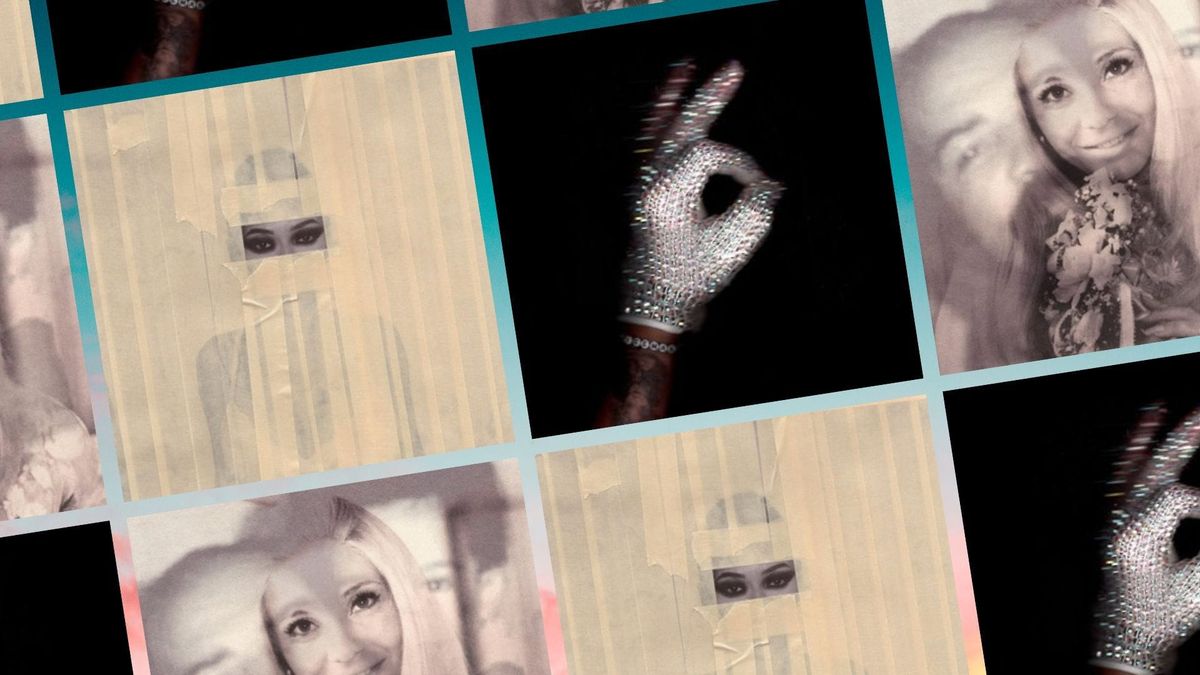
Adding fuel to the fiery discourse was the politicization of Iceman by the Trump administration. One official White House post on X featured an altered cover photo of Drake’s album with the glimmering Michael Jackson glove holding a chain with the initials MAGA dangling from it. The official White House TikTok account also posted a doctored video of Trump and law enforcement agents, with the outro of “Make Them Know” playing in the background. The 17-second clip featured jump cuts with the word “Iceman” throughout the video as text overlays and sound bites.
Fans called for Drake to respond to these posts, but he has yet to respond or make a statement about the incident. His silence meant it was left to the fans themselves, who flooded these White House posts with comments and quoted posts condemning the thoughtless PR move. Cultural critics, meanwhile, have questioned whether Drake’s allegiance to streamers like Ross and his undefined political lines are indicators that he’s been radicalized by his far-right supporters.
Drake’s political lines have always been blurry, but his selective advocacy and fair-weather social awareness was on full display in Iceman. On “Make Them Pay,” in addition to name-dropping Ross, Drake somewhat contradictorily took jabs at DJ Khaled over the ongoing conflict transpiring in Palestine, where Khaled’s parents are originally from. “And, Khaled, you know what I mean / The beef was fully live, you went halal and got on your deen / And your people are still waitin' for a free Palestine / But apparently everything isn’t black and white and red and green.” The line didn’t go over well for fans. They pointed to Drake’s own reluctance to address the conflict in-depth, despite entertaining Arab culture and language in his music.
“You put yourself in a tough position when you call somebody out like that, though, because people gon’ say, ‘Well, what have you ever stood for, Drake?’” seminal radio host Charlamagne commented while discussing the track. “You been here eating off the Black experience in America for a long time, I ain’t never heard you say ‘Black Lives Matter.’” Much of the focus surrounding Iceman has been on how well Drake responded to the two years of unparalleled pressure post-beef, but questions still remain about Drake the artist and the man.
For Desmarathes, Drake’s music should be the focus—and Drake fans shouldn’t be judged for wanting to hear something beyond socially conscious music. “Sometimes people want an escape from their reality,” he said. “On a daily basis I’m hearing about gas being five dollars, and you can’t fault people for saying, ‘I don’t want to hear about that anymore.’ We’re so entrenched with everything that’s going on in the economy, and in the world. I think people need that escape.”
Rather than harping on what Drake hasn’t done, what questions about him still remain, or how he compares to an artist like Kendrick, Desmarathes urges rap fans to embrace him for what he is. “People need to appreciate Drake for everything he’s done, how many summers he’s dedicated to us,” he said. To Desmarathes, and many fans like him, it’s clear that above all else, the music is what matters most.