Be Gay, Do (Sea) Crimes: Pirate Tropes and Queer Resistance

As Robert Louis Stevenson once wrote, pirate stories thrive on “all the old romance, retold exactly in the ancient way.”

Share
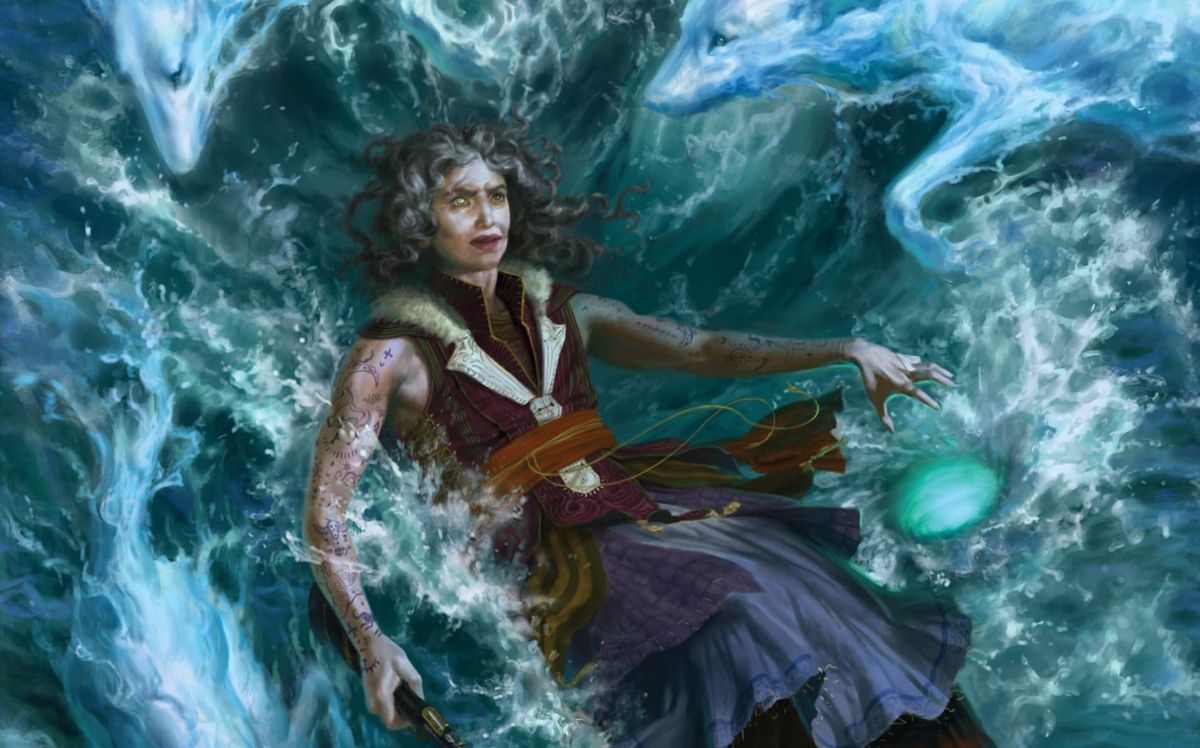
Image of Pasha the pirate captain, falling into a swirling sea.
Kidnapping, disguised gender, and a damsel in distress were all pirate tropes to play with—and queer further—in Pasha the Storm. Illustration by Grace Aldrich.

“What a ship is, what the Black Pearl is,” says pirate Jack Sparrow, drunkenly watching the horizon, “is freedom.” 

When Pirates of the Caribbean: Curse of the Black Pearl launched into theaters in July 2003, freedom was the ever-present theme of the film. But really, it’s the theme of all pirate media—and always has been. Political, social, and sexual freedom are the turning points of almost every contemporary pirate story. Pirates resist convention; they operate by deviating from the norm, cut from the same storytelling cloth as outlaws, bandits, and highwaymen. 

Amidst all this deviance is an undercurrent of queerness, long an established trope of maritime writing, made all the more clear in our modern-day explorations of pirates. Queerness, like piracy, exists outside of societal norms, and it feels easy to draw parallels between homosexual queer enclaves and the brotherhood of pirate outlaws. Queer historicism always runs the risk of ascribing contemporary labels or framings when the culture and language of the time elides definitions, but at least in the case of pirates and piracy, we have quite a bit of evidence for the cultural revolution—and the queerness—that pirates implicitly espouse. 

When I set out to write my own pirate novel—Pasha the Storm,[1] released June 30—I knew that I wanted to write a story that played with the tropes and caricatures that had been around since the 1700s. But even during the time when buccaneers were sailing around the Caribbean, the contemporary literature was largely fictive, their exploits used more for inspiration than information.


  1. Fansplaining is part of the Bookshop.org affiliate program. If you buy any of the linked books in this piece via our shop, we receive a portion of the sale. ↩︎

Parsing the details of pirate history from pirate story wasn’t strictly necessary to write a novel like Pasha the Storm (an epic fantasy book set in an alternate world), but understanding where these stories began, parsing the politics behind how pirates operated in the Caribbean, and analyzing the corpus of media that has built up the image of the pirate over the past three centuries made my novel stronger, because many readers can—almost instinctively—recognize the disparate parts of a pirate story. To create something fun, exciting, and surprising, I had to figure out where these tropes came from—and decode the queerness at the heart of the pirate legend.


The golden age of European piracy in the Caribbean lasted less than a hundred years, roughly between 1650 and 1750. It was a brutal time of rampant colonialism in the Caribbean and the Americas. The sale of enslaved African peoples helped drive the economy of the new colonies, which was almost entirely built on a system of exploitation and cruelty. Wars between European powers spilled over into the islands and mainland colonies, and alliances changed regularly, sometimes to the highest bidder. In this time of turmoil, piracy was not only seen as a rebellion against the various European crowns—the state, in the broadest sense—but also as a rebellion against the gendered cultural norms of revered “gentlemanly” behavior. 

Books published in this period, such as 1678’s Bucaniers of America by Alexandre Exquemelin (a former buccaneer himself) and 1724’s A General History of the Pyrates by the pseudonymous Captain Charles Johnson, depicted pirates as both a metaphorical political and cultural threat, and a literal menace to civilized nations as a whole. “The pirates they depicted radiated a hyper masculinity, at once morally ambiguous and socially transgressive,” Carolyn Eastman writes in her essay, “Shivering Timbers: Sexing up the pirates in early modern print culture,” in which she discusses how pirates were depicted as paradoxical sexual objects, even in contemporary literature of the time. “Were these men admirable and manly rogues or cowardly, vicious villains?” 

It would be disingenuous to argue that pirates were enlightened, anti-colonial freedom fighters. Pirates were still operating within the same systems as the most exploitative, rapacious, unconscionable imperial movements in the history of the world; many even participated in the slave trade in the Carribbean. But an anti-hero is an easy sell, and, as Eastman argues, there was always a desire to turn these opportunistic, brutal men into romantic bad boys. Eastman cites a 1704 publisher’s note that preceded the reprint of Bucaniers of America, which stated that the writing portrayed the “‘wondrous Actions, and daring Adventures [of the pirates],’ claiming that all but ‘the most stupid minds’ could not help but admire them…even taking their moral failings into account, the editor assured readers that ‘a bolder Race of Men both as to personal Valour and Conduct, certainly never yet appear’d’ on land or sea.” 

Still from POTC featuring the Black Pearl in a bottle.
Jack Sparrow holds the Black Pearl in a bottle in Pirates of the Caribbean: On Stranger Tides. Image via Disney.

While texts at the time attempted to balance brutality against a fictionalized romantic ideal of individualistic liberation, it was the latter that echoed throughout depictions of pirates over the next 300 years. Popular 19th-century novels like Treasure Island (Robert Louis Stevenson, 1884) and Fanny Campbell, the Female Pirate Captain (Maturin Murray Ballou, 1844), or the operetta The Pirates of Penzance (Gilbert and Sullivan, 1879), were so formative in the public’s conceptions of pirates that they even started to overwrite historical perceptions; some people, for example, thought Fanny Campbell was a real historical figure. A century on from the golden age of piracy, the cultural image of a swashbuckling Caribbean pirate contained little historical accuracy, instead consistently skewing towards a legendary caricature drawn far more from fiction than fact. Even the violence often associated with piracy is more performance than occurrence; most pirates leveraged their fearsome reputation to engage in a bloodless turnover of goods, with only occasional encounters with deadly combatants.

Eastman argues that we clearly see the ways in which many seventeenth-century pirate tropes have become consistently ubiquitous points for replication, repudiation, and satire. “The themes of manly adventure, gender transgression, erotic violence, and moral ambivalence have recurred with such regularity over these centuries by successive writers and illustrators that we can’t help but see how early modern print culture came to rely on such conventions for selling books.” It doesn’t matter if you’re in the 18th century or the 21st; it’s always been hard to resist the romance of a pirate story.  


In 1935, Errol Flynn starred in the swashbuckling pirate adventure Captain Blood, based on the wildly popular novel of the same name written by Rafael Sabatini and published in 1922. This marked the first breakout film of Flynn’s career, which would go on to be defined by action-packed plots and (typically) happily-ever-afters. He starred in other pirate films, including The Sea Hawk, The Adventures of Captain Fabian, and Against All Flags. The classic image we have now of a daring pirate, pirouetting through swordplay and brash fight choreography, owes a huge debt to Flynn’s portrayal of various ocean outlaws. 

Sabatini authored other pirate novels, many featuring the Captain Blood who became immortalized in film. (Captain Blood was so popular, in fact, that it was used as the basis of five different films between 1924 and 1962.) He took a genre that so far had been mostly concerned with brutality and added a damsel in distress, cementing tropes that had been coalescing in pirate fiction for years. Up until this point, the most famous pirate story—Treasure Island—was written for little boys about a little boy. Sabatini wrote stories for men who wanted to read a sexier power fantasy. As the hypermasculinity cited in Eastman’s essay tipped into hypersexual erotic stories of a wolf in wolf’s clothing, a real-life event began to influence the fiction of the time, as Flynn’s own reputation began to bleed into the rakish, lusty image of the pirate.

Flynn was a notorious playboy, attached to multiple women across his career. In the 1940s he made headlines when two young women accused him of raping them when they were underage. While he was acquitted of the charges, the trial damaged his career: his previously charming, boyishly flirty persona lost some of its appeal. Around the same time, a new wave of pirate-focused romance novels began to feature an Errol Flynn-type just waiting for some innocent naif to get herself in trouble so that he could whisk her away onto his ship. In fact, one of the first modern pirate novels written by a woman was concerned with this imaginary creature, though he was haunting the Cornish Coast, not the Caribbean. 

Daphne du Maurier—of Rebecca fame—published Frenchman’s Creek in 1941. In it, du Maurier plays with themes of duty, justice, sexuality, and even gender. Her heroine, upon realizing that her deserted country manor is the hideaway of the notorious pirate Jean-Benoit Aubéry, disguises herself as a boy and steals away onto his ship, only to find herself falling in love with the man who has assumed the mantle of villain. Lady Dona is eventually forced to choose between her duty to her children and her newfound love, remaining on shore as Aubéry escapes English justice. It was a hugely popular book, and while not a happily-ever-after, it is now considered an important gothic romance that helped open the floodgates for pulpy bodice-rippers that would continue to replicate the themes and tropes of pirate fiction, almost without changing, for a century. 

Woodcut drawing of Anne and Mary, both holding swords and in front of several sailing ships.
Anne Bonny and Mary Read, as depicted in A General History of the Pyrates. Image via Wikimedia Commons.

Even du Maurier was not immune to emulating pirate tropes. One of the earlier books I mentioned, Fanny Campbell, sees a young woman disguising herself as a man in order to infiltrate a pirate ship. The inspiration for this trope could easily come from Anne Bonny, a historic female pirate who disguised herself as a man until she—according to the stories—bared her naked breasts at men to distract them while fighting. 

These old tropes—kidnapping, disguised gender, and a damsel in distress—were ones that I knew I wanted to play with when I was writing Pasha the Storm. At the beginning of the book, it’s not a beautiful young woman being kidnapped or spirited away; instead, Pasha, a 50-something pirate 10 years past her legend, is dragged inland to stand before a politician, where she is blackmailed into sailing northwards. While she is flat-chested—due to some unspecified body modifications—we learn that she uses breast pads to disguise herself, attempting to become more womanly, rather than less. Additionally, the politician, Atle, is gender-neutral as a way of defining their ministerial connection to the state. And it doesn’t take very long for them to realize that they are the one trapped on a boat with Pasha, and not the other way around.  


Towards the end of the 20th century, pirates became something of a joke—often relegated to comedies or satires, if not outright erotic romances. Errol Flynn’s Captain Blood was clearly satirized in the Dread Pirate Roberts in The Princess Bride. Muppet Treasure Island saw the flamboyant and expressive Tim Curry’s Long John Silver as one of only a few human performers amid a cast of puppets. Even Eiichiro Oda’s One Piece (which began in 1997 and is still published serially) has a goofy, absurdist portrayal of pirates, hiding a shonen improvement fantasy underneath playful tropes and imagery. 

When Jack Sparrow first appeared in the Pirates of the Caribbean franchise in 2003, pirates had, more or less, stopped being sexy on screen. Now, featuring a necromantic fantasy plot, the film offered something different while still playing with key tropes of the pirate films established 60 years before. Although not explicitly queer, Johnny Depp allegedly made Disney execs nervous with his swishy, flamboyant acting. According to a 2010 Vanity Fair interview, when the powers that be confronted him with the question of whether or not Sparrow was drunk or gay, he allegedly said, “But didn't you know that all my characters are gay?” 

As much as I’m loath to quote Depp (for various reasons, but especially because he has been credibly accused of abuse and has gone after his ex-wife in court multiple times), we cannot ignore the impact of the Pirates of the Caribbean franchise. When you rewatch the movies with a queer lens…there is something to be said for his portrayal of Sparrow as a bit of a swishy gay. A pirate captain hunted by the law, running from his own piratical colleagues, and cursed by a half-dozen mysterious and supernatural entities over the course of a half-dozen films—and only ever free when he’s on the ocean. That’s a confirmed bachelor if I’ve ever seen one. 

As pirates again came back into fashion, contemporary media began to transfer the ambiguous, brutal nature of any pirate’s rebellion against the strictures of state into contemporary narratives, taking on a modern political and metaphorical weight. Within the pursuit of freedom, themes of sexual ambiguity and homoeroticism became cornerstones of contemporary pirate media, moving further away from the lusty heterosexual romances of the 20th century. 

The queer turn of modern pirate media followed historical investigations into the sex lives of pirates—with many scholars wondering if the mostly male maritime outlaws were getting any heterosexual sex at all. In 1984, B. R. Burg published Sodomy and the Pirate Tradition, where he argues homosexuality was not an “alternative style of sexual conduct,” but was in fact the predominant expression of sexual action within members of the pirate community. Burg’s account—largely a sociological argument—is not universally or even widely accepted. But while there are dozens, if not hundreds, of court documents regarding sodomy and buggery on board military and merchant vessels litigated or punished by maritime powers during this time, true evidence of gay sex on pirate ships remains sparse. 

It’s worth noting that for much of history the most reliable evidence for tracking and understanding cultural homosexual activity has been legal records—and it’s unlikely that a pirate would bring forth a case to a state court. Matelotage, a legally binding agreement where two men bequeath their possessions and income to each other, is often brought up when attempting to support an argument for a history of queer relationships at sea. But surviving records of matelots are scarce, and support for matelotage as a homosexual replacement for marriage, scarcer still. This lack of evidence could be because of what Burg argues: homosexual behavior was so commonplace it wasn’t even worth mentioning, much less prosecuting or codifying in legally binding documents (especially when said parties were criminals and unlikely to have access to traditional legal methods of recordkeeping). 

However, in his 1999 book, Rum, Sodomy, and the Lash, Hans Turley states that “the evidence for piratical sodomy is so sparse as to be nonexistent.” But, he adds, the perceptive “cultural history of masculine desire, the homoerotic implications of the pirate’s transgressive homosocial world,” are more important as artifacts of art and society. A much more recent book, Sons of Neptune by Jessica M. Floyd, tracks the archetypal queer erotic sailor across media from the 19th through the 20th centuries, and she spends quite a bit of time on pirates and piracy.

A fantasy map done in soft shades of tan.
A map of the fantasy seas of Pasha the Storm. Illustration by Sveta Dorosheva.

While writing Pasha the Storm, I knew that I wanted to write about queer pirates—but the entire world is fairly queernormative. The trope of the queer pirate wasn’t specifically deployed so much as liberally applied to the entire cast. I took much more interest in building out gender in the book—if I was removing classic tropes of women-disguised-as-men, damsels in distress, and taking away the subtext of queerness, I wanted to replace it with different gender dynamics at sea. When attempting to determine my characters’ genders, I always asked “why?” Often gender was a personal choice, but there are multiple examples where cultural norms—gender delineated by religion or occupation—supersede choice. 

Instead of a stereotypical hypersexual male pirate, the main character is a queer woman who won’t shut up about how much she wants to get into Atle’s pants. A character who appears about a third of the way through the book—Matvei—is described in a very stereotypical way: long dark hair, guns strapped to his chest, sun-tanned skin, with a scar on his rakishly handsome face. He’s the exact kind of pirate someone would expect to be a seductive, hyper-masculine, fearsome Blackbeard-type. But very quickly we are introduced to his wife, Yrr, to whom he is devoted. Matvei isn’t a rapacious fantasy: he’s a Wife Guy. 

Creating a world where different cultures, genders, and expressions overlapped was my way of playing on tropes of hyper-masculinity, deconstructing how media treated these characters, and either replicating or queering those tropes with my own queer, trope-y book. I wanted to play with romance tropes as well: a perfect example comes early in the book, when Pasha and Atle are discussing where to sail. As the acting captain (another character named Viveca) tacks the ship, Atle loses their footing and Pasha catches them. It’s a classic romance moment, and as Atle stalks off, Pasha grins at Viveca and asks, “Did you like that?” At this point, Pasha is talking to the audience. You’ll get everything you want to see out of a pirate romance, but it’ll be done with tongue in cheek—or other places, depending on the chapter. 


Two of the most popular depictions of pirates on television from the past decade have been explicitly focused on queer characters, blending both fictional and real-life pirates in their episodes. Black Sails (2014–2017), which takes inspiration from Treasure Island, follows Captain James Flint (Toby Stephens) before the events of Robert Louis Stevenson’s novel. Flint is depicted as a queer man, more or less forced into piracy after his homosexual affair is revealed. A majority of the characters are queer, and often their queerness drives their action within the story. There is a Caribbean gothic air to the show as it pursues trauma, love, justice, and terror across its four seasons, engaging with pirate tropes, traditions, and history, often pulling from fact and fiction within the same scene.  

The finale of Black Sails sees the main characters about to seize the treasure they have pursued and protected for most of the series: the Spanish gold on board the ship Urca de Lima is finally within reach. But when Flint faces off against Long John Silver, he seems to choose to leave piracy behind, giving up his cause—the ignition of a massive war against the English state—after he learns that his lover, Thomas Hamilton, is incarcerated in Savannah. The last shot of Flint is him embracing Hamilton on the plantation; choosing love over piracy, violence, and the endless pursuit of justice.

Set in roughly the same time period, Our Flag Means Death (2022–2023) is a workplace sitcom centered on the romance between pirate captains Stede Bonnet (Rhys Darby) and Edward “Blackbeard” Teach (Taika Waititi). As the leading men dance around their attraction to each other—and their attraction to piracy—the rest of the cast continues on, queerly aware of the odd vibes between them. The ending of the show—Stede and Ed safely on shore, outside of a cottage, watching their ship sail away—seems to indicate that piracy gave them the freedom to find love in each other, and that the pirate’s life that Stede desperately wants is better seen as a metaphor for social and sexual transgression. Eventually, the freedom to live in their truth and love takes priority over living as an active antithesis to the state, and they retire immediately after the brutal death of their first mate, Izzy Hands, a man who was so repressed throughout most of the series that he had to cling to his own hyper-masculinity in order to avoid the way that love made him vulnerable.

Both shows have characters that span a wide range of sexual and gender identities, and central to the structure of both series is that what piracy grants people is, as Sparrow says, freedom. What it does not grant is a reprisal from violence. In these shows, characters have to leave piracy behind in order to find peace with—or for—the people that they love. The villainy of the state is explicit within its opposition to love and queerness, among the additional political and social pressures exerted by European mores. 

Production still featuring Flint and Hamilton embracing in a field.
James Flint’s reunion with Thomas Hamilton in the final episode of Black Sails. Image courtesy Starz.

With Pasha the Storm, I took this trope—a pirate needs to leave piracy to be with, or protect, the person they love—and established it before the events of the book even start. Pasha’s first ship, the Temper, sinks off-page, 10 years before the book begins. It’s later revealed that she remained in exile not just because she was supposed to have died on board the ship, but because she was protecting her wife and child. After Pasha is assumed gone, the country of Garda believes that the pirate scourge is much less of a threat, and they turn their ambitions to their neighbors on land, rather than at sea. (This trope is invoked a few more times, but I don’t want to give it all away just yet!)


It seems easy, then, to say that a contemporary pirate’s quest for freedom aligns with a quest for liberation, and especially queer sexual liberation. Both Black Sails and Our Flag Means Death have explicitly taken up this standard—that the larger fight against various government and capital entities is also the fight for queer survival. In Queer Buccaneers (2011), an academic text focused on deconstructing sexuality and gender within the Pirates of the Caribbean franchise, author Heike Steinhoff argues that the act of depicting piracy establishes tropes of “transgression of boundaries that define the social, spatial and cultural standards of the dominant order.” 

These themes were taken up by both Black Sails and Our Flag Means Death, where a rejection of empire became a sociological imperative that required a broad, widespread, unified approach, and didn’t hinge on one man—or one ship—facing down the line of any nation’s armada alone. The overarching theme of personal freedom espoused by Jack Sparrow in the first Pirates of the Caribbean movie was just the starting point for these modern swashbucklers. By the later films, the existential discussions between pirates moved beyond individual freedom to encompass a larger, more holistic rebellion against the tyranny of the European authorities. 

The ubiquitousness of these themes and tropes—many of which first appeared alongside the historical figures themselves—means that the contemporary pirate media must either embrace social, cultural, and sexual revolution as themes, or risk undermining the very anti-authoritarian structures of the stories they’re crafting. While the cost of producing a piratical TV show is typically high, even for Hollywood, books provide a larger sample of critical media. When we look at books published over the past 10 years, many of them take these themes seriously, embracing the political weight of what it means to be in opposition to the oppressor.

One of the most popular pirate novels of the past decade, The Adventures of Amina Al-Sirafi by Shannon Chakraborty, features a middle-aged protagonist who is called on to find the granddaughter of a former crewmate. Amina eventually finds out that the missing child fled with her assumed captor because she was being forced into an arranged marriage and she did not believe she was a woman—by the end of the book, she began to use he/him pronouns and took on a male name. Over the course of  the story, Amina reveals that she herself entered into marriage with a demon while in her glory days so that they could have sex (otherwise it would have been against her Islamic beliefs to engage in premarital intimacy). The boundaries of the world—established by the patriarchy and by religion, even when that faith is something that is precious to the characters—become slippery at sea. Salt water seems capable of breaking down barriers of sexuality and gender that society has spent centuries erecting.

Pirate tropes don’t necessarily mean pirate clichés, and Alexandra Rowland’s Running Close to the Wind, a bawdy pirate fantasy, in part explores whether or not piracy can survive in a queernormative world. The book sets up a sexual foil in Brother Julian, a celibate monk. As the other two protagonists, ne’er-do-well spy Avra and the pirate captain Teveri, attempt to seduce Julian, they also realize that they are in possession of the secret that has allowed Avra’s former employers, the Araşt Empire, to become the main maritime power in the world. The book isn’t that interested in piracy on the page, and eschews a lot of swashbuckling in favor of absurdity, setting up pirates as the dark horses and promising to come back to fight for seafaring supremacy—this time with the queer triumvirate at the head of a feared pirate armada. Piracy, and its removal from the mores of the world, is once again the impetus that allows these characters to come together, literally and metaphorically.

There are dozens more examples of pirate books that work within and against the longstanding tropes of piracy—and engage directly with queerness. The young adult novel Kemosha of the Caribbean by Alex Wheatle features a young Black girl who is able to use piracy to escape a plantation—but unlike other books, piracy is seen as a means to find freedom as she seeks a mythical island where she, her family and her newfound love, Isabella, can reside in safety. Alliette De Boddard’s The Red Scholar’s Wake is a sci-fi pirate adventure where the main romance is between a manifestation of the sentient ship Rice Fish and the woman she has made her new captain, Xích Si. In The Mermaid, the Witch, and the Sea by Maggie Tokuda-Hall, there is a kidnapped noble, but she must partner with a shape-shifting bi-gender queer pirate in order to escape the confines of the Dove…and the arranged marriage that waits her at the end of her voyage.  

Identifying—and then undermining—pirate tropes was integral to writing Pasha the Storm. Instead of sailing on a boat that’s well known across the oceans (such as the Black Pearl, Queen Anne’s Revenge), Pasha is sailing on a brand-new boat, named the Dog (instead of a name that’s more imposing or regal, like the Interceptor or the Colonial Dawn). The sister oceans are in an arctic clime, not a tropical or Caribbean-inspired location. Pasha has one good eye—but her bad eye is a magical wayfinder, inspired by the Icelandic saga of Rauth, who used a semi-mythical ‘sólarstein’ to find the sun in cloudy weather.  

All of these tropes feel familiar, and, as Carolyn Eastman writes, the ubiquitousness of the genre makes pirate tropes remarkably easy to spot. These books, shows, and movies demonstrate the ways in which the swashbuckling rogue pirate fantasy previously established during the golden age of piracy formed our impressions of what a pirate story should look like, either by reifying or undercutting those themes. Embracing queerness in contemporary pirate fiction is an act of narrative continuance, furthering the positions of anti-imperialism, transgressive social norms, and the freedom that a ship represents in fiction. To ignore queerness onboard a pirate ship is to ignore the history of pirates—and, more importantly, the stories of resistance they inspired.